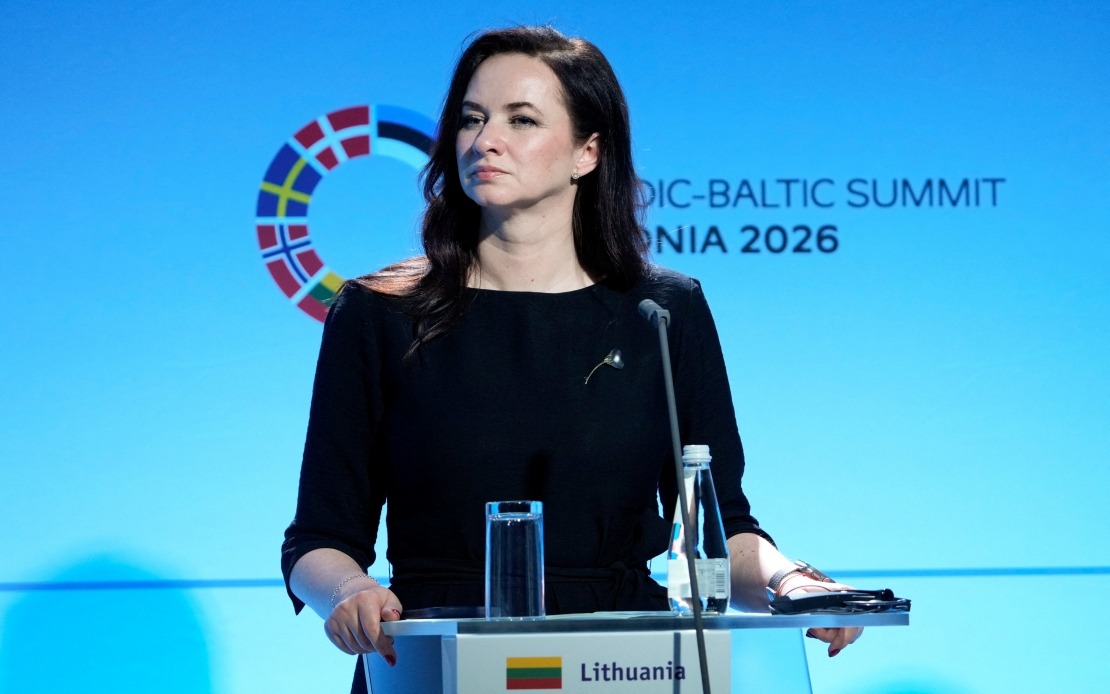
Lithuanian Prime Minister Inga Ruginiene announced her government's resignation on Tuesday, setting in motion a transition period that will reshape the country's political leadership. The move comes amid shifts within the ruling coalition that have made the existing administration untenable, necessitating a fresh governmental arrangement. President Gitanas Nauseda has formally accepted the resignation and requested the outgoing Cabinet to continue in a temporary caretaker role pending the formation of a successor administration, ensuring governmental continuity during the transition.
The constitutional framework governing Lithuania's governmental transitions requires careful orchestration across several stages. Following the resignation announcement, the President holds a 15-day window within which to nominate a candidate for the prime minister position. That individual must subsequently navigate parliamentary approval through the Seimas, Lithuania's legislative body, before assuming office. This phased approach reflects the Baltic nation's commitment to parliamentary oversight of executive appointments, ensuring that significant governmental changes receive democratic validation from elected representatives.
Mindaugas Sinkevicius, who leads the Lithuanian Social Democratic Party that currently holds the governing coalition's majority, stands as the presumptive nominee for the prime ministerial role. Political observers across the region view his elevation as highly probable, pending formal confirmation by parliamentary vote. Should the Seimas approve his candidacy, Sinkevicius would then face two consecutive 15-day periods to construct his Cabinet and articulate a coherent policy programme before presenting the complete governmental lineup for final parliamentary endorsement. This staggered timeline allows incoming leadership to deliberate cabinet appointments and policy direction while maintaining legislative oversight throughout the formation process.
The anticipated governmental transition marks the third coalition administration that the Social Democrats will have assembled since parliamentary elections concluded in late 2024, signalling considerable flux within Lithuania's political landscape. The previous government, led by Gintautas Paluckas, dissolved when he resigned last August, allowing Ruginiene's administration to take office and navigate the intervening period. Now, merely months into this tenure, fresh coalition calculations have necessitated another reconfiguration. For Malaysian observers familiar with coalition dynamics in Southeast Asian parliamentary systems, Lithuania's experience demonstrates how even well-established governing parties must periodically reconstruct their administrative partnerships to maintain parliamentary support.
The outgoing Cabinet convened for its final meeting on Tuesday, where members unanimously approved a resolution formalizing their collective resignation. Ruginiene addressed the Cabinet during this concluding session, acknowledging that despite confronting substantial difficulties throughout its tenure, the government had accumulated legitimate achievements warranting recognition. Her characterization of the administration's record reflects an attempt to frame the transition as an orderly passing of governance rather than a humiliating collapse, a rhetorical approach common across parliamentary systems when governments acknowledge their exit.
The rapid succession of governmental configurations within Lithuania reflects structural tensions within the country's political coalition architecture. Since the 2024 elections, no single party has possessed sufficient parliamentary seats to govern unilaterally, necessitating complex power-sharing arrangements among multiple parties. These coalitions inherently contain latent instabilities, as partners must continually negotiate competing policy preferences and ministerial allocations. When disagreements intensify or political calculations shift, maintaining coalition cohesion becomes progressively more difficult, ultimately precipitating the kind of governmental reconstruction now underway in Vilnius.
For regional analysts tracking Baltic political developments, Lithuania's governmental transition holds particular significance given the country's security priorities and European integration commitments. The timing of administrative changes can affect governmental responsiveness to security challenges, particularly in a region heightened by regional tensions. Any disruption to policy continuity or ministerial expertise during this transitional window could theoretically complicate Lithuania's defense coordination or EU engagement. The caretaker arrangement mitigates such risks by maintaining existing administrative capacity, though substantive policy innovation becomes constrained until a new government with a distinct mandate assumes full responsibilities.
The constitutional mechanics governing Lithuanian governmental formation reflect democratic principles emphasizing legislative primacy and executive accountability. Unlike presidential systems where chief executives possess autonomous appointment authority, Lithuania's parliamentary framework requires elected representatives to validate governmental leadership. This arrangement ensures that administrations command demonstrable parliamentary confidence, though it simultaneously creates opportunities for frequent political realignments as legislative coalitions shift. Compared with Southeast Asian parliamentary democracies, Lithuania's governmental formation procedures showcase comparable commitments to democratic validation, though specific constitutional timeframes and procedural requirements vary across jurisdictions.
The immediate policy implications of Lithuania's governmental transition remain to be determined pending Sinkevicius's formal nomination and parliamentary confirmation. The incoming administration will inherit existing governmental commitments, including Lithuania's NATO membership obligations, European Union responsibilities, and domestic reform agendas. Whether the new coalition will pursue policy continuity or introduce substantive programmatic shifts depends upon the specific coalition composition ultimately negotiated. For Lithuania's international partners, including Baltic neighbors and Western allies, stable governmental transition represents a positive indicator of democratic institutional functionality, even when frequent leadership changes might suggest underlying political fragmentation.
The sequence of events unfolding in Vilnius illustrates how parliamentary democracies navigate governmental transitions through institutionalized procedures that balance executive necessity with legislative oversight. Rather than governance disruption, the formalized timeline for nomination, confirmation, and cabinet formation provides structured opportunity for deliberate political repositioning. As Lithuania proceeds through these constitutional stages, the country's political system will demonstrate whether coalition realignment produces more durable governing partnerships than the arrangements that preceded them, ultimately shaping the stability of governance throughout the remainder of the legislative term extending from the 2024 elections.

