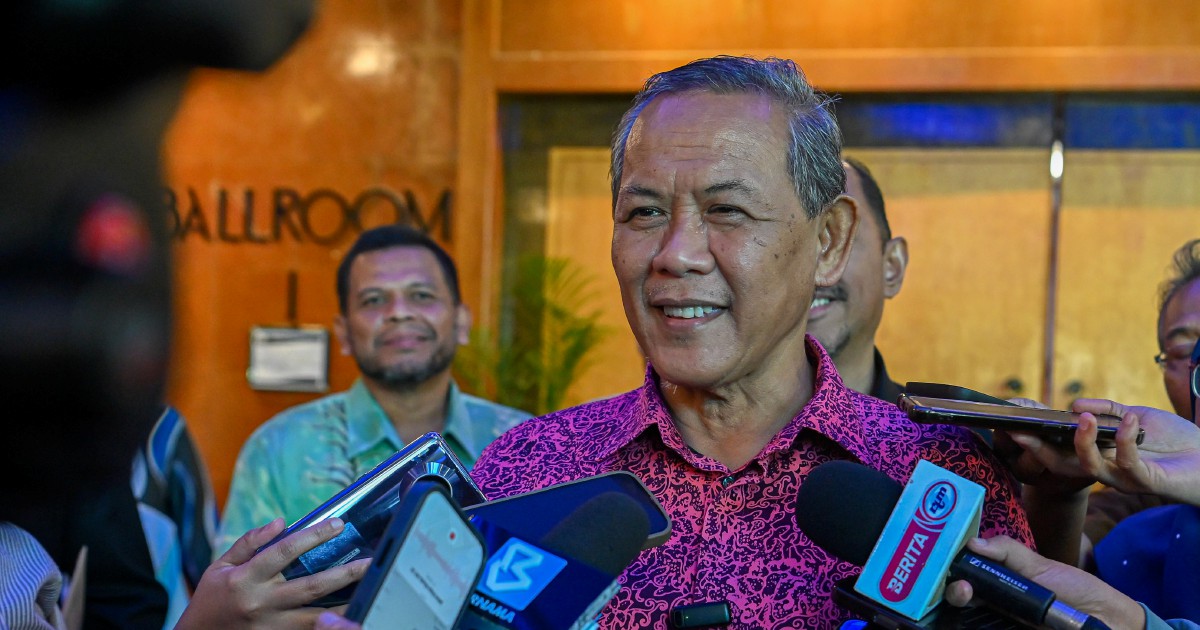
Negri Sembilan Menteri Besar Datuk Seri Aminuddin Harun has made an appeal to residents and voters to assess the state government's substantive efforts in tackling the Linggi river's chronic flooding problem on their merits, cautioning against allowing what has become a long-running infrastructure challenge to be weaponised for political purposes as campaigning intensifies ahead of the 16th state election.
The appeal reflects growing tensions over how local governance issues, particularly those affecting vulnerable communities in flood-prone areas, are framed during electoral cycles across Malaysia. Aminuddin's intervention signals concern that legitimate engineering and environmental solutions to the Linggi problem risk being obscured by partisan posturing, which ultimately disadvantages residents who depend on functional flood management systems rather than campaign promises.
Flood mitigation in the Linggi river basin has represented a persistent challenge for Negri Sembilan authorities, with successive waves of flooding affecting communities along the river corridor. The issue carries significant weight in state politics given the number of voters in affected areas and the visceral impact of inundation on household economies, agricultural activity, and daily life. Understanding why this particular infrastructure problem remains contentious requires examining both the technical complexities involved and the political incentives surrounding such issues.
The underlying hydraulic and environmental factors contributing to Linggi's flooding pattern are multifaceted. The river serves a catchment area influenced by seasonal monsoon rainfall patterns, urban development that has altered natural water absorption, encroachment on riparian zones, and potential bottlenecks in the river channel itself. Comprehensive solutions demand sustained investment, careful planning, and often coordination across multiple agencies and jurisdictions—the sort of unglamorous, long-term work that rarely generates electoral excitement but which residents desperately require.
Aminuddin's emphasis on ongoing mitigation works suggests that the state government is actively pursuing engineering interventions rather than leaving the problem unaddressed. The specific nature of these works—whether involving dredging, dyke reinforcement, channel widening, or retention pond construction—reflects the technical approach being adopted. For residents who have experienced repeated flood damage, evidence of concrete action becomes the metric by which they evaluate government performance, regardless of which party controls the state assembly.
The political dimension of infrastructure failures in Malaysia cannot be ignored, however. Opposition parties naturally highlight areas where the incumbent government has failed to resolve longstanding problems, while ruling coalitions argue that such issues require time and resources to address properly. This dynamic creates temptation for both sides to frame the same situation through radically different lenses, potentially obscuring genuine technical information that residents need to understand what is actually being done and when they might expect relief.
For Malaysian voters generally, and for Negri Sembilan residents specifically, the challenge involves distinguishing between legitimate policy criticism and mere political exploitation. A government deserves scrutiny if flood defences remain inadequate despite adequate budgets and time, but it also deserves acknowledgment when serious work is underway to address inherited or particularly stubborn infrastructure problems. The Linggi situation likely contains elements of both—real progress alongside areas requiring acceleration or refinement.
Regional context matters here as well. Several Southeast Asian jurisdictions face similar challenges managing river systems that flood predictably, and solutions tend to follow fairly established engineering pathways. Malaysia's experience with the Rajang, Kinabatangan, and other flood-prone river systems has generated considerable technical expertise. Positioning the Linggi challenge within that broader framework helps separate what is realistically achievable from what represents either unfulfilled promises or unrealistic expectations.
Aminuddin's call for voters to evaluate substantive measures rather than political rhetoric carries implicit recognition that electoral campaigns can obscure technical realities. As the 16th state election approaches, various political actors will naturally highlight the Linggi issue differently according to their interests and positions. His intervention attempts to keep focus on what actually matters to residents: whether water enters their homes, whether their crops are destroyed, and when these problems will be solved.
The tension between technical problem-solving and political communication in governance pervades Malaysian politics at federal, state, and local levels. Infrastructure issues that affect voters' material welfare—including flood management, water supply, waste disposal, and transport—occupy an uncomfortable space where genuine engineering constraints intersect with political accountability and electoral competition. Voters are right to demand solutions, but they benefit from understanding realistic timeframes and resource requirements rather than accepting whichever promise sounds most impressive during campaign season.
Moving forward, the evaluation of Negri Sembilan's flood mitigation performance will ultimately rest on practical outcomes. Residents will observe whether the Linggi flooding cycle shows improvement, whether affected communities receive adequate warning and assistance when floods occur, and whether damage patterns change meaningfully over time. These observable facts will matter far more than rhetoric from any political actor, which is precisely what Aminuddin's appeal—setting partisan advantage aside to focus on actual solutions—fundamentally acknowledges.

