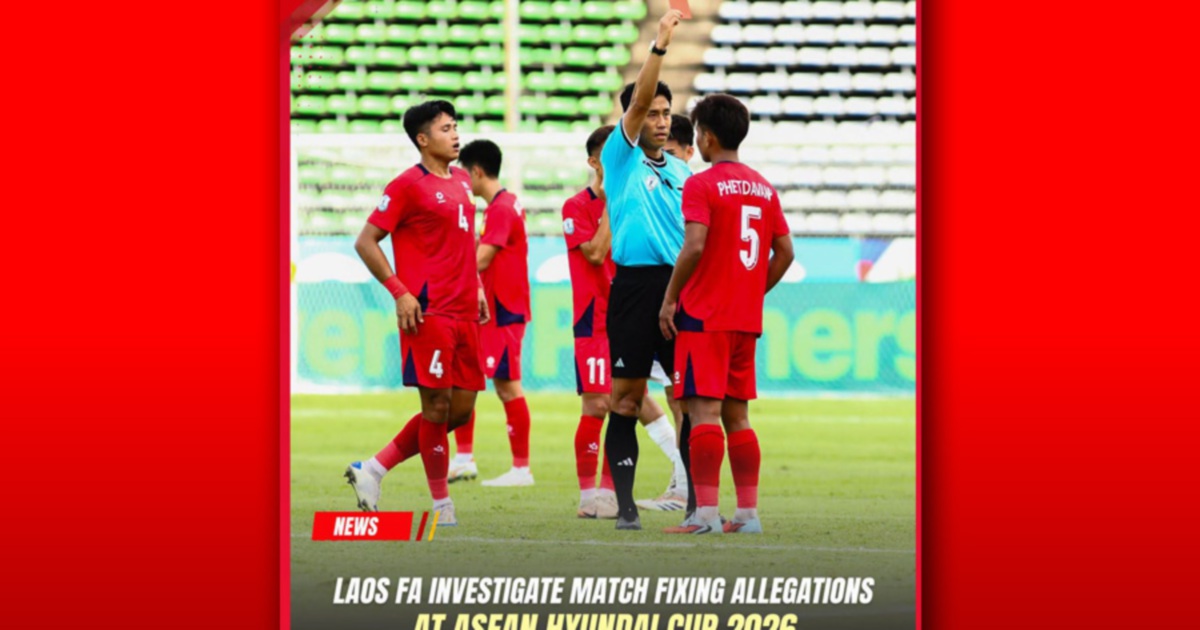
A significant integrity crisis has emerged within Southeast Asian football after the Lao Football Federation announced plans to pursue a thorough investigation into corruption allegations involving its national team members during regional competition. The federation's decision to formally examine claims of match-fixing, financial impropriety, and illicit wagering marks a watershed moment for competitive standards across the ASEAN Cup framework and raises troubling questions about governance within the sport across the region.
The announcement by the LFF represents an unprecedented step within Laotian football administration, signalling that officials are taking the allegations with appropriate gravity. Match-fixing scandals have periodically surfaced throughout Asian football, but involvement by a national team competing in a major regional tournament underscores vulnerabilities in oversight mechanisms. The federation's willingness to instigate high-level scrutiny demonstrates institutional recognition that permitting such misconduct to go unexamined would fundamentally undermine the legitimacy of competition and public confidence in the sport.
Corruption in football takes multiple forms, and the allegations reportedly encompassing match-fixing, bribery, and gambling operations suggest a systematic pattern rather than isolated incidents. Match-fixing—where results are predetermined—represents perhaps the most egregious breach because it directly compromises competitive integrity and denies teams genuine advancement based on performance. Bribery allegations indicate that individuals may have leveraged financial incentives to manipulate player conduct or match outcomes. Simultaneously, illegal gambling operations frequently operate alongside fixing schemes, creating financial incentives for those orchestrating corruption.
For Malaysian readers, this incident carries particular relevance given the interconnected nature of ASEAN Cup football and Malaysia's own competitive profile in the tournament. Malaysia's national team has competed at various levels of success throughout ASEAN Cup history, and any compromise to tournament integrity affects all participating nations. Additionally, Malaysian clubs and players maintain commercial and competitive relationships throughout the region, making ethical standards in Southeast Asian football a matter of direct concern.
The timing and context of these allegations within the ASEAN Cup competition framework demand examination. The ASEAN Cup represents one of the region's premier football competitions, attracting significant media attention, sponsorship investment, and public interest. Allegations affecting a participating national team during active competition create immediate complications for tournament administration while raising questions about whether other matches or teams warrant similar scrutiny. Tournament organisers face pressure to determine whether current procedures adequately safeguard against corruption and whether additional oversight measures should be implemented during ongoing fixtures.
The LFF's initiative to investigate internally reflects broader efforts across Asian football to address corruption proactively. However, the effectiveness of such investigations depends critically on investigative competence, independence of enquiry officers, and capacity to gather evidence and conduct interviews comprehensively. International football bodies such as FIFA have increasingly emphasised anti-corruption protocols, and regional federations are expected to maintain parallel vigilance. The LFF's investigation will likely attract scrutiny from international football authorities monitoring whether investigations meet professional standards and whether findings are acted upon appropriately.
Beyond administrative consequences, these allegations carry implications for individual players implicated in any wrongdoing. Players found to have participated in match-fixing or other corrupt practices face potential bans from football competition, legal prosecution under Laotian law if applicable, and lasting damage to professional reputation. For young footballers aspiring to careers in Southeast Asian football, the scandal underscores both the temptations corruption can present and the severe consequences arising from participation in such schemes. Educational initiatives emphasising integrity within Southeast Asian football development programmes may prove increasingly necessary.
The emergence of corruption allegations also prompts reflection on environmental factors that facilitate wrongdoing within football systems. Limited resources, uncertain career prospects for players, and potentially insufficient regulatory oversight in some Southeast Asian nations create conditions where financial incentives for corruption become particularly persuasive. Addressing systemic vulnerabilities requires investment in player welfare, transparent governance structures, and adequate compensation ensuring that legitimate football revenue reaches those whose talent generates spectator interest.
Regional football confederations must now consider whether the Laos situation represents symptomatic problems within ASEAN Cup administration more broadly. Implementing standardised anti-corruption protocols across all participating federations, establishing independent monitoring mechanisms, and creating clear sanctions frameworks would strengthen collective defences against misconduct. Enhanced cooperation between national football authorities and law enforcement agencies could disrupt organised corruption networks operating across borders within Southeast Asia.
The investigation outcome will significantly influence perceptions of Southeast Asian football integrity among international observers, sponsors, and supporters. If the LFF inquiry operates transparently and pursues credible findings irrespective of political considerations, it may establish a template for other regional federations confronting similar challenges. Conversely, investigations perceived as inadequate or politically compromised risk deepening cynicism about governance throughout ASEAN football.
For Malaysian football stakeholders, monitoring the LFF investigation's progress and conclusions offers instructive lessons regarding institutional vulnerability and necessary safeguards. Malaysian football administration should examine whether comparable corruption risks exist domestically and whether current oversight mechanisms provide adequate protection. The incident reinforces that protecting Southeast Asian football's competitive integrity demands sustained commitment from administrators, players, law enforcement, and international football bodies collaborating toward common standards.

