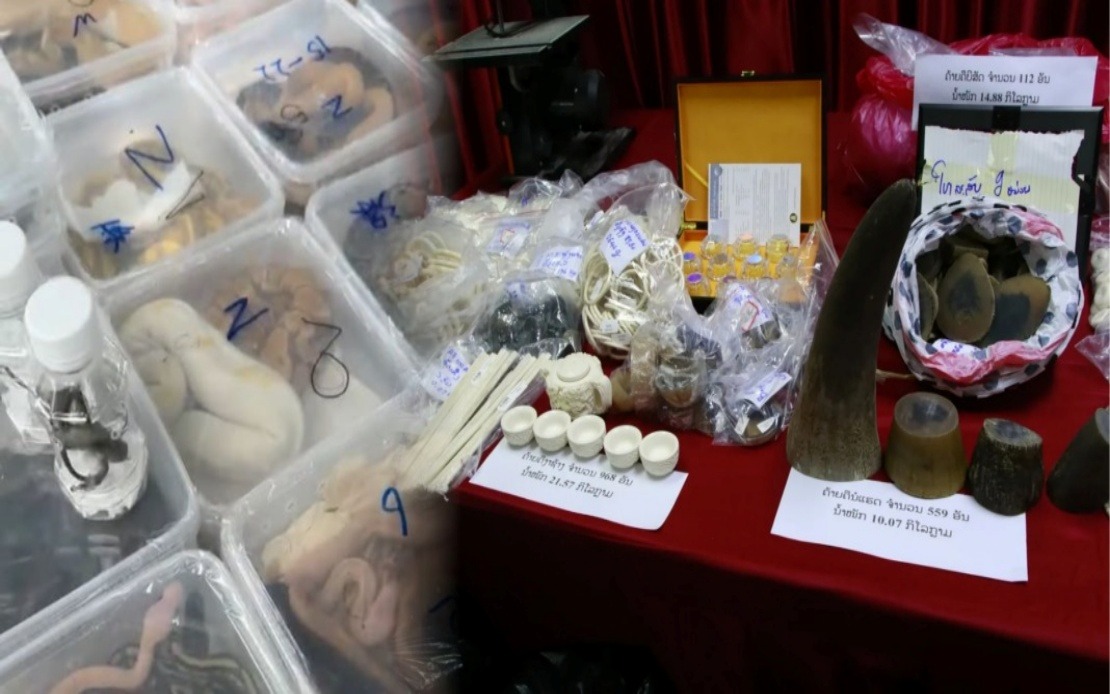
Recent enforcement operations in Laos have dismantled a substantial wildlife smuggling operation that was channelling endangered species across international borders into the lucrative black market. The Lao Wildlife Enforcement Network's discovery of the trafficking ring underscores the vulnerability of the region's borders to organised crime networks exploiting Southeast Asia's rich biodiversity for profit. The exposé comes as part of an intensified crackdown on smuggling routes that have made Laos a critical transit hub for illegal wildlife trade destined for regional and international markets.
The initial breakthrough occurred when authorities conducting operations in Luang Prabang Province, one of Laos's most visited tourist destinations, uncovered approximately 60 kilogrammes of suspected illegal wildlife materials. The haul revealed the sophistication of smuggling networks operating in the area, with seized items including purported ivory products, animal gallbladders harvested from protected bears, pangolin scales valued in traditional medicine, and rhinoceros horn components. The discovery also encompassed elephant skin derivatives packaged as powder, preserved hornbill heads, and various herbal remedies suspected of containing illegal wildlife ingredients. The range and quality of the contraband suggests organised criminal operations rather than opportunistic smuggling, indicating established distribution networks connecting suppliers to end-users.
Four days following the Luang Prabang seizure, wildlife rangers achieved an even more substantial breakthrough at the Vang Tao International Checkpoint in Champasak Province. Officers intercepted a shipment of 294 live wild animals that were being transported through this strategic border crossing linking Laos with Ubon Ratchathani Province in northeastern Thailand. The animals recovered included various turtle species, pythons, green snakes, gold-ringed cat snakes, and multiple lizard varieties, all species whose capture and export are prohibited under national and international wildlife protection regulations. This interception provided compelling evidence of the volume of live animal trafficking occurring through established border checkpoints, suggesting that enforcement gaps remain despite official oversight infrastructure.
The momentum of law enforcement operations extended into neighbouring Thailand, where in late May authorities arrested a Thai businesswoman operating a traditional medicine and souvenir retail establishment in Nakhon Phanom, a province adjacent to Laos. Thai investigators recovered more than 100 protected wildlife specimens from the shop, with investigators determining that the materials had been smuggled across the Lao border. This arrest demonstrated how trafficking networks integrate retail operations into their supply chains, allowing illegal products to be laundered into commerce through seemingly legitimate businesses. The connection between cross-border smuggling and retail sale highlighted the vulnerability of conventional commercial channels to exploitation by wildlife crime syndicates.
Earlier in May, Thai and Lao authorities collaborated to intercept another major smuggling attempt along their shared border, preventing the transit of 130 kilogrammes of processed elephant ivory and animal carcasses according to the Traffic Southeast Asia monitoring organisation. This seizure, occurring on May 16, illustrated the persistent targeting of megafauna species whose body parts command premium prices in traditional medicine and luxury goods markets. The frequency and scale of these interdictions over a concentrated timeframe suggested either an increase in smuggling activity or improved detection capabilities among enforcement agencies, though the sheer quantity of contraband intercepted indicated that substantial volumes likely evade detection.
Geographic and political factors position Laos as an exceptionally vulnerable smuggling corridor. The country shares terrestrial borders with five nations: Cambodia, China, Myanmar, Thailand, and Vietnam. This extensive frontier network creates multiple entry and exit points for trafficking operations whilst complicating unified enforcement strategies. Wildlife crime experts recognise that Laos's geographic situation, combined with its role as a major overland transit route between Southeast Asia and broader Asian markets, makes it an inevitable chokepoint in international wildlife trafficking networks. Traffickers exploit the country's position to source animals and products from across the region and channel them towards wealthy consumer markets, particularly in China and Vietnam where demand for traditional medicine ingredients and exotic pets remains robust.
The scale of global wildlife trafficking illuminates why Laos has become such an active smuggling zone. According to the United Nations Office on Drugs and Crime's World Wildlife Crime Report 2024, the illegal wildlife trade generates approximately US$10 billion (RM41 billion) in annual revenues globally. This valuation places wildlife trafficking alongside human trafficking, drug smuggling, and arms trafficking as one of the world's most lucrative criminal enterprises. The report identifies corruption as a fundamental enabler of wildlife trafficking operations, noting that without official complicity or negligence, smugglers would face substantially greater obstacles to moving contraband across borders. This corruption dimension renders enforcement efforts inherently challenging, particularly in countries with limited resources and institutional capacity.
The persistence of wildlife trafficking despite two decades of coordinated international and national enforcement initiatives demonstrates the structural resilience of smuggling networks. The UNODC report emphasises that global wildlife trafficking affects thousands of animal and plant species, threatening biodiversity across numerous ecosystems. However, enforcement agencies remain perpetually reactive, responding to discovered smuggling operations rather than dismantling trafficking networks at their source. The Lao operations represent tactical successes in border interdiction but do not address underlying demand drivers, the involvement of organised crime syndicates, or the profitability calculations that make wildlife smuggling attractive to criminal enterprises.
The species seized in recent Lao operations reflect the diversity of targets traffickers pursue. Pangolins, the world's most trafficked mammals, appear in multiple recent seizures, driven by demand for scales used in traditional Asian medicine despite scientific evidence questioning their therapeutic value. Elephants and rhinoceroses, iconic megafauna species facing extinction threats, remain priority targets because their ivory and horn components fetch extraordinary prices. Reptiles including pythons, various snake species, and turtles represent a separate trafficking stream destined for the exotic pet trade, particularly where enforcement against live animal smuggling proves weaker than controls on processed products. The simultaneous trafficking of multiple species categories indicates that smuggling networks operate flexibly, responding to market demand rather than specialising in particular commodities.
Regional cooperation has begun addressing the cross-border dimensions of wildlife trafficking, as evidenced by Thai-Lao coordination in recent operations. However, systematic challenges persist in aligning enforcement priorities, sharing intelligence, and maintaining consistent standards across jurisdictions. Cambodia, another major trafficking corridor, maintains inconsistent enforcement records, whilst Myanmar's political instability has reduced wildlife protection capacity. Vietnam, simultaneously a significant consumer market and trafficking source, faces institutional challenges in managing both demand reduction and border control. Building sustainable regional frameworks requires sustained diplomatic engagement, technical capacity-building, and resource allocation that many Southeast Asian governments struggle to prioritise alongside competing development demands.
The financial magnitude of illegal wildlife trade ensures that smuggling operations will persist unless interventions address demand-side factors and the profitability calculations that attract criminal networks. Enforcement alone, whilst necessary and symbolically important, cannot eliminate a US$10 billion annual industry without concurrent campaigns reducing consumer demand for wildlife products. Traditional medicine practitioners and consumers require education about the ecological consequences of wildlife sourcing and the availability of synthetic or plant-based alternatives. Simultaneously, source country enforcement must extend beyond border interdiction to address poaching within national wildlife protected areas, where initial capture of live animals or harvesting of body parts occurs. The recent Lao operations demonstrate growing enforcement capability, but sustainable wildlife protection requires integrated approaches addressing supply, demand, trafficking logistics, and the underlying corruption enabling these networks to flourish.