A Laotian court has charged a distillery owner in connection with the deaths of six foreign tourists who consumed tainted alcohol at a Vang Vieng hostel in November 2024, but the initial charges fall far short of expectations from the victims' families and their home governments. Denmark's foreign ministry announced Friday that the accused faces charges of selling food harmful to health and operating an illegally-run business, offences that carry penalties of between three months to four years imprisonment and financial fines upon conviction. The development has ignited international anger over what multiple governments view as a grossly inadequate legal response to a tragedy that claimed multiple young lives.
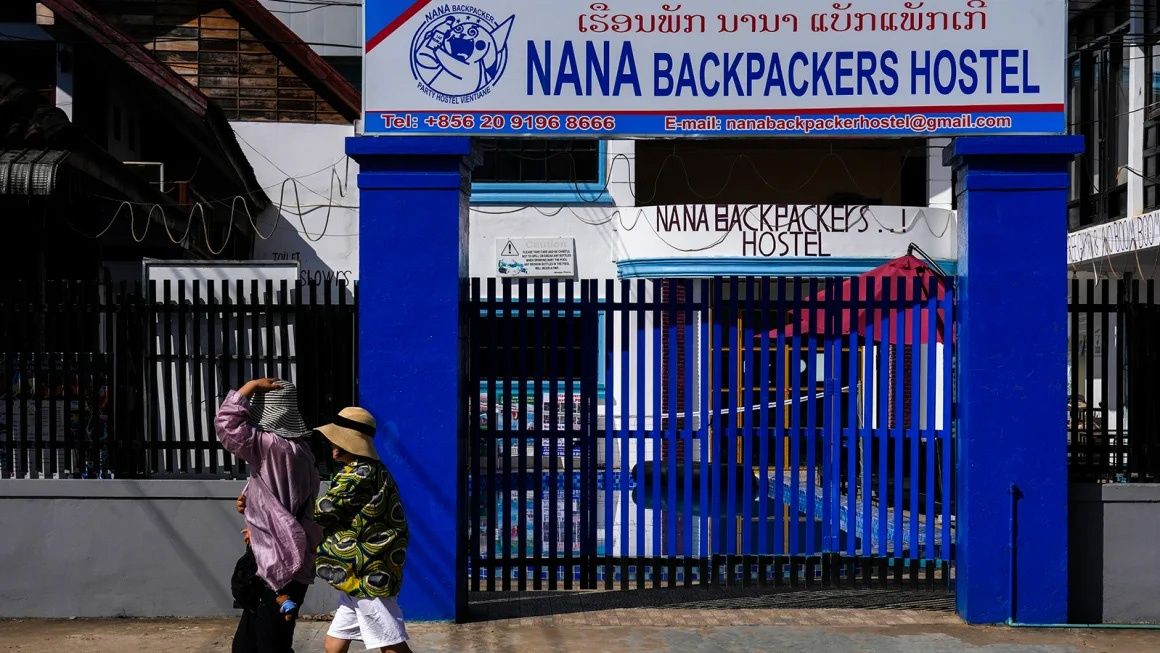
Among those killed were two Danish women in their early twenties: Anne-Sofie Orkild Coyman, 20, and Freja Vennervald Sorensen, 21. Australian teenagers Bianca Jones and Holly Morton-Bowles, both 19, also perished, along with British lawyer Simone White, 28, and U.S. citizen James Louis Hutson, 57, according to Laotian media reports. The victims had been staying at the Nana Backpacker Hostel, where they consumed complimentary shots of what was allegedly Laotian vodka before visiting other entertainment venues. When the Australian teenagers failed to check out as scheduled, staff discovered them gravely ill in their room. Both were evacuated across the border to Thai hospitals, where they subsequently died from methanol poisoning.
Danish Foreign Minister Lars Løkke Rasmussen expressed profound disappointment that the indictment fails to capture the severity and breadth of the catastrophe affecting numerous families across multiple nations. Acknowledging that establishing the precise legal burden of proof for more serious offences such as negligent homicide can prove complex, Rasmussen nonetheless emphasised the difficulty of accepting such lenient charges given the gravity of the outcome. The Danish ministry noted that the case will remain formally open for 15 years, preserving the possibility that authorities could pursue upgraded charges for negligent homicide if sufficient evidence materialises. However, no clarification was provided regarding whether the current charges relate to all six deaths or only some of them.
The Australian government's response has been notably forceful. Foreign Minister Penny Wong issued a statement expressing bitter disappointment that Laotian authorities were not pursuing the most serious available charges. Prime Minister Anthony Albanese dispatched a senior envoy to Vientiane on Friday specifically to lodge formal objections and convey the Australian government's expectations for a thorough investigation delivering justice for the deceased victims. Wong indicated that Australian officials had summoned Laos' ambassador to Canberra to underscore the seriousness with which the Australian government views this matter. The ministry's statement made clear that Australia regards the initial charges as fundamentally inadequate and intends to maintain diplomatic pressure for more substantive legal action.
Families of the deceased have been similarly vocal in their anguish and frustration. Michelle Jones, mother of Bianca Jones, addressed a news conference held Friday morning before the formal charges were announced, articulating the emotional devastation her family and others have endured. "It's like their lives didn't even matter," she said, describing her daughter and her peers as young people simply engaging in what represents a normal rite of passage for teenagers worldwide. She conveyed deep dismay that the legal response appeared so trivialised relative to the magnitude of loss. Shaun Bowles, father of Holly Morton-Bowles, characterised Friday's development as "mind-boggling," particularly given Laos' status as a major tourist destination attracting substantial numbers of young Australian and international travellers.
Bowles expressed concern that the Laotian government's handling of the case and what he perceived as efforts to minimise accountability would deter future visitors from considering the nation as a travel destination. His remarks underscore a broader anxiety that the inadequacy of the legal response signals to international travellers that Laos assigns limited value to visitors' safety and wellbeing. Parents of the Danish victims have also voiced serious concerns about the handling of their daughter's death. Vennervald Sorensen's family stated that they have received minimal information since the tragedy occurred, and that no autopsy was conducted on their daughter. Instead, the death certificate attributed her death to a natural cause—cardiac arrest—rather than methanol poisoning, a discrepancy that the family views as indicative of insufficient investigative rigour.
The parents of Vennervald Sorensen emphasised that their daughter had taken precautions throughout her travels and that the family remained unaware methanol poisoning represented a genuine risk to travellers. They have expressed a desire to raise awareness about this particular hazard, hoping that greater public knowledge might prevent similar tragedies in future. This personal testimony highlights how the incident has affected not merely individual families but has broader implications for how international tourists approach risk assessment when visiting Southeast Asian destinations. The families' insistence on more serious charges reflects a conviction that justice demands accountability proportionate to the harm inflicted.
Methanol poisoning represents a significant global public health concern, affecting not only tourists but predominantly impoverished local populations in regions where legitimate alcoholic beverages remain prohibitively expensive or where illicit alcohol production persists. Medical assistance organisation Doctors Without Borders has compiled statistics indicating that Indonesia, India, and Russia report the highest numbers of suspected cases worldwide. The substance is sometimes deliberately added to mixed drinks at disreputable establishments as a cost-cutting measure, serving as a cheaper substitute for ethanol, or it may accumulate as a byproduct of poorly distilled home-brew spirits that inadvertently contaminate commercial venues. The challenge of preventing such poisoning in developing economies where regulatory oversight and enforcement mechanisms remain weak has long troubled public health authorities and traveller safety advocates.
Vang Vieng, the town where this tragedy occurred, occupies a particular niche in Southeast Asian tourism as a destination especially popular among backpackers seeking nightlife, recreational activities, and adventure sports. Laos itself ranks among South-East Asia's economically poorest nations, yet maintains significant appeal for international tourists, particularly younger Australian and European travellers. The incident has raised uncomfortable questions about the adequacy of safety standards and regulatory enforcement in tourist establishments across the region. The apparent inadequacy of the legal response has prompted concerns that similar incidents might recur if authorities lack sufficient deterrent through serious criminal penalties.
Denmark has indicated that it will coordinate with the families of the deceased and other affected nations to determine appropriate next steps in pursuing justice. This multilateral diplomatic effort suggests that international pressure may yet influence the trajectory of the case, potentially compelling Laotian authorities to upgrade charges or conduct more thorough investigations. The involvement of four nations—Denmark, Australia, Britain, and the United States—in seeking accountability demonstrates that this incident transcends bilateral relations and represents a matter of international concern regarding tourist safety in Southeast Asia. The coming weeks and months will reveal whether such coordinated diplomatic engagement can overcome what appears to be a reluctance within Laos' legal system to pursue charges commensurate with the severity of the deaths.

