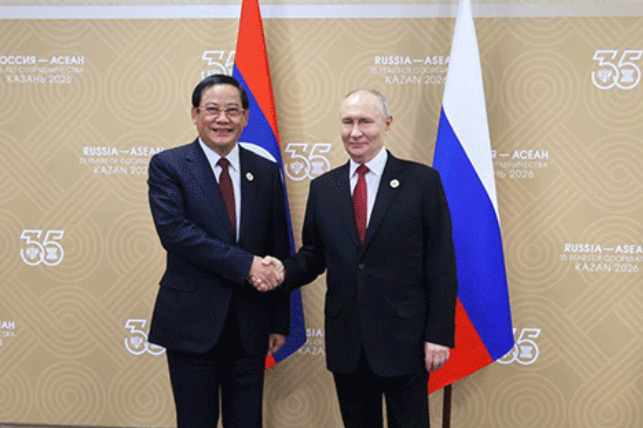
Laos and Russia have solidified their decades-long relationship through high-level diplomatic engagement, with Prime Minister Sonexay Siphandone meeting Russian President Vladimir Putin at the Russia-Association of Southeast Asian Nations Summit in Kazan. The encounter marks a significant moment in bilateral relations, particularly as Sonexay undertakes his first official visit to Russia since assuming office. The visit, which ran from June 14-17 and was conducted at the invitation of Russian Prime Minister Mikhail Mishustin, underscores the commitment both nations maintain to preserving and expanding their historical partnership at a time when geopolitical alignments across Southeast Asia remain fluid and consequential for regional stability.
The discussions between the two leaders emphasised the enduring foundations of Laos-Russia friendship, centred on mutual respect and balanced consideration of each nation's interests. President Putin articulated Russia's appreciation for Laos, highlighting how the relationship has weathered decades of shifting international circumstances while maintaining consistency in its core principles. This messaging carries particular weight given Russia's broader efforts to strengthen its standing within Southeast Asia, a region where Moscow seeks to counterbalance Western influence and secure strategic footholds. For Laos, a landlocked nation that has long relied on external partnerships to navigate regional complexities, the reaffirmation of Russian support provides a counterweight to other great power relationships and reinforces the country's policy of maintaining equidistant ties with multiple powers.
A landmark achievement emerging from the talks is the signing of an intergovernmental agreement on cooperation in the peaceful use of nuclear energy. This accord provides the legal framework for constructing a small nuclear power plant utilising Russian technology within Laos. The initiative represents a significant development in the nation's energy infrastructure and reflects Moscow's willingness to transfer technology to a trusted partner. For Laos, which faces mounting energy demands driven by rapid economic development and population growth, nuclear power offers a pathway to reduce dependence on hydroelectric dams whilst diversifying its energy portfolio. However, such development also carries long-term implications for regional energy security and environmental considerations that warrant careful monitoring by neighbouring countries and international observers.
The two leaders acknowledged Laos's diplomatic contributions to broader Russia-Southeast Asian relations, particularly as the region marks the 35th anniversary of Moscow's formal engagement with ASEAN in 2026. President Putin expressed gratitude for Laos's support in facilitating cooperation between Russia and the regional bloc, recognising the country's role as a diplomatic bridge. He also commended Laotian participation in Russian commemorative events, including President Thongloun Sisoulith's attendance at Victory Day celebrations in May and the earlier participation of a Lao People's Army unit in parades marking the 80th anniversary of Soviet victory in World War II. These gestures, whilst symbolic, reflect the mutual respect for historical narratives and shared security interests that characterise the bilateral relationship.
Cooperation across multiple economic and social sectors formed a substantial portion of the dialogue. The two nations discussed expanded engagement in energy development beyond nuclear initiatives, industrial partnerships, agricultural collaboration, mining operations, digital economy advancement, banking integration, transport infrastructure, tourism promotion, and educational exchange programmes. This comprehensive approach to bilateral relations demonstrates an effort to create multiple channels of interdependence and shared prosperity, extending beyond traditional security partnerships. For Malaysian observers and businesses, this expanding Laos-Russia relationship underscores the competitive landscape in Southeast Asia, where multiple powers vie for influence through economic engagement and infrastructure investment.
Educational collaboration has proven particularly valuable for Laos, with Prime Minister Sonexay specifically thanking Russia for its continuing provision of annual scholarships and training opportunities for Lao nationals, including government officials. The construction of the Laos-Russia Friendship School in Vientiane, a joint initiative between both countries that approaches completion, will further institutionalise educational ties and deepen people-to-people connections. Such human resource development programmes have long served as soft power tools for Russia in Southeast Asia, cultivating generations of policymakers and professionals with favourable views of Moscow. For the broader region, these educational investments by external powers merit consideration when assessing how future Southeast Asian leaders may approach international relationships and alignment.
Parallel discussions between Prime Minister Sonexay and Russian Prime Minister Mikhail Mishustin yielded similar affirmations of mutual commitment and expanding cooperation rooted in trust and reciprocal support. The premiers emphasised the steady expansion of bilateral ties, signalling that momentum remains strong across both diplomatic and practical implementation levels. Prime Minister Sonexay's participation in a Laos-Russia business forum during his visit demonstrates concurrent efforts to stimulate commercial engagement and attract Russian investment into Laotian enterprises. Such business-level dialogue remains crucial for translating political goodwill into tangible economic benefits that can raise living standards and drive sustainable development across Laos.
The symbolic dimension of the visit received expression through the ceremonial handover of two elephants to the Kazan Zoo, presented as gifts from President Thongloun and the Lao people marking the 65th anniversary of diplomatic relations and Russia Day on June 12. This gesture, whilst seemingly ceremonial, carries cultural significance and reinforces the personal warmth characterising relations between the leadership of both nations. Such symbolic acts, carefully choreographed in state visits, serve to humanise diplomatic relationships and generate positive media narratives that resonate domestically within both countries. For international observers, these moments provide windows into how nations wish to be perceived and what narrative frameworks they employ to justify their foreign policy choices.
The alignment demonstrated in discussions regarding international forums and regional issues reflects broader shared perspectives between Laos and Russia on matters of global governance. Both nations have indicated consonance on numerous regional and global questions, a development facilitated by their cooperative stance at the United Nations and participation in other international mechanisms. This convergence underscores how smaller nations like Laos navigate multipolar dynamics by aligning with powers that share similar interests in challenging Western-dominated international structures. For Malaysia and other ASEAN members, understanding these bilateral dynamics proves essential for comprehending how internal regional alignments may shift and influence collective decision-making within the bloc.
The timing of Prime Minister Sonexay's visit and his participation in the Russia-ASEAN Summit carried particular significance given contemporary geopolitical tensions and the strategic importance of Southeast Asia in great power competition. Laos's demonstrated commitment to deepening Russian ties, whilst simultaneously maintaining its ASEAN membership and relationships with other powers, exemplifies the sophisticated balancing act that smaller Southeast Asian nations must perform. The nuclear energy agreement specifically carries implications beyond bilateral cooperation, potentially establishing a template for Russian technological transfer to other Southeast Asian nations and reshaping regional energy dynamics. As the region continues developing economically and technologically, the choices made regarding energy infrastructure and technological partnerships will reverberate across decades, influencing not only bilateral relationships but broader regional security arrangements.
Looking forward, the strengthened Laos-Russia partnership suggests continued momentum in bilateral cooperation across multiple domains. The comprehensive nature of the engagement, spanning security, energy, education, and commerce, indicates that both nations view their relationship as strategically important and worthy of sustained investment. For Southeast Asia more broadly, the deepening of these ties represents one example among many of how external powers compete for influence and position themselves within the region's evolving landscape. Malaysian policymakers and business leaders must carefully monitor these developments, recognising that bilateral partnerships among neighbouring countries carry implications for regional integration, ASEAN cohesion, and the broader balance of power shaping Southeast Asia's future trajectory.

