A kindergarten in Langkawi has been instructed to halt all operations pending the completion of a police investigation into allegations of child neglect and improper treatment of pupils. The Social Welfare Department (JKM) issued the directive following serious complaints filed by a former kindergarten teacher, marking an escalation in oversight of child care facilities across Malaysia.
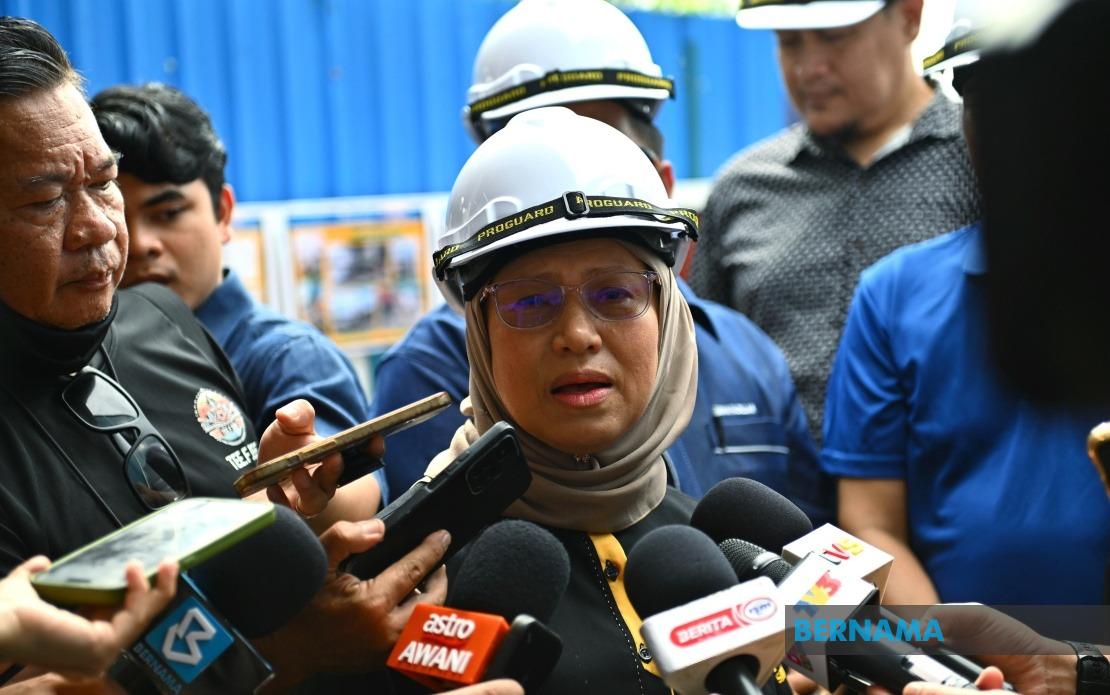
Women, Family and Community Development Minister Datuk Seri Nancy Shukri confirmed the temporary closure order during a visit to Kuching on July 18. Although the kindergarten falls under the Education Ministry's regulatory framework, Shukri underscored that JKM maintains jurisdiction over child protection matters and has taken a coordinating role in the investigation. The collaborative approach involves the police force, the District Education Office, and child protection officers deployed by the department to gather evidence and compile documentation necessary for the ongoing inquiry.
Investigators are examining the validity of allegations that reportedly include practices such as requiring children to rest on bare floors without bedding and, in some instances, confining them to toilet areas. Langkawi district police chief ACP Khairul Azhar Nuruddin revealed that officers are systematically reviewing closed-circuit television recordings from the premises and conducting interviews with witnesses to corroborate or refute the teacher's claims. The investigation operates under Section 31(1) of the Child Act 2001, which addresses offences related to child cruelty and neglect.
The minister's statement reflects growing government concern over standards at early childhood education centres nationwide. By publicly advising the kindergarten operator to cease activities and instructing parents to cooperate with police directives, JKM has signalled its commitment to prioritising child safety over operational convenience. Such decisive action also serves as a cautionary message to other facility operators regarding the consequences of failing to meet care standards.
Shukri noted that the kindergarten's management has been formally cautioned regarding the care, safety, and welfare standards required under relevant legislation and regulations. The department emphasised that further enforcement action, potentially including legal proceedings, would follow if the investigation uncovers evidence of statutory violations. This graduated response—from warning to operational suspension—demonstrates the government's structured approach to addressing failures in child protection infrastructure.
The case has broader implications for the early childhood education sector in Malaysia, particularly in East Malaysia where oversight mechanisms may be less developed than in peninsular states. The involvement of multiple government agencies reflects systemic gaps that become apparent only when complaints surface. Questions have emerged about how a kindergarten could allegedly operate without adequate facilities or supervision, suggesting that routine inspections by education authorities may require strengthening.
For parents with children previously enrolled at the facility, the experience raises anxieties about identifying trustworthy alternatives and obtaining assurance that their children have not suffered lasting harm. The Social Welfare Department has implicitly acknowledged parental concerns by prioritising transparency and encouraging cooperation with the police investigation. Families displaced by the closure may seek compensation or explanations, potentially resulting in civil claims against the kindergarten operator.
The timing of the allegation's emergence—reported by a staff member rather than a parent—suggests that institutional safeguards designed to protect children may not be functioning effectively. Employees sometimes observe problematic practices that parents might miss during brief drop-off and collection periods. The decision by the former teacher to report concerns publicly indicates either that internal complaint mechanisms failed or that staff felt sufficiently alarmed to escalate matters beyond the kindergarten's management.
Education authorities will likely conduct a thorough review of the kindergarten's operational licence, curriculum delivery, staff qualifications, and facility standards. Such reviews often reveal additional deficiencies beyond those explicitly mentioned in initial complaints. The government may also examine whether inadequate staffing ratios contributed to the alleged incidents, as understaffed facilities frequently struggle to maintain proper supervision and care standards.
The investigation's outcome will inform policy discussions about mandatory training for early childhood educators and clearer accountability mechanisms for centre operators. Malaysia has progressively tightened regulations governing childcare facilities, yet enforcement remains inconsistent across states. The Langkawi case provides an opportunity to identify regulatory weaknesses and implement corrective measures that enhance nationwide protection standards.
Parallel to the kindergarten matter, Shukri announced progress on the RM600,000 Pending Jetty upgrading project in Kuching, which stands approximately 90 per cent complete with expected delivery on August 24. The project represents the type of infrastructure investment that complements broader community development priorities. Shukri, who represents the Santubong parliamentary constituency, highlighted the jetty's role in linking Pending with the Kampung Muhibbah Seberang area, with remaining construction focused on completing two jetty sections and associated stairways spanning approximately 12 to 13 metres.
The convergence of child protection concerns and constituency infrastructure work in a single ministerial statement underscores the multifaceted portfolio of Malaysia's women and family affairs ministry. Balancing high-profile development projects with urgent child welfare investigations requires sustained attention to both immediate crisis management and systemic reform. As the kindergarten investigation proceeds, the government's handling of this case will substantially influence public confidence in Malaysia's capacity to safeguard vulnerable children within institutional settings.

