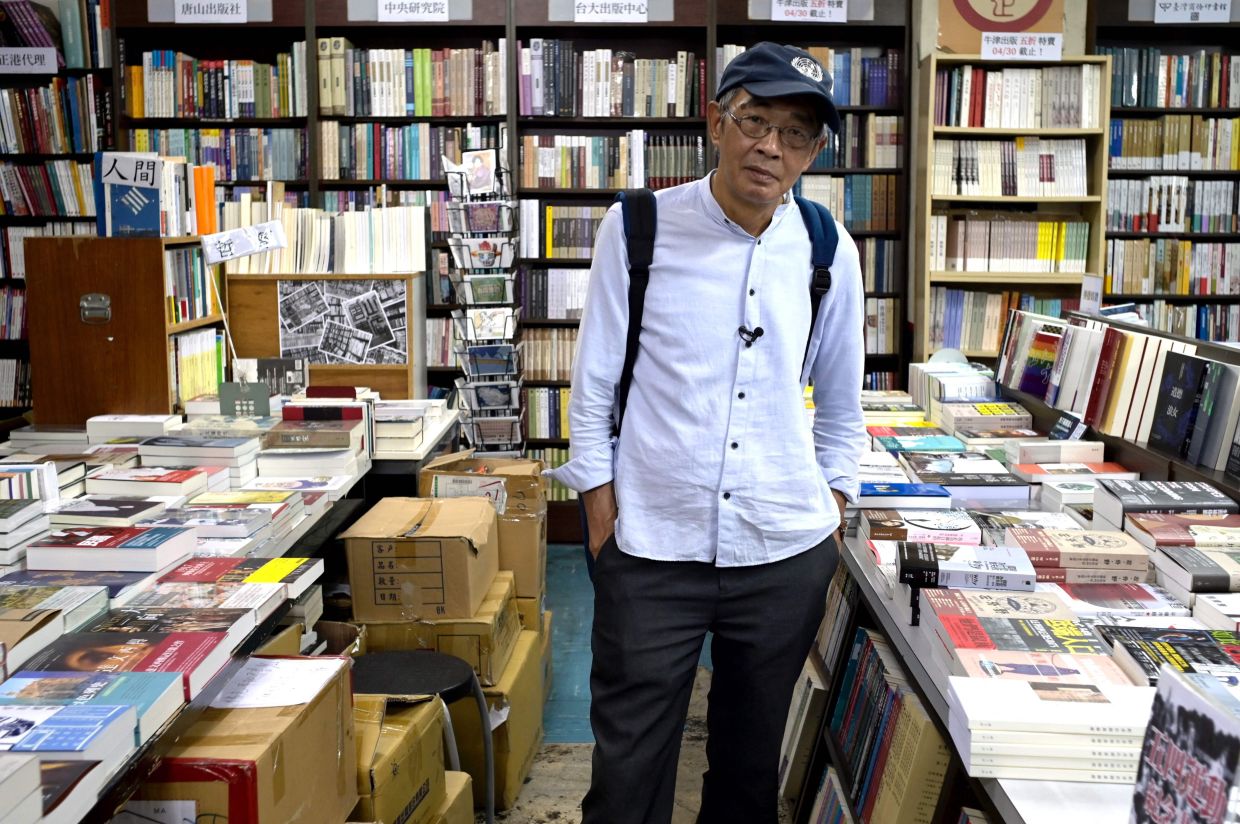
Lam Wing-kee, whose detention by Chinese authorities in 2015 transformed him into a symbol of Hong Kong's eroding freedoms, has died in Taiwan at the age of 70. The former manager of Causeway Bay Books in Hong Kong passed away Thursday evening at MacKay Memorial Hospital in Taipei, where he had been admitted just days earlier after suffering a cancer relapse. His death marks the conclusion of a remarkable chapter in the ongoing struggle between free expression and state control in the Asia-Pacific region, with implications that resonate far beyond the city where his ordeal began.
Lam's story gained international prominence when he became one of five people connected to Causeway Bay Books who vanished within weeks of each other in late 2015. The timing was no coincidence—the bookstore specialised in publications unavailable on mainland China, including sensational accounts purporting to expose the personal secrets and alleged misconduct of senior Chinese Communist Party leaders. This business model made the shop a lightning rod for Chinese state concerns about information control and political vulnerability. The disappearances immediately raised alarms among press freedom advocates, journalists, and international observers who recognised them as evidence of Beijing's expanding influence over Hong Kong's previously independent institutions.
What distinguished Lam's experience from that of his four disappeared colleagues was his willingness, upon eventual release, to publicly detail his detention and contradict official narratives. In a defiant news conference held in Hong Kong during 2016, Lam described being seized after crossing into Shenzhen in October 2015. He recounted a harrowing 13-hour train journey during which he remained blindfolded, followed by five months of confinement in an undisclosed location where rotating pairs of guards maintained round-the-clock surveillance. The forced televised confession that authorities demanded of him added another layer of psychological coercion to his ordeal. His testimony became a crucial firsthand account that international organisations documenting human rights abuses could point to when assessing Beijing's methods.
The fates of his four colleagues illustrated different dimensions of China's reach. Gui Minhai, a publisher and part-owner of Causeway Bay Books, disappeared from Thailand—demonstrating that the Chinese state's pursuit extended beyond Hong Kong's borders into Southeast Asia. He was eventually sentenced to a decade in prison on charges of illegally providing intelligence abroad, a conviction that appeared designed to send a message about the costs of disseminating politically sensitive information. The parallel disappearances of other booksellers suggested coordinated action rather than isolated incidents, reinforcing perceptions that this was a calculated campaign to neutralise a particular threat to information control.
Lam's decision to relocate to Taiwan in 2019 reflected growing apprehension about his legal position as Beijing's grip on Hong Kong tightened further. The city's autonomy, theoretically protected under the Sino-British Joint Declaration and the Basic Law, had been progressively eroded through political pressure, constitutional reinterpretation, and institutional capture. By moving to Taipei, Lam positioned himself within a jurisdiction where he could operate with greater security, though not without risk. In 2020, he reopened Causeway Bay Books in the Taiwanese capital, continuing his work in a location that offered greater protection for political expression. This relocation, in itself, exemplified how Beijing's expanding security architecture was forcing Hong Kong's civil society figures into exile across the region.
The implementation of Hong Kong's 2024 national security law has demonstrated that Lam's concerns were well-founded. In June of this year, Hong Kong police arrested two individuals operating a bookstore under suspicion of selling seditious publications and accepting funding from overseas political organisations. These arrests indicate that authorities are actively targeting those engaged in the very business—selling literature deemed problematic by Beijing—that precipitated Lam's original detention. The law's broad definitions of subversion and sedition have created a chilling effect on independent publishing and bookselling throughout Hong Kong, validating the fears that prompted so many to flee the city.
Taiwan's President Lai Ching-te responded to Lam's death with a Facebook tribute that transcended conventional condolences. Lai framed Lam's life as a testament to the value of freedom and democracy, noting that the bookseller had embodied through ordinary action an extraordinary commitment to principles that many take for granted. The Taiwanese president's statement positioned Lam within a broader narrative about democratic resilience and the generational responsibility to preserve freedoms under sustained pressure. For Taiwan, which faces its own security anxieties regarding cross-strait relations, Lam's story carried particular resonance—a concrete illustration of what freedom of expression means when it is threatened.
Lam's legacy extends beyond his individual actions to represent a broader category of Hong Kong figures displaced by the city's transformation. Since 2019, when massive pro-democracy protests engulfed Hong Kong, the political environment has undergone unprecedented change. What was once presented as a global financial centre with distinctive legal protections has increasingly resembled other mainland Chinese cities in terms of political control and surveillance. Activists, journalists, academics, and businesspeople like Lam have made the difficult decision to establish themselves elsewhere—in Taiwan, the United States, Canada, Australia, and throughout Southeast Asia. This diaspora carries with them firsthand knowledge of Beijing's security apparatus and practical understanding of how political repression operates.
The white rose left anonymously outside Causeway Bay Books in Taipei on the Monday following his hospitalisation served as a quiet gesture of remembrance and solidarity. Such symbols matter in contexts where open political expression has become risky. The flower referenced both Hong Kong's protest culture and international conventions of mourning, yet it also represented something more—an acknowledgment that Lam's cause remained relevant and that others recognised the stakes involved in defending intellectual freedom. In an era of increasing authoritarianism across parts of Asia, such small acts of defiance carry disproportionate significance.
For Malaysia and other Southeast Asian nations, Lam's death and the circumstances surrounding it present instructive lessons about the importance of protecting press freedom, judicial independence, and civil space. Hong Kong's transformation from a relatively open society to one characterised by pervasive security measures occurred within a single decade, driven by both external pressure and internal institutional changes. Malaysia's own experience with restrictions on speech and press freedom, though arising from different historical and constitutional contexts, illustrates how quickly democratic norms can erode when unchecked. Lam's life and death remind policymakers and citizens throughout the region that freedoms require constant vigilance and active defence across generations.

