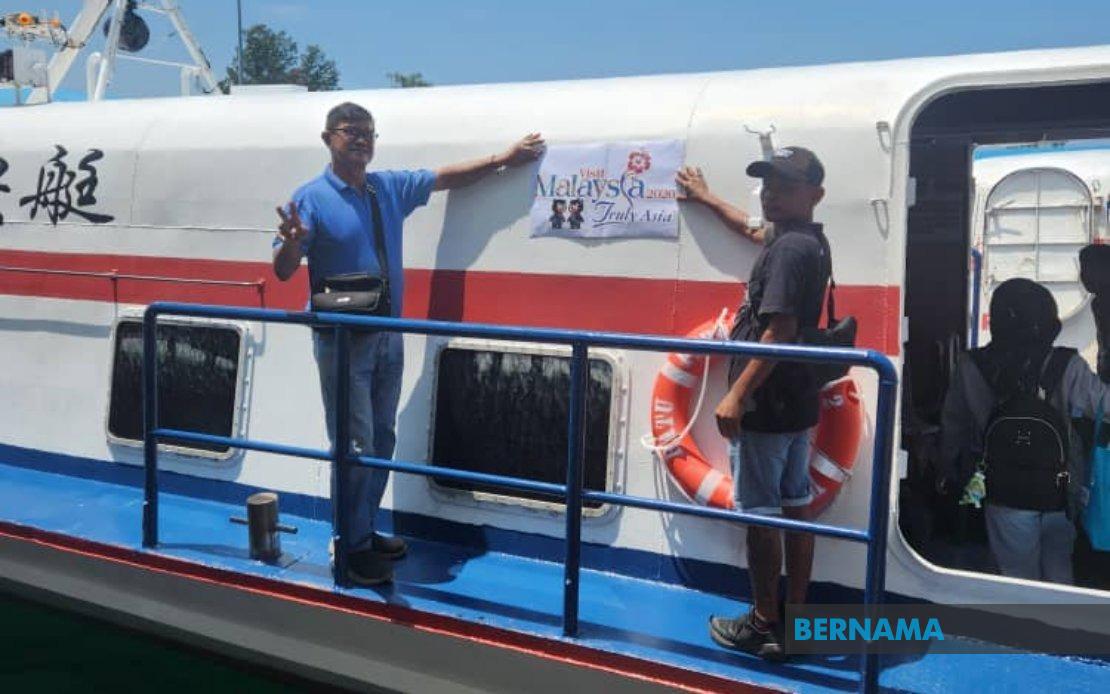
A critical maritime link serving thousands of students and patients across Brunei and Sarawak has come to an unexpected standstill. The passenger ferry service connecting Labuan and Lawas, which has operated uninterrupted for more than three decades, ceased operations on July 14 for a three-month suspension lasting until October 14. RPL Shipyard Co, the service operator, notified LDA Holdings Sdn Bhd that the temporary halt was necessary to address mounting operational challenges that have rendered the service financially unviable under current conditions.
The suspension marks a significant turning point for a transport corridor that has become essential infrastructure across the Brunei-Malaysia maritime frontier. Students from Sarawak attending higher education institutions in Labuan, particularly Universiti Malaysia Sabah (UMS) and Labuan Matriculation College, have long depended on this affordable sea route as their primary commuting option. Beyond the student demographic, residents from Lawas and neighbouring areas have similarly relied on the ferry to access healthcare services at Labuan Hospital, creating a multifaceted dependency on this single transport connection.
According to RPL Shipyard's formal notification, the operator confronts an interlocking crisis of fuel procurement difficulties and unsustainable cost structures. The company identified unresolved diesel supply complications as a primary impediment to consistent service delivery. Rather than attempting to operate under perpetually constrained conditions, management determined that a planned suspension would allow them to stabilise their balance sheet and restructure operational frameworks. The operator expressed conditional optimism that resumed service would become possible once environmental and financial conditions improved sufficiently to make passenger fares sustainable.
The financial mathematics underlying this decision reveal deeper supply-chain vulnerabilities affecting maritime operators across the region. Operating expenditures have surged dramatically, particularly in workforce compensation and vessel maintenance costs. Simultaneously, the ferry fares charged to passengers, frozen at levels that once reflected realistic cost recovery, have fallen progressively further behind genuine operational requirements. This classic squeeze between rising inputs and fixed revenues left the operator with diminishing alternatives beyond service withdrawal. The company's decision to suspend rather than continue at a loss demonstrates management's recognition that temporary cessation might preserve the business better than protracted financial deterioration.
LDA Holdings Sdn Bhd, the commercial entity managing Labuan International Ferry Terminal, received formal notification of the suspension and acknowledged the gravity of the situation. Noor Halim Zaini, chief executive officer of LDA Holdings, indicated that management understood the temporary nature of the closure while committing to urgent discussions with RPL Shipyard regarding the obstacles constraining operations and potential solutions. These conversations are scheduled to explore not merely when service might resume, but how sustainable commercial viability might be restored to this route.
The timing and duration of the suspension create practical complications for the affected communities. Students have suddenly lost reliable transport between their residential areas and educational institutions precisely as academic calendars intersect with travel commitments. Healthcare-seeking residents face disrupted access to specialist services at Labuan Hospital. The three-month timeframe through mid-October provides a compressed window during which alternative arrangements must be negotiated or passengers must discover substitute transport options.
From a regional policy perspective, this suspension illuminates broader challenges confronting small-scale maritime operators across Southeast Asia. Rising fuel costs, labour market pressures, and maintenance inflation consistently outpace revenue growth for passenger ferry services operating on fixed-fare schedules. Operators like RPL Shipyard, serving essential cross-border routes with limited passenger volumes, find themselves particularly vulnerable to cost-squeeze dynamics. The Labuan-Lawas corridor, despite serving significant student and medical passenger segments, apparently lacks sufficient combined demand or pricing flexibility to sustain profitability during periods of elevated input costs.
The precedent of a three-decade-long uninterrupted service makes this suspension noteworthy for stability-focused stakeholders in both Labuan and Sarawak. Infrastructure continuity of this duration creates entrenched usage patterns and dependency relationships within both communities. Sudden withdrawal forces passengers into unexpected adaptation, while longer-term uncertainty about whether normal service will genuinely resume by mid-October creates planning complications for students, patients, and occasional users. The conditional nature of RPL Shipyard's commitment to eventual resumption suggests that restoration remains contingent on improvements to diesel supply arrangements and cost structure rationalisation.
Governmental bodies in both jurisdictions face emerging pressures to engage constructively with the resumption challenge. Transport connectivity across the Labuan-Lawas route represents a service gap that private operators apparently cannot sustain independently under current price-cost configurations. Whether through subsidy mechanisms, pricing structure adjustments, or alternative operational arrangements, policymakers may need to explore whether this route merits intervention to restore service continuity. The three-month window provides opportunity for such discussions but relatively constrained timeframe for implementing substantive solutions.
Looking forward, the suspension underscores how international transport corridors serving students and patients require stability not typically provided through purely commercial arrangements. The Labuan-Lawas service demonstrates that even well-established routes with substantial passenger demand cannot necessarily sustain operations when cost pressures accumulate faster than fare revenues can expand. The coming months will indicate whether RPL Shipyard's operational restructuring and the broader improvement in fuel supply and cost environments permit genuine service resumption, or whether this three-month pause signals a longer-term reconfiguration of transport connectivity across this crucial maritime frontier.

