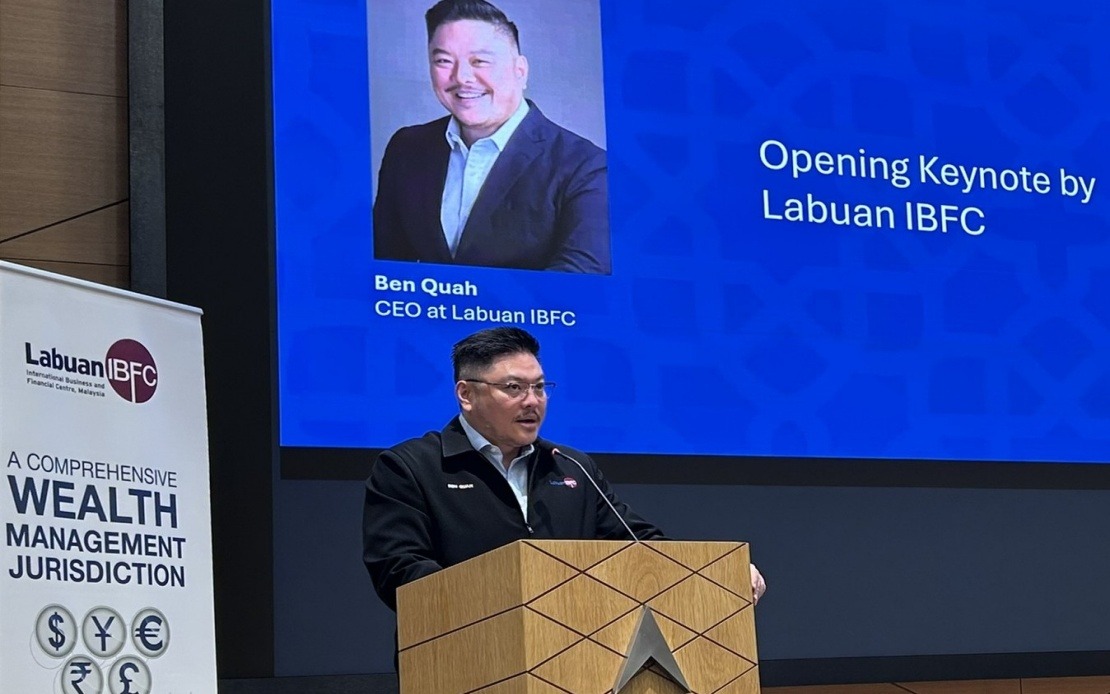
Three major industry organisations have joined forces to elevate standards in Islamic wealth planning across Malaysia and the broader region. Labuan IBFC Incorporated Sdn Bhd, the Association of Shariah Advisors in Islamic Finance Malaysia (ASAS), and the Society of Trust and Estate Practitioners (STEP) Malaysia convened the Islamic Wealth & Legacy Forum 2026 in Kuala Lumpur, bringing practitioners and specialists together to examine how families can effectively preserve and transfer assets while remaining compliant with Shariah principles. The initiative addresses a growing need among high-net-worth Muslim families seeking sophisticated solutions that bridge traditional Islamic inheritance frameworks with modern estate planning tools.
The collaborative forum reflects a broader recognition within Malaysia's financial services ecosystem that Islamic private wealth management requires integrated expertise. Rather than treating Shariah governance, estate administration and trust mechanisms as separate domains, the three organisations demonstrated how these elements must work in concert. Labuan IBFC Inc chief executive officer Ben Quah underscored this integration, positioning the Labuan International Business and Financial Centre as a pivotal infrastructure for families navigating increasingly complex global asset portfolios. His remarks acknowledged a fundamental shift in wealth dynamics: as families accumulate assets across multiple jurisdictions and currencies, cookie-cutter approaches to estate planning prove inadequate. Malaysian institutions must provide frameworks that offer genuine asset protection while ensuring intergenerational continuity, particularly for families with international business interests.
A central theme running through the forum's sessions was the concept of planning "beyond faraid"—a phrase that warrants careful unpacking for Malaysia's financial services community. Faraid, the Islamic system of prescribed inheritance shares, remains foundational to Muslim estate planning, yet increasingly sophisticated family structures, business arrangements and cross-border investments demand additional mechanisms. STEP Malaysia Branch chair Farah Deba articulated this nuance in her welcome remarks, emphasising that moving beyond faraid does not mean abandoning Islamic principles but rather recognising that faraid represents only one component of comprehensive estate administration. This framing matters significantly because it positions advanced Islamic wealth planning not as a departure from religious obligations but as their sophisticated extension—a distinction crucial for securing buy-in from conservative constituencies while modernising practices.
Practical challenges in Muslim estate administration formed the substantive core of the forum's opening session. Estate practitioners working with Muslim families frequently encounter situations where literal application of faraid shares produces outcomes misaligned with the deceased's documented intentions or family dynamics. These scenarios might involve family businesses requiring continuity, investment portfolios demanding professional management, or assets in multiple jurisdictions with conflicting legal frameworks. The forum examined how proper documentation, governance structures and strategic use of trusts can reconcile these tensions within Shariah boundaries. By elevating visibility of these real-world complications, the three organisations signal to the financial services profession that Islamic wealth planning demands equivalent expertise and professionalism as conventional estate administration.
The afternoon sessions shifted focus toward implementation mechanisms, exploring how various financial instruments serve wealth preservation and risk management objectives. Takaful products, trusts, and other structured arrangements were examined not as abstract options but as practical tools addressing specific family circumstances. This implementation-focused approach proves essential for Malaysia's market maturation. Many Muslim families possess aspirational wealth plans reflecting genuine Islamic intentions, yet lack access to practitioners capable of translating these intentions into functional legal and financial structures. By showcasing concrete implementation pathways, the forum equipped advisers with practical knowledge applicable to client relationships. The emphasis on liquidity management, asset protection and intergenerational transfer mechanics demonstrates how Islamic wealth planning has evolved from theological discussion into operational financial practice.
Shareah governance emerged as perhaps the forum's most significant conceptual contribution. ASAS exco member Yusaini Yusof's closing remarks framed governance as the mechanism ensuring that wealth structures remain authentically Islamic throughout their implementation lifecycle. This perspective prevents a common pitfall: families obtaining fatwas for estate plans that subsequently drift from their Islamic moorings during execution by non-Shariah-conscious advisers. Robust governance—encompassing regular Shariah reviews, documented decision-making processes, and specialist oversight—ensures that wealth transfer mechanisms consistently serve Maqasid Shariah, the overarching objectives of Islamic law. For Malaysia's regulatory and professional bodies, this emphasis suggests scope for developing formalised standards around Islamic wealth governance, potentially positioning Malaysian institutions as thought leaders in an area where Islamic finance has traditionally lagged conventional practice.
The partnership between these three organisations also carries strategic implications for Malaysia's positioning in the regional wealth management landscape. Labuan IBFC functions as an offshore financial centre offering structural flexibility, while ASAS represents Shariah expertise embedded within Malaysia's Islamic finance ecosystem, and STEP brings international best practices in estate administration. This convergence allows Malaysia to offer something competitors cannot easily replicate: offshore wealth structures crafted explicitly for Islamic compliance and tailored to Muslim family dynamics. As wealth management increasingly becomes a competition among jurisdictions, Malaysia's ability to integrate Shariah governance with international financial infrastructure provides distinctive competitive advantage, particularly for families across Southeast Asia, the Middle East and diaspora communities seeking trustworthy partners.
The memorandum of understanding between Labuan IBFC Inc and ASAS signals institutional commitment beyond a single forum. This formalised partnership establishes channels for ongoing collaboration, knowledge-sharing and standards development. Such arrangements matter because they translate episodic events into sustained ecosystem development. Professional communities evolve not through one-off conferences but through regular engagement, shared standards, and institutional mechanisms rewarding best practices. By anchoring their collaboration in formal agreements, these organisations demonstrate seriousness about elevating the profession and suggest future initiatives—potentially including certification standards, practice guidelines, or specialist training programmes—remain in development.
For Malaysia's wider professional community, the forum's messaging carries particular significance. STEP Malaysia chair Farah Deba's framing of the three organisations as providing distinct but complementary perspectives invites wealth managers, financial planners, legal advisers and Shariah specialists to view their roles as inherently interconnected. Siloed practice—where wealth managers handle investments without Shariah input, or Shariah advisers issue opinions divorced from practical implementation—becomes untenable in sophisticated Islamic wealth planning. This relational view of professional expertise suggests scope for educational initiatives, interdisciplinary dialogue forums, and client communication strategies emphasising the importance of integrated advisory teams. Malaysian professional bodies might consider how their own standards, qualifications and practice guidelines accommodate and incentivise this integrative approach.
The economic dimensions merit attention as well. Malaysia's Islamic finance sector, whilst globally significant, historically concentrated on banking and debt instruments. Private wealth management, estate planning and succession advisory represent relatively under-developed segments with substantial growth potential. High-net-worth Muslim families increasingly seek sophisticated planning services, yet supply remains constrained by practitioner scarcity and institutional fragmentation. By elevating the profile of Islamic wealth planning and demonstrating pathways for professional development, these organisations may catalyse market expansion. Labuan IBFC's positioning as an offshore platform for Islamic private wealth suggests deliberate strategy to capture a portion of this emerging market, particularly for families with assets and operations spanning multiple countries.
Regional dynamics also warrant consideration. Southeast Asia contains substantial Muslim populations with growing aggregate wealth, yet limited institutional infrastructure for Islamic private wealth management. Malaysia's advancement in this domain—demonstrated through forums like this and supported by institutional partnerships—positions the country as a potential regional hub for Islamic wealth planning expertise. Practitioners and families across Indonesia, Singapore, Brunei and other regional markets facing similar challenges may increasingly look to Malaysian institutions for benchmarks, guidance and service provision. This potential extends Malaysia's soft power influence in Islamic finance beyond conventional banking into the more intimate and strategically significant domain of family wealth.
Looking forward, the success of initiatives like the Islamic Wealth & Legacy Forum depends substantially on whether insights and frameworks developed by industry leaders permeate broader professional practice. Continuing education for advisers, client-facing communication materials, and institutional incentives encouraging Shariah-conscious estate planning all require sustained investment. The three organisations' demonstrated commitment through formal partnerships and professional engagement suggests awareness of this implementation challenge. As Malaysia continues developing its Islamic wealth management infrastructure, maintaining momentum toward genuine ecosystem transformation—rather than treating forums as isolated events—will determine whether these institutions succeed in genuinely elevating professional standards across the sector.

