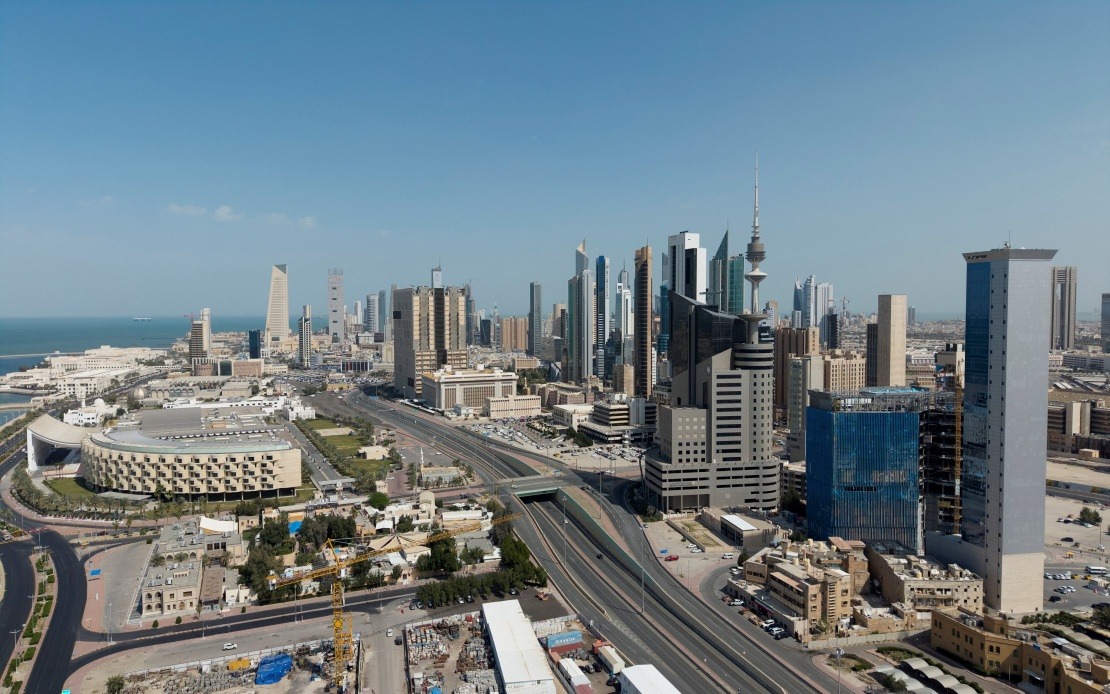
Kuwait has launched a dedicated emergency financing mechanism with an initial allocation of US$100 million to address infrastructure damage sustained during heightened regional military tensions. The Kuwait Emergency Response Fund, established through the Kuwait Fund for Arab Economic Development (KFAED), represents a strategic policy response to protect national assets and accelerate reconstruction efforts across the Gulf state's critical sectors.
Foreign Minister Sheikh Jarrah Jaber Al-Ahmad Al-Sabah unveiled the initiative at a public forum, positioning it as a cornerstone of Kuwait's broader crisis management framework. The fund establishes a formal institutional structure for identifying, evaluating, and financing reconstruction projects, moving beyond ad-hoc emergency spending toward a coordinated national recovery strategy. This approach demonstrates how Gulf states are increasingly professionalising their response mechanisms to geopolitical shocks that threaten economic infrastructure.
The decision to establish this dedicated facility follows February's escalation of regional military actions, when the United States and Israel conducted joint strikes against Iran. The subsequent Iranian retaliation through coordinated missile and drone attacks targeting Israeli positions and American military installations across neighbouring countries created significant security concerns for Gulf states positioned along contested waterways and air corridors. Kuwait, situated directly across from Iran, faces particular vulnerability to cross-border military actions and their economic consequences.
Waleed Al-Bahar, Acting Director General of the KFAED, emphasised that the fund's creation implements a formal cabinet decision, indicating high-level governmental commitment to infrastructure restoration. The fund will operate on a competitive basis, requiring government agencies and private sector entities to submit project proposals for evaluation and prioritisation. This selection mechanism ensures that limited resources are allocated to initiatives offering the greatest strategic and economic returns, while also encouraging private sector participation in national recovery efforts.
The timing of Kuwait's announcement carries broader significance for Southeast Asian readers and investors. Gulf states remain critical players in regional economic systems, with their stability directly influencing energy markets, trade flows, and investment patterns affecting Malaysia and other ASEAN economies. Military tensions that prompt emergency infrastructure spending can trigger broader economic uncertainty, including potential disruptions to shipping lanes, energy supplies, and financial flows that link Middle Eastern economies to Asian markets.
By establishing this formal emergency financing structure, Kuwait signals its intention to maintain economic continuity despite external security pressures. The fund's existence provides reassurance to international investors and trading partners that the country possesses institutional mechanisms to absorb shocks without cascading economic dysfunction. This institutional resilience contributes to broader regional stability, as investor confidence in one Gulf state's crisis management capabilities extends to perceptions of the entire region's economic viability.
The appeal for private sector contributions alongside government resources reveals Kuwait's desire to distribute financial burden while leveraging private sector efficiency in project execution. Private firms often bring superior project management expertise, faster implementation timelines, and innovation in infrastructure solutions. By explicitly soliciting private participation, Kuwait creates incentive structures encouraging businesses to invest in their own national recovery, transforming what could be viewed as burden-sharing into opportunity creation.
The fund's emphasis on emergency response and crisis preparedness reflects evolving perspectives on infrastructure investment in conflict-prone regions. Rather than viewing reconstruction purely through a development lens, Kuwait treats it as an essential security function requiring dedicated institutional capacity. This reframing justifies rapid deployment of capital and streamlined decision-making processes that might be impossible within conventional development finance frameworks governed by lengthy evaluation periods.
For Malaysia and other ASEAN states, Kuwait's approach offers instructive lessons in institutional design for managing external shocks. As Southeast Asian economies face diverse security challenges from maritime disputes to terrorism, establishing dedicated emergency finance mechanisms separate from regular budgetary processes provides flexibility and rapid responsiveness. Kuwait's model demonstrates how institutional innovation can protect economic stability even when geopolitical circumstances remain uncertain or volatile.
The US$100 million initial capitalisation represents a significant but measured commitment, suggesting Kuwait views this as an ongoing programme rather than one-time allocation. Future fund contributions will likely follow as damaged sites are assessed and project lists are finalised. The staged approach allows Kuwait to monitor effectiveness and make course corrections based on implementation experience, rather than committing the full financial burden upfront without comprehensive damage assessments.
Regionally, this initiative may inspire other Gulf Cooperation Council members to establish similar mechanisms, potentially creating coordinated frameworks for cross-border infrastructure recovery. Should multiple Gulf states adopt comparable emergency financing structures, the resulting institutional coordination could enhance the region's collective capacity to respond to shared security challenges, benefiting the broader international economy including Asian trading partners dependent on Gulf stability.

