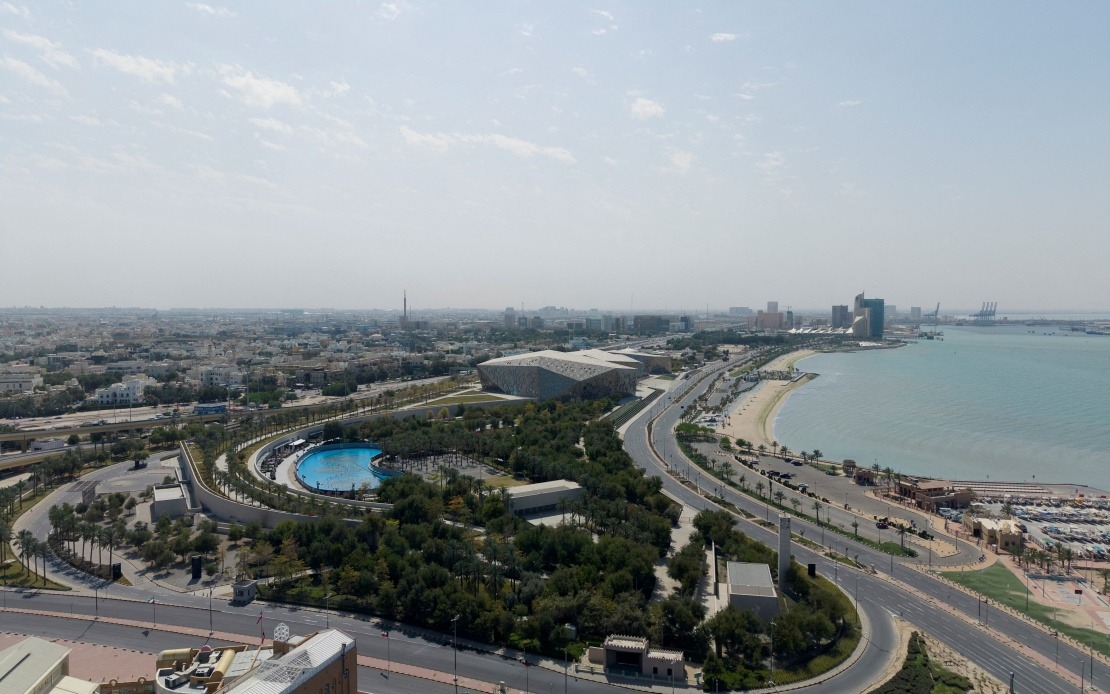
The Arabian Gulf faced a dramatic security escalation in the early hours of Wednesday as Kuwait's military activated air defence systems to counter what it identified as hostile drone incursions across Kuwaiti airspace. The country's armed forces issued a public alert cautioning residents that explosive sounds reverberating across populated areas stemmed from active air defence interceptions rather than direct strikes, while urging the population to adhere to safety protocols issued by the relevant authorities.
The Kuwaiti military characterised the incoming unmanned aerial vehicles as Iranian in origin, though officials did not immediately provide specifics regarding the sophistication of the drones or their intended targets. The operation highlighted the vulnerability of Gulf nation infrastructure to aerial assault, a concern that has intensified significantly over the past eighteen months as regional powers have developed and deployed increasingly capable unmanned systems.
In a parallel incident, authorities in Kuwait confirmed that firefighting personnel had successfully contained a fire at an undisclosed location that had been targeted during what they described as the Iranian strike. Despite the nature and location of the facility remaining classified, the rapid containment suggested either limited damage or that the site possessed prepared emergency response protocols. No civilian casualties were reported from the incident, though the absence of injury figures does not necessarily indicate minimal impact given the opacity surrounding the attack.
The developments in Kuwait coincided with heightened alert status across the broader Arabian Gulf region, as Bahrain's Interior Ministry simultaneously activated air raid sirens and issued instructions to citizens and expatriate residents to proceed to designated safe locations. The almost simultaneous nature of the alerts in both countries suggested a coordinated or widespread Iranian operation rather than an isolated incident, indicating a deliberate escalation in tactics by Tehran. Bahrain's response followed its own military's announcement the previous day that air defence systems had successfully neutralised what it characterised as Iranian aerial attacks directed at the kingdom.
The current crisis represents a dangerous inflection point in the persistent standoff between Washington and Tehran that has destabilised the Gulf for the past two years. American military operations against Iranian targets and subsequent Iranian retaliation against US installations stationed throughout the region have created a volatile cycle where miscalculation or tactical escalation could rapidly spiral beyond diplomatic control. The involvement of smaller Gulf nations such as Kuwait and Bahrain—traditionally seeking to maintain careful neutrality and avoid direct confrontation with larger powers—underscores how the broader US-Iran conflict has begun spilling into their sovereign territory and threatening civilian populations.
The targeting of Kuwaiti infrastructure appears designed to impose costs on regional partners that host American military presence and intelligence infrastructure. Kuwait has historically hosted substantial US military assets, including air bases and command centres critical to American operations across the Middle East. By striking targets within Kuwait rather than US facilities directly, Iran may be attempting to raise the political and economic costs for regional governments that facilitate American operations, potentially fracturing the coalition arrayed against Tehran.
Attempts to de-escalate the crisis have proven ineffective despite a Pakistani-mediated memorandum of understanding that was negotiated to establish mechanisms for conflict resolution and lasting peace. The persistence of attacks despite such agreements suggests that either the understanding lacks enforceability mechanisms or that significant actors remain committed to confrontation regardless of diplomatic frameworks. The failure of mediation reflects deeper structural tensions between regional powers over competing visions for Gulf security architecture.
For Malaysia and Southeast Asian observers, the Kuwait and Bahrain incidents serve as a potent reminder of how crises in the Middle East and Arabian Gulf can reverberate across global energy markets and international trade routes. Malaysia, as a major petroleum importer and a nation whose shipping routes depend on stable passage through waters proximate to the Gulf, faces indirect but substantial consequences from regional instability. Disruptions to Gulf oil production or threats to tanker traffic through the Strait of Hormuz translate quickly into energy price volatility that affects Malaysian manufacturing, transportation costs, and economic growth.
Moreover, the drone and missile technologies being deployed across the Gulf represent capabilities that could eventually diffuse to other regions and non-state actors. Malaysian defence and security planners monitor such developments closely, recognising that mastery of unmanned aerial systems and precision strike capabilities represents a frontier in military technology that smaller powers can acquire more easily than traditional air forces or naval systems. The operational effectiveness demonstrated by Iranian drones in the Gulf theatre carries implications for regional security planning across Southeast Asia.
The broader geopolitical dimension of the escalation also carries implications for ASEAN nations pursuing pragmatic relationships with both Washington and Beijing. Intensifying US-Iran confrontation tends to polarise regional alignment and complicates the delicate balancing act that Southeast Asian governments attempt to maintain. Countries like Malaysia must navigate pressure to take sides in conflicts that lie outside their immediate strategic interests while protecting their citizens and commercial interests from collateral damage of proxy conflicts and regional power competition.
The limited transparency surrounding the specific targets and damage from the latest attacks complicates assessment of escalation dynamics and Iranian intentions. Whether these strikes represent a measured response to prior US actions or represent a new threshold of Iranian offensive capability remains unclear, but the employment of drone swarms and the simultaneous alert status across multiple Gulf states suggests careful coordination by Tehran rather than spontaneous reactions. This indicates a strategic patience that contrasts with crisis escalation rhetoric often employed in public communications.
The humanitarian implications deserve equal attention to strategic analysis. Civilian populations in Kuwait, Bahrain, and across the region face genuine security threats from kinetic operations, and the activation of air raid sirens and safety protocols reflects the sobering reality that the US-Iran conflict has transitioned from purely military realm into domains affecting everyday civilian life. Families in Kuwait required to shelter from incoming drones experience the tangible costs of regional power competition in their daily existence.

