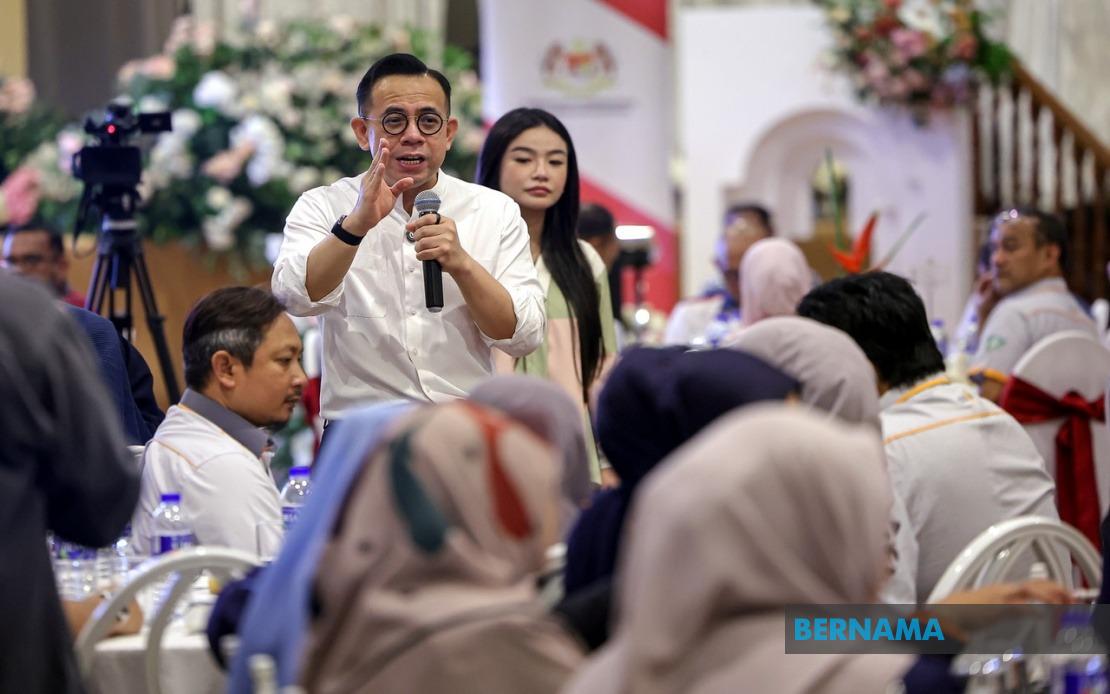
The Ministry of Entrepreneur Development and Cooperatives has made substantial progress in its commitment to strengthen Malaysia's entrepreneurial ecosystem, deploying nearly RM7 billion during the opening half of 2026 through its flagship Power Up 10K initiative. Minister Steven Sim announced that the funds have reached more than 213,000 micro, small and medium enterprises across the country, underscoring the government's determination to nurture business activity at the grassroots level during an increasingly complex global economic environment.
The year-to-date disbursement represents roughly half of KUSKOP's ambitious RM15 billion target for the full calendar year, indicating a steady pace of implementation across the ministry's various support and financing channels. This trajectory suggests the organisation is well-positioned to meet or potentially exceed its annual goals, pending no significant operational disruptions in the remainder of 2026. The scale of the rollout highlights the government's recognition that MSMEs, which form the backbone of Malaysia's economy and employment base, require consistent capital infusions and programmatic support to maintain competitiveness.
Negeri Sembilan has emerged as a particularly successful deployment zone within this national effort. The state-level implementation of the Power Up programme has channelled RM345 million to more than 6,600 local entrepreneurs, demonstrating that government assistance mechanisms are functioning effectively at the ground level. This regional success provides a useful case study for how federal support structures can be operationalised through state agencies, offering practical evidence that bureaucratic machinery is capable of translating ministerial directives into tangible economic benefit for business operators.
Minister Sim framed the initiative as a critical response to contemporary economic volatility, noting that resilience in the MSME sector depends on both external macroeconomic conditions and domestic policy frameworks. While Malaysia cannot insulate entrepreneurs from phenomena such as global oil price fluctuations or international trade disruptions, the government can meaningfully reduce the regulatory and compliance burden that these businesses face. This philosophical approach suggests a shift toward recognising that competitiveness stems not only from capital availability but from creating an operating environment where administrative friction does not compound external challenges.
The ministry has articulated a strategic reorientation aimed at transforming all KUSKOP agencies into proactive service delivery platforms rather than passive responders to entrepreneur inquiries. This represents a notable operational philosophy, emphasising that frontline government bodies should take initiative in identifying eligible beneficiaries and actively promoting available schemes rather than waiting for applicants to navigate bureaucratic processes independently. For many small business operators, particularly those in rural or underserved areas, such proactive outreach can be the difference between accessing capital and remaining unaware that support exists.
To operationalise this new direction, KUSKOP has prioritised three interconnected objectives: expanding the resource base available to entrepreneurs, streamlining public service delivery mechanisms to reduce processing delays, and systematically lowering compliance costs imposed through regulatory requirements. These targets acknowledge that administrative efficiency improvements can function as an implicit form of business support, freeing entrepreneurial time and capital for productive activities rather than regulatory navigation. The emphasis on reducing compliance burdens reflects growing recognition across Southeast Asian governments that excessive bureaucratic overhead disproportionately affects smaller operators who lack dedicated compliance departments.
Minister Sim's exhortation to state-level agencies to engage in competitive fund disbursement dynamics introduces an interesting governance mechanism. By encouraging friendly competition among regional KUSKOP bodies to accelerate their distribution timelines, the ministry leverages institutional motivation to improve performance without necessarily requiring additional external incentives. This approach assumes that agencies will respond positively to a narrative framing rapid disbursement as an indicator of organisational effectiveness and public service commitment, while potentially internalising the reputational benefits of early delivery against targets.
The promotion strategy articulated by the minister encompasses both digital and traditional channels, recognising that entrepreneurs span diverse demographics and communication preferences. Roadshows, social media campaigns, and physical outreach efforts together constitute a multimedia awareness offensive designed to ensure that information about schemes and facilities penetrates beyond formal business networks to reach sole proprietors and informal operators who might otherwise remain unaware of government support. For Malaysia's diverse entrepreneurial base—spanning urban professionals, suburban traders, and rural producers—such layered communication strategies are essential for equitable programme reach.
For Malaysian policymakers and business stakeholders, the KUSKOP initiative carries several implications. The scale of capital deployment signals genuine government commitment to MSME development, moving beyond rhetorical emphasis toward substantial fiscal commitment. However, the programme's ultimate impact depends on whether disbursed capital translates into genuine business expansion or merely substitutes for private financing without generating incremental economic activity. Monitoring not only deployment volumes but outcomes—such as employment generation, sales growth, and enterprise survival rates—will be crucial for evaluating whether the RM15 billion annual investment generates proportionate economic returns.
Regionally, Malaysia's approach offers a model for other Southeast Asian economies wrestling with how to structure MSME support programmes. The emphasis on regulatory cost reduction, agency proactivity, and integrated financing channels reflects lessons increasingly recognised across the region. For neighbouring countries such as Indonesia, Thailand, and the Philippines, where MSME sectors face similar competitive pressures and where access to capital remains a persistent constraint, Malaysia's operational framework provides a demonstration case worth studying.
Looking ahead, sustaining the momentum of the Power Up 10K initiative will require not only continued budgetary allocation but ongoing assessment of whether deployed capital reaches truly underserved segments of the entrepreneurial population or concentrates among relatively formal, already-connected businesses. The programme's success ultimately hinges on whether KUSKOP agencies genuinely shift toward entrepreneurial ecosystem stewardship or whether the initiative remains largely a capital delivery mechanism without transforming the underlying institutional culture. The coming months will reveal whether this initiative generates lasting structural improvements in Malaysia's MSME support infrastructure.

