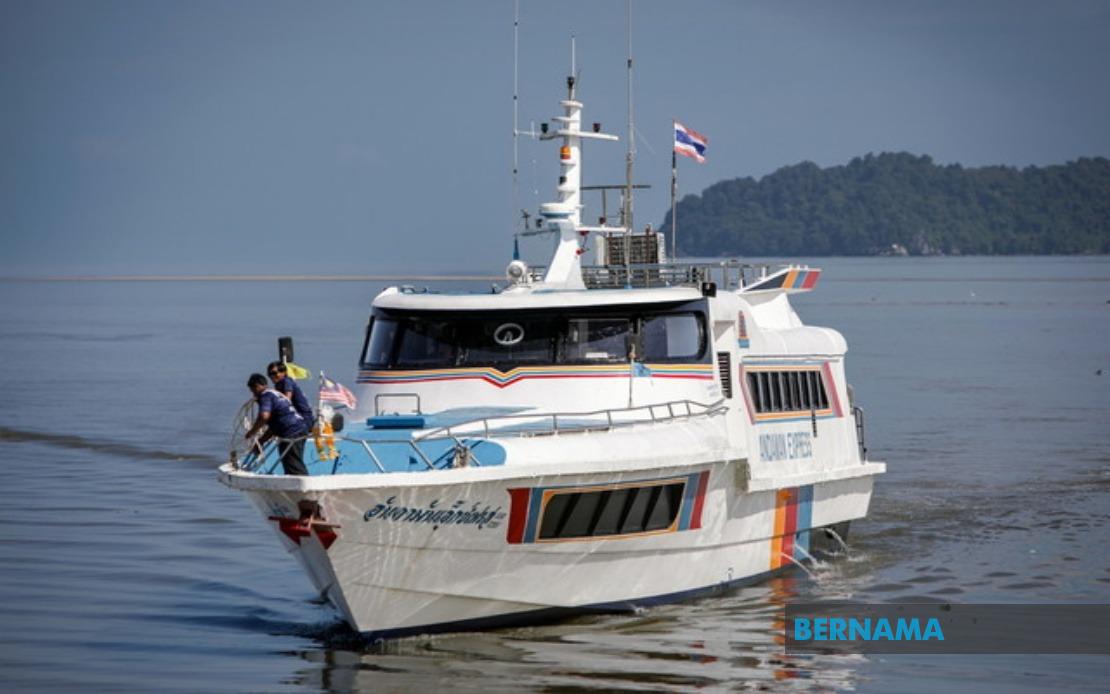
The maritime crossing between Kuala Perlis in Malaysia and Satun in Thailand will resume regular passenger and vehicle operations beginning Thursday, July 9, ending a suspension that stretches back to the global pandemic shutdown. The reinstatement of this sea route represents a significant milestone in restoring connectivity across the Andaman Sea region and comes as both nations prioritise economic recovery in their border communities.
Perlis Menteri Besar Abu Bakar Hamzah outlined the strategic vision for the reopened ferry service during a site visit to Tammalang Jetty in Satun, where officials conducted a full operational simulation to test safety protocols and border procedures. Rather than viewing the ferry as a mere transport link, state leadership frames it as a catalyst for deeper cross-border collaboration centred on heritage tourism and cultural exchange. The initiative seeks to position three UNESCO-designated geopark regions—Perlis Geopark, Satun UNESCO Global Geopark, and Langkawi UNESCO Global Geopark—as an integrated destination cluster that enhances appeal to international visitors.
The administrative groundwork has been thoroughly prepared. Abu Bakar emphasised that a tri-partite committee comprising representatives from Perlis, Satun, and Langkawi will be established to coordinate tourism marketing efforts and ensure policy alignment across jurisdictions. This governance structure addresses a longstanding challenge in regional tourism development: the fragmented nature of border areas where multiple authorities must align schedules, regulations, and promotional strategies. By formalising coordination through a dedicated committee, both governments signal commitment to preventing the logistical silos that often undermine cross-border initiatives.
The operational launch will be deliberately measured. Rather than immediately scaling the service to multiple daily departures, the ferry will operate with a single voyage each direction, allowing operators to establish rhythm, train staff, and identify operational bottlenecks before expansion. This measured approach reduces risks of service interruptions that might damage confidence in early-stage cross-border transport initiatives. Frequency increases will follow demand patterns, meaning that robust uptake from tourists and regional traders will directly determine when additional slots become available.
Fare competitiveness has emerged as a central concern for state officials, reflecting awareness that pricing can determine whether the ferry attracts leisure travellers or remains primarily a utilitarian link. Abu Bakar confirmed that Perlis is actively negotiating with ferry operators to maintain reasonable tariffs and is exploring introductory discounts during the initial operational phase. Such promotional fare strategies—common in newly reopened transport corridors—create windows of opportunity to build passenger habits and demonstrate demand to potential investors in upgraded facilities.
Capital investment in shore infrastructure accompanies the service resumption. The Kuala Perlis Roll-on-Roll-off Terminal is undergoing substantial upgrades, including dedicated vehicular routes designed to streamline the loading process for cars and motorcycles traversing the crossing. These improvements extend beyond mere convenience; they signal confidence in the route's viability and reflect recognition that cross-border vehicle transport could generate revenue alongside passenger fares, particularly if the geopark collaboration succeeds in attracting adventure tourists with their own transport.
Regulatory harmonisation represents perhaps the less visible yet most critical dimension of this reopening. The simulation tested coordination among Malaysia's Royal Customs Department, Immigration Department, and Marine Department alongside Thai counterparts, confirming that international standards for border checks, vessel safety, and emergency protocols have been synchronised. For Malaysian travellers, this means the ferry crossing will entail familiar customs and immigration procedures rather than experimental arrangements, reducing uncertainty that might otherwise deter initial usage.
The resumption arrives as both Malaysia and Thailand pursue regional integration frameworks that prioritise people-to-people connectivity. Satun province, situated at Thailand's southwestern tip, remains relatively underdeveloped compared to tourist-saturated zones further north, meaning cross-border visitor flows could meaningfully benefit local economies. Similarly, Perlis—Malaysia's smallest state—has historically struggled with tourism profile despite genuine geographic and cultural assets. The geopark partnership leverages geological heritage as a differentiation strategy, moving beyond the beach-resort model that dominates Langkawi toward educational tourism and geological exploration.
For Malaysian travellers, the reopened ferry provides an alternative route to Thailand that bypasses the road networks converging on Bukit Kayu Hitam and offers direct maritime access to rural Satun's limestone formations and national parks. The crossing time and competitive pricing relative to driving will determine adoption rates. For Thai operators, Malaysian visitors represent a demographically valuable market segment with disposable income and established travel habits, potentially higher-yielding than domestic traffic.
The success of this initiative will depend partly on soft factors beyond government control: weather seasonality, airline pricing to the region, and pandemic-related anxieties about enclosed maritime travel. Yet the coordinated preparation evident in the simulation, the commitment to graduated scaling, and the framing of the ferry as part of an integrated tourism zone suggest serious institutional commitment rather than opportunistic reopening. If the committee structure functions effectively and promotional efforts gain traction, the Kuala Perlis-Satun crossing could become a model for how Malaysia and Thailand deepen regional connectivity through heritage-based tourism cooperation.
The ferry's resumption on July 9 marks not simply a return to pre-pandemic operations but potentially the beginning of a more ambitious phase of cross-border integration. Whether the initiative fulfils that promise will become evident within months as passenger volumes and feedback inform decisions about frequency expansion and capital investment. For now, the successful simulation and comprehensive regulatory preparation suggest that both nations approach this reopening with greater intentionality than many pandemic-era transport resumptions, viewing maritime connectivity as an instrument for sustainable regional development rather than merely restoring status quo convenience.

