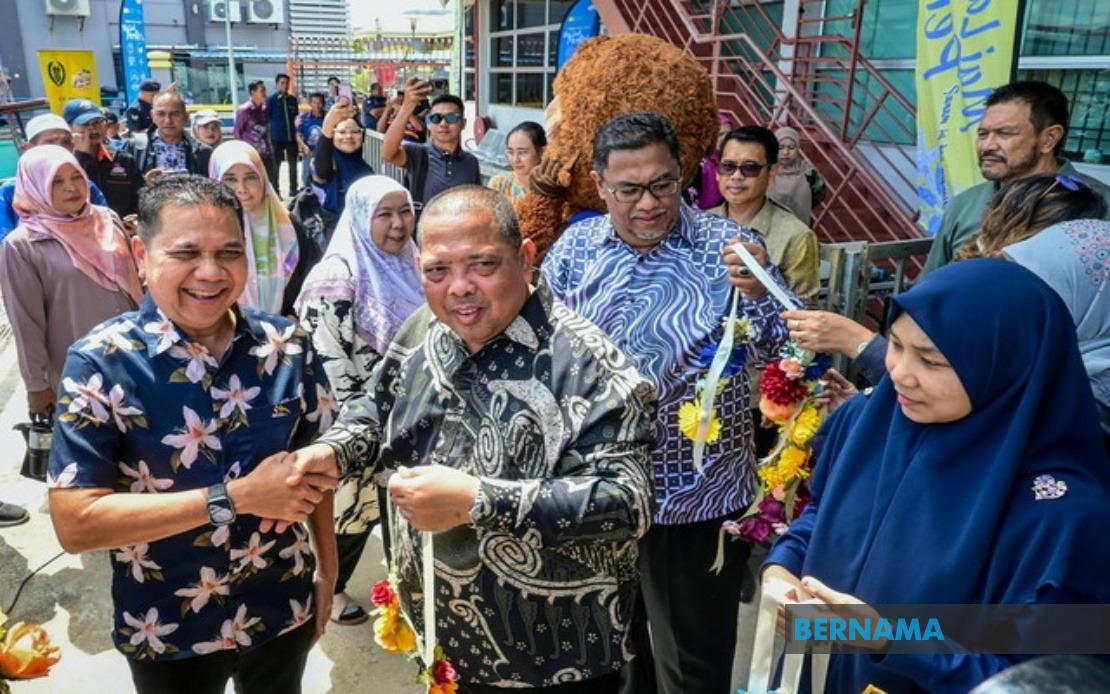
The reopening of the Kuala Perlis-Satun ferry service marks a significant milestone for Perlis's tourism recovery, with state authorities projecting visitor numbers between 5.5 and 6 million for the year. Menteri Besar Abu Bakar Hamzah unveiled the development at the Kuala Perlis Ferry Terminal after welcoming a delegation from the Thai province of Satun, signalling renewed bilateral cooperation in maritime transport and tourism.
The sea crossing, dormant throughout the COVID-19 pandemic, restores a critical transportation link that had previously facilitated cross-border movement and cultural exchange between the neighbouring regions. The 40-minute voyage offers passengers scenic vistas of the Strait of Malacca coastline, transforming the commute itself into an experiential component of the tourist journey rather than merely utilitarian transit.
The Menteri Besar articulated a multifaceted vision for the ferry's role in regional economic development. By enabling direct passage between Satun and Kuala Perlis, the service is anticipated to funnel Thai shopping tourism towards Perlis retail and hospitality sectors, thereby diversifying the state's revenue streams beyond conventional land-based border commerce. This avenue of cross-border consumer movement holds particular significance given Thailand's substantial domestic tourism market, with Satun's proximity to major Thai population centres positioning Perlis as an accessible weekend destination.
Beyond tourism dynamics, the ferry represents a strategically important infrastructure investment for easing pressure on terrestrial border facilities. The Padang Besar land crossing experiences predictable congestion surges during major holidays and festive seasons, bottlenecking vehicle throughput and extending wait times for travellers. By providing a viable maritime alternative, the ferry distributes cross-border traffic across multiple channels, potentially reducing gridlock and enhancing overall border crossing efficiency during peak travel periods.
The reinstatement of this service carries broader implications for Malaysia-Thailand bilateral relations at the grassroots level. Tourism and trade facilitation have long formed the bedrock of people-to-people diplomacy, and restored cross-border transport corridors signal governmental commitment to deepening regional integration. For Perlis specifically, geographic proximity to Thailand has historically been both an economic asset and a developmental challenge; the ferry reactivation represents a deliberate pivot towards leveraging this proximity as a competitive advantage in the regional tourism marketplace.
However, the state government acknowledges existing infrastructure constraints that could limit the ferry service's full potential. Fluctuating tidal patterns and shallow waters at the Kuala Perlis terminal present recurring berthing challenges that compromise operational reliability and vessel capacity utilisation. To address these navigational impediments, authorities have committed to installing a floating pontoon system, which would provide flexible berthing infrastructure capable of adapting to variable water depths throughout tidal cycles.
More ambitiously, state planners are exploring the reactivation of a Roll-on/Roll-off service specifically engineered for vehicular transport, acknowledging that some cross-border travellers prefer retaining personal transportation for intra-Thai mobility. This dual-mode approach—passenger ferries and Ro-Ro vehicle services operating in parallel—would cater to diverse travel preferences and maximise the corridor's utilisation across different traveller demographics.
The most transformative initiative under consideration involves a proposed RM500 million infrastructure megaproject: a two-kilometre marine bridge designed to permanently overcome shallow channel constraints and establish a modern, all-weather transportation corridor. Such an undertaking would constitute a generational investment in regional connectivity, comparable in scope to existing cross-border infrastructure projects elsewhere in Southeast Asia. Current discussions with prospective investors suggest serious feasibility exploration, though the project's realisation remains contingent upon securing financing arrangements and navigating the complex bilateral agreements required for transnational maritime infrastructure.
These cumulative infrastructure investments reflect a strategic recognition that Perlis, while Malaysia's smallest state by landmass, occupies an outsized role in Malaysia-Thailand relations owing to its geographic position as the primary terrestrial and now maritime interface between the two nations. By systematically upgrading and diversifying its border crossing infrastructure, Perlis positions itself as a gateway rather than merely a boundary, potentially attracting investment in complementary sectors such as tourism, logistics, and cross-border e-commerce hubs.
For the broader Southeast Asian region, the Kuala Perlis-Satun corridor exemplifies how post-pandemic recovery efforts are catalysing infrastructure modernisation and bilateral cooperation in the ASEAN sphere. As countries throughout the region evaluate reopening decisions, those prioritising seamless cross-border connectivity—particularly through alternative transportation modes—stand to capture disproportionate shares of recovering tourism demand and intra-regional trade flows.
The ferry service's success will ultimately depend on operational consistency, competitive pricing relative to land-based alternatives, and effective marketing to both Thai and international tourist markets. Initial reception from the Satun delegation suggests receptivity from the Thai side, but sustained growth will require coordinated promotion and quality service delivery that justifies travellers' choice of maritime over terrestrial routes.
For Malaysian observers, the Kuala Perlis development offers instructive lessons in bilateral tourism cooperation and infrastructure diversification. As the region continues its post-pandemic reset, states that proactively restore and enhance cross-border connectivity stand to benefit disproportionately from pent-up demand for intra-regional mobility and cultural exchange.

