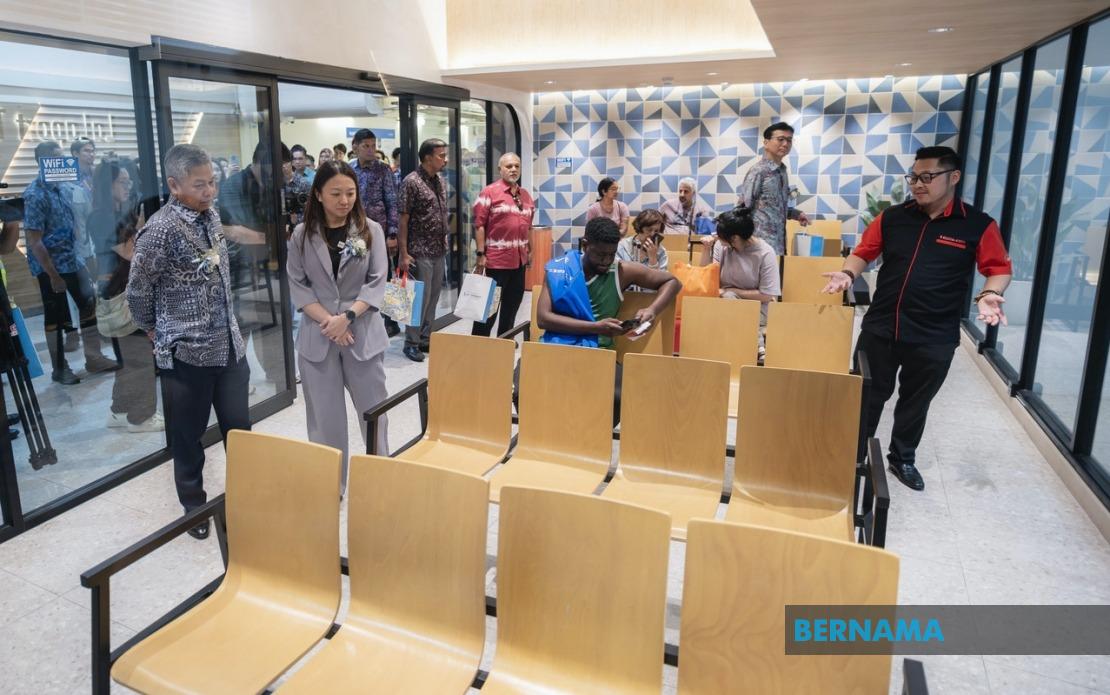
Kuala Lumpur's urban transport infrastructure has reached another milestone with the official launch of the LaLaport Transportation Hub, a modern integrated terminal strategically positioned beside the Hang Tuah LRT and Monorail interchange. The facility is positioned to become a critical node in the city's growing transport network, expected to process up to 10,000 passengers on a daily basis while reducing friction between different modes of public and private transport. Minister in the Prime Minister's Department (Federal Territories) Hannah Yeoh unveiled the hub, emphasising its role in streamlining connections across rail networks, express bus services, e-hailing platforms, conventional taxis, and shared mobility solutions through climate-controlled pedestrian pathways.
The timing of the hub's opening reflects mounting pressure on Kuala Lumpur's transport systems. The capital city experiences an extraordinary flux of human movement, with 1.2 million people crossing its boundaries each day in either direction. This translates into approximately 5.5 million individual journeys recorded within the metropolis on a typical 24-hour cycle. These figures underscore the escalating demand for efficient, coordinated transport solutions that can accommodate both commuter volumes and diverse traveller preferences. Against this backdrop, strategic investments in interconnected mobility infrastructure have become not merely desirable but essential for maintaining the city's economic competitiveness and quality of life.
The hub occupies the LG1 level within the East Atrium of the Hang Tuah complex, featuring a comprehensively weather-protected environment that includes eleven dedicated bus parking positions. Inside, passengers encounter an air-conditioned waiting zone complete with staffed service counters and automated ticketing kiosks, alongside a Passenger Information Display System delivering real-time bus schedule updates. This combination of infrastructure elements addresses a persistent gap in Kuala Lumpur's transport ecosystem: a professionally managed, comfortable boarding facility specifically designed for express and intercity bus travellers operating from the city core. Previously, such services often relied on informal or inadequately equipped staging points scattered throughout the metropolitan area.
Operator Asia Success Resource Sdn Bhd, through chief executive officer Aaron Chuah, has projected that the facility will accommodate approximately 150 bus trips daily once fully operational. Most significantly, the hub will host a continuous 24-hour express bus service directly connecting Kuala Lumpur with Singapore, capitalising on the vital business and leisure travel corridor between Malaysia's capital and the island city-state. Around thirty bus operators are anticipated to establish the hub as their primary transit point within the city centre, particularly those engaged in cross-border operations. This consolidation of services offers Malaysian travellers greater convenience when accessing intercity transport, eliminating the need to navigate multiple dispersed departure points.
Beyond conventional bus services, the hub functions as a comprehensive mobility ecosystem. The on-demand Boleh-Boleh Ride van shuttle service links passengers to prominent destinations throughout central Kuala Lumpur, addressing the final-mile connectivity challenge that often discourages public transport use. Additional shuttle van services extend to Kuala Lumpur International Airport terminals one and two, providing seamless airport access without requiring passengers to navigate separate ground transport arrangements. This integrated approach recognises that modern urban travellers increasingly expect door-to-door solutions combining multiple transport modalities rather than discrete, disconnected services.
Hannah Yeoh articulated the broader regulatory framework supporting this initiative, noting that the Dewan Bandaraya Kuala Lumpur has transitioned from annual to three-year operating licences for transport terminals. This extended licensing period provides greater operational stability and security for private transport operators investing in infrastructure improvements, while allowing municipal authorities to conduct more thorough oversight cycles. The shift reflects lessons learned from previous transport deregulation experiences across Malaysia and demonstrates policy maturity in balancing private sector incentives with public interest protection. Simultaneously, DBKL is deploying approximately 10,000 operational closed-circuit television cameras throughout the city, enhancing security and passenger safety across the transport network.
International dimensions of the project merit attention for Malaysian policymakers and regional observers. Japanese Ambassador to Malaysia Noriyuki Shikata attended the launch, framing the hub as tangible evidence of Malaysia-Japan cooperation in sustainable urban development. This diplomatic dimension reflects deeper engagement between the nations regarding infrastructure standards, technology transfer, and metropolitan planning expertise. Shikata referenced Prime Minister Datuk Seri Anwar Ibrahim's recent Japan visit as reaffirming bilateral commitments extending beyond transport into energy security cooperation. Next year's celebration of the 75th anniversary of Malaysia-Japan diplomatic relations will occur alongside growing Japanese investment in Southeast Asian urban infrastructure, with the LaLaport hub exemplifying this pattern.
The hub's positioning within Kuala Lumpur's broader transport strategy cannot be separated from Singapore's magnetic pull on Malaysian commerce and leisure. The city-state attracts millions of Malaysian visitors annually for work, shopping, healthcare, and recreation, while Singaporean professionals and tourists flow northward. This cross-border traffic has previously relied on dispersed, poorly coordinated departure points, creating inefficiencies that discouraged some potential users from selecting bus transport over private vehicles. By concentrating express bus services at a professionally managed, centrally located terminal with seamless MRT and monorail connections, the hub removes practical obstacles to cross-border public transport usage. Over time, this could measurably shift modal choices toward more sustainable, congestion-reducing options.
Kuala Lumpur Mayor Datuk Seri Fadlun Mak Ujud and Land Public Transport Agency deputy director Azrin Borhan represented municipal and federal transport bureaucracies in affirming institutional support for the initiative. Their presence signalled alignment between local governance, national transport policy, and private sector operators, a coordination dynamic that has historically proven elusive in Malaysian infrastructure development. The hub's success depends partly on sustained regulatory certainty and municipal-federal cooperation in complementary investments such as CCTV infrastructure enhancement and future MRT or monorail extensions. Political continuity regarding transport prioritisation remains crucial for realising the facility's full potential.
For Malaysian travellers and transport planners, the LaLaport hub represents a nascent model for how integrated transport terminals can function within tropical urban contexts. The emphasis on climate-controlled facilities addresses practical realities of the Malaysian environment while improving passenger experience. The 24-hour Singapore service reflects recognition of regional travel patterns, acknowledging that Malaysian mobility patterns extend beyond domestic borders. The projected 10,000 daily passenger capacity, if achieved, would constitute a material contribution toward shifting metropolitan transport modality away from private vehicles, with corresponding benefits for air quality, congestion management, and urban livability. However, realising this potential requires sustained attention to service reliability, operator coordination, and passenger information systems that go beyond launching ceremony rhetoric.

