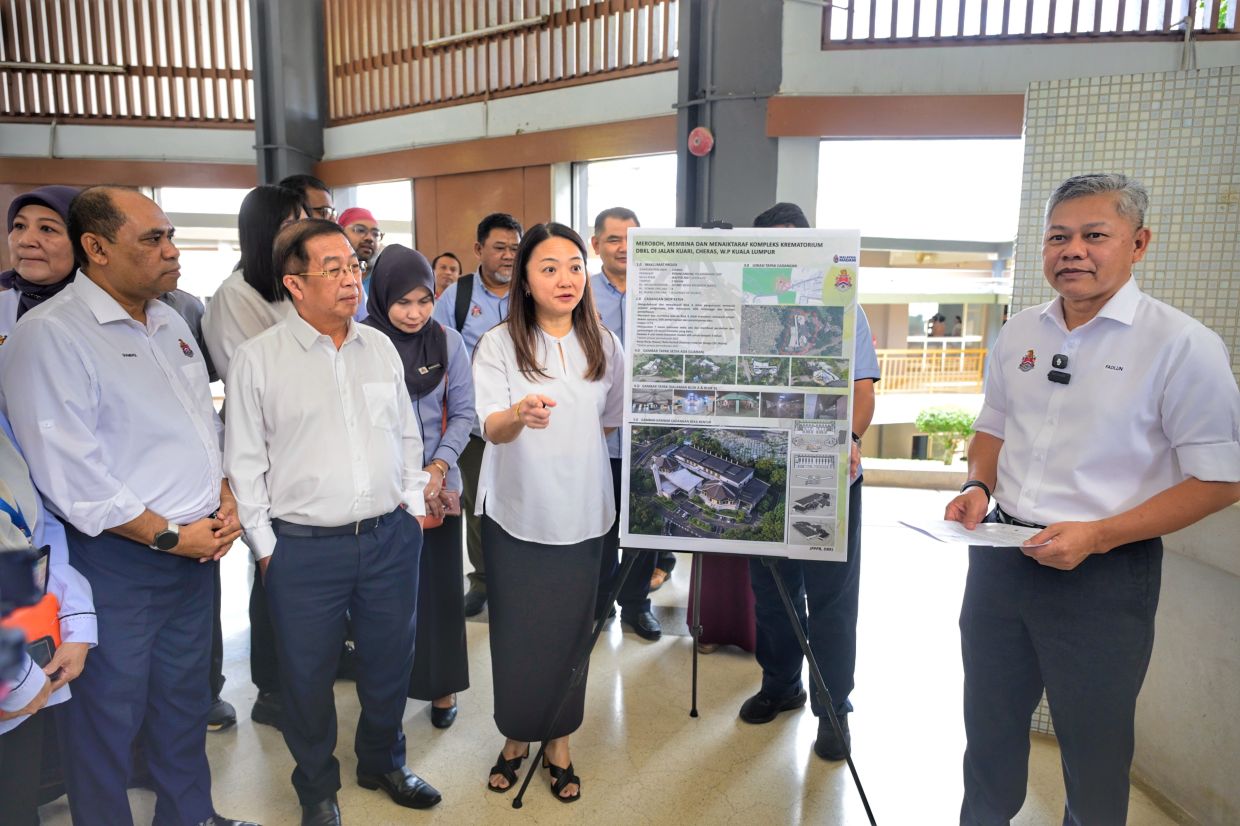
Kuala Lumpur City Hall (DBKL) has committed RM45 million to a comprehensive overhaul of the Cheras crematorium on Jalan Kuari, targeting completion within two years and marking a significant infrastructure investment in funeral services for the city's non-Muslim communities. According to Mayor Datuk Seri Fadlun Mak Ujud, who visited the facility on Wednesday, the upgrade programme will add three modern cremation units to complement the existing seven, substantially expanding operational capacity to address persistent demand pressures on the capital's funeral infrastructure.
The facility, which has operated continuously since 1977, currently processes more than 5,800 cremations annually and serves as the only municipal crematorium operated by DBKL across Kuala Lumpur. This heavy workload, combined with the ageing infrastructure at the four-decade-old complex, has necessitated the expansion project, which received formal approval under the 13th Malaysia Plan. The scale of the undertaking reflects City Hall's recognition that funeral services form an essential component of municipal infrastructure, particularly as Kuala Lumpur's diverse religious communities continue to expand alongside broader urbanisation.
Operational continuity has been carefully considered in the project design. DBKL has committed to maintaining four cremation units in full service throughout the two-year construction period, ensuring that the upgrading works will not precipitate service disruptions or create backlogs for families requiring cremation services. The February 2026 commencement date allows time for final preparatory work, including contractor selection and site preparation, ahead of the formal launch of construction activities.
May Cheras MP Tan Kok Wai, present alongside Mayor Fadlun and Minister in the Prime Minister's Department (Federal Territories) Hannah Yeoh during the facility visit, underscored the urgency of modernising the complex. Tan observed that the crematorium, now more than five decades into operation, must evolve to accommodate Kuala Lumpur's rapidly expanding residential base and the corresponding surge in demand for funeral services. His comments reflected growing political awareness that municipal funeral infrastructure directly impacts residents' ability to observe final rites according to their faith traditions and cultural practices.
The investment decision situates funeral infrastructure within City Hall's broader service modernisation agenda. Mayor Fadlun characterised the upgrade as evidence of DBKL's commitment to responding dynamically to demographic shifts and evolving public requirements. By expanding cremation capacity, the city government signals recognition that infrastructure planning must extend beyond conventional utilities—water, waste, transport—to encompass the essential life-event services that sustain community cohesion and dignity during critical moments for families.
Beyond Kuala Lumpur's immediate crematorium requirements, the upgrade initiative highlights a broader Southeast Asian urbanisation challenge. As Malaysian cities experience sustained population growth and increasing religious and cultural diversity, municipal authorities must invest in appropriate funeral infrastructure for all communities. The crematorium expansion represents a measured, proactive response to demographic realities, contrasting with reactive approaches that might delay essential services until acute shortages force emergency measures.
Parallel to crematorium expansion, federal government discussions with Selangor state authorities are progressing to identify land parcels in Semenyih suitable for Muslim cemetery development. Minister Yeoh noted that Kuala Lumpur's geographic constraints and existing development patterns have substantially limited available space for additional burial grounds. This two-pronged approach—expanding crematorium capacity within the capital while identifying external cemetery sites in neighbouring Selangor—reflects collaborative federalism addressing funeral infrastructure pressures across the Klang Valley region.
The project timeline carries implications for funeral service providers and affected families. The two-year construction schedule, while necessary for thorough infrastructure work, will require sensitive management to prevent backlogs during the transition period. DBKL's commitment to maintaining four operational units appears designed to cushion demand during peak periods, though funeral service providers may need to implement temporary scheduling adjustments. The RM45 million investment represents a substantial commitment, reflecting the genuine significance of funeral infrastructure provision within Malaysia's urban development priorities.
Successful completion of the Cheras crematorium expansion could establish a template for other Malaysian cities contemplating similar funeral infrastructure upgrades. Penang, Selangor, and Johor—home to substantial non-Muslim populations—may monitor this project's outcomes and implementation quality as precedent for their own capacity planning. The technical specifications for the three new units, construction methodologies, and operational integration will likely interest municipal authorities nationwide seeking to balance service quality with fiscal responsibility.
The upgrade announcement also reflects ongoing conversations about religious and cultural pluralism within Malaysia's urban governance. By visibly investing in facilities serving non-Muslim communities' essential needs, DBKL demonstrates municipal commitment to inclusive service delivery. This contrasts with governance models that prioritise certain communities' infrastructure needs over others, and positions Kuala Lumpur as pursuing equitable urban development.
The crematorium project emerged from substantive needs assessment rather than political symbolism. Processing over 5,800 annual cremations, the complex operates at sustained high capacity, validating the expansion case on purely functional grounds. As Kuala Lumpur continues attracting residents and visitors from diverse religious backgrounds, this infrastructure investment acknowledges that municipal governments cannot restrict service provision to majority-religion populations without undermining social cohesion and civic dignity.

