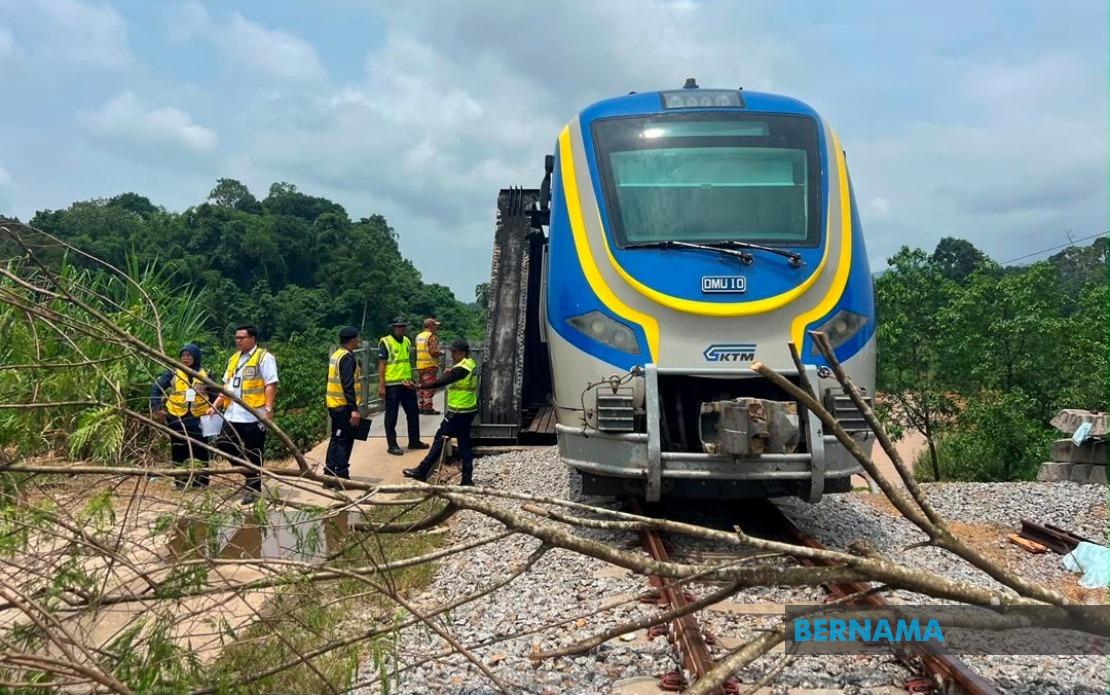
Keretapi Tanah Melayu Berhad (KTMB) has conducted a comprehensive emergency response training exercise on the EX-Kemubu railway route in Kuala Krai, with the primary objective of identifying and strengthening critical gaps in disaster response capabilities across remote rail corridors. The drill focused on three interconnected operational challenges: ensuring rescue teams can rapidly access the incident location despite geographic isolation, measuring the speed at which emergency agencies respond after receiving notification, and establishing effective communication protocols for disseminating vital information among multiple stakeholders.
The selection of the EX-Kemubu route as the training ground reflects a deliberate strategic choice by KTMB management. According to Khairul Naim Johdi, the railway operator's Occupational Safety, Health and Environment general manager, this particular corridor presents authentic operational hazards representative of Malaysia's wider rail network challenges. The line features sections running adjacent to rivers and is situated in a geographically remote area far removed from major arterial roads, creating precisely the conditions that would hamper conventional emergency response mechanisms during a genuine crisis.
Rural railway incidents present fundamentally different operational constraints than accidents occurring in urban or semi-urban environments. Standard emergency protocols developed for easily accessible locations often prove inadequate when responding to derailments or other disasters on remote branches. The time delay inherent in reaching a casualty location in sparsely populated areas can critically determine survival outcomes, making the training exercise's focus on access routes and response timing directly relevant to passenger safety outcomes on routes like Dabong to Kemubu.
The exercise attracted approximately 350 personnel representing 11 separate agencies, reflecting the multi-institutional complexity of modern railway emergency management. Participating organisations included the Royal Malaysia Police, the Malaysian Fire and Rescue Department, the Ministry of Health, the Malaysian Civil Defense Force, and the Department of Social Welfare, among others. This inter-agency composition mirrors the actual response environment that would be activated during a genuine emergency, requiring real-time coordination across organisations with distinct command structures, communication systems, and operational procedures.
Khairul Naim acknowledged that access represents the paramount challenge confronting rescue teams operating in rural contexts. Unlike urban incidents where fire brigades, ambulances, and police vehicles can reach a scene within minutes along established road networks, remote railway locations demand advance planning for alternative vehicle routes, helicopter accessibility, and positioning of personnel and equipment strategically along the line. The training specifically examined how quickly rescue agencies could mobilise and reach the designated incident location following KTMB's initial notification, providing data on whether current procedures and resource positioning enable acceptable response windows.
Evaluation of the training outcomes employed a structured post-exercise analysis methodology, examining multiple performance dimensions including response delays incurred by individual agencies, the effectiveness of initial responders' actions, the practical viability of access routes and entry points, and the adequacy of information dissemination procedures. This comprehensive assessment approach moves beyond simple success-or-failure metrics to identify specific bottlenecks within the emergency response system that warrant operational improvements or procedural refinement.
Internal coordination and early notification emerged as critical improvement areas identified during the training review process. Khairul Naim specifically highlighted that enhancing how KTMB staff communicate incidents to the operation control centre, and how that centre subsequently alerts relevant emergency agencies, could meaningfully compress response times. Even marginal improvements in notification speed accumulate to significant advantages when compounded across the multiple agencies required to coordinate a comprehensive rescue operation, particularly in contexts where geographic distance already imposes substantial temporal penalties.
KTMB's emergency preparedness framework encompasses training programmes, detailed procedures documentation, and proficiency development among operational staff. The railway operator conducts large-scale emergency drills annually, rotating them across KTMB's four operational regions to ensure comprehensive coverage of the network's diverse geographic and operational contexts. Supplementing these annual major exercises, smaller-scale drills and tabletop exercises occur throughout the year, providing continuous skills maintenance and familiarisation with evolving procedures among frontline personnel.
Passenger evacuation capabilities represent a foundational component of railway emergency response that receives particular emphasis in KTMB's training regimen. Train operators and crew must possess practical competency in rapidly and safely removing potentially injured or shocked passengers from damaged rolling stock while managing the distinct challenges posed by rural location, nighttime conditions, inclement weather, and limited immediate access to emergency services. Training ensures that this critical function can proceed methodically and effectively even under the psychological and logistical stress of an actual incident.
The established protocol for KTMB staff encountering an emergency incident requires immediate notification to the railway operator's operation controller, who manages the central control centre. This individual serves as the crucial nexus point within the system, receiving information from trackside personnel and translating that information into coordinated notifications to police, fire services, health authorities, and other relevant agencies. The effectiveness of this architectural arrangement depends entirely on the speed, accuracy, and completeness of information flowing through this central point, underscoring why information dissemination received explicit attention throughout the training exercise.
For the Dabong-Kemubu route specifically, which serves communities across difficult terrain in Kelantan state, comprehensive emergency preparedness requires that all personnel and external agencies understand their distinct responsibilities and can execute coordinated actions without confusion or delay. The training exercise fundamentally aimed to translate this understanding from theoretical documents into practical competency, ensuring that if a genuine incident occurs on this remote line, the organised response capability exists to protect both passenger safety and the wellbeing of KTMB staff involved in managing the crisis.
Beyond the immediate operational benefits for KTMB and its partner agencies, these regular large-scale emergency training exercises serve a broader public confidence function. Passenger willingness to utilise railway services, particularly on rural routes where alternatives may be limited, depends partly on demonstrated commitment to safety and emergency preparedness by the operator. By conducting visible, professionally executed training programmes and transparently addressing identified deficiencies, KTMB signals to Malaysian rail users that systematic processes exist to minimise incident probability and manage inevitable emergencies competently.

