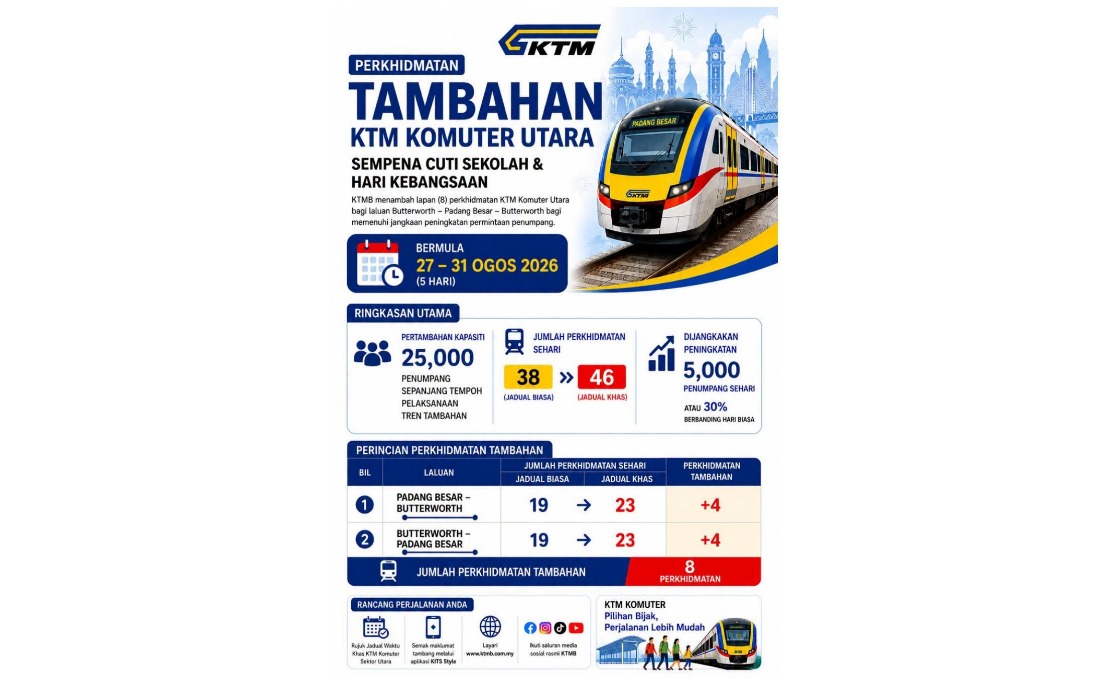
Keretapi Tanah Melayu Berhad (KTMB) is ramping up rail capacity across the northern corridor as Malaysia prepares for the convergence of school holidays and National Day festivities. The rail operator announced on August 24 that it will deploy eight extra KTM Komuter Utara services on the Butterworth-Padang Besar route spanning five days from Thursday through Monday, August 27-31. This targeted intervention reflects KTMB's recognition that the simultaneous occurrence of school breaks and patriotic celebrations historically triggers substantial movement across Penang, Kedah and Perlis.
The additional trains represent a substantial 21 per cent increase in daily service frequency on the vital northern corridor. Under normal operations, KTMB operates 38 services daily across the Butterworth-Padang Besar-Butterworth route. The special timetable will expand this to 46 daily services, providing northern Peninsular commuters with significantly more departure options during the peak travel window. The symmetrical distribution of new services ensures balanced capacity in both directions: four additional northbound trains will bring the Padang Besar-Butterworth service count from 19 to 23 daily, while four southbound services will similarly elevate the Butterworth-Padang Besar frequency from 19 to 23 trains per day.
KTMB's forecasting models anticipate a 30 per cent spike in passenger volumes compared to ordinary weekdays during this five-day period. The railway company estimates that the additional eight services will accommodate approximately 5,000 surplus travellers daily, translating to a cumulative capacity of 25,000 extra passengers across the implementation window. This projection underscores the scale of seasonal travel demand that occurs when families coordinate school break itineraries with National Day celebrations, a phenomenon that strains public transport networks across the country annually.
The initiative reflects broader strategic thinking within KTMB regarding the role of rail infrastructure in managing regional mobility. Rather than allowing bottlenecks to develop during predictable peak periods, the operator has opted for proactive capacity expansion. The Northern Sector Special Timetable represents a deliberate policy to provide travellers with genuine choice in their departure schedules, reducing congestion on alternative modes of transport and potentially alleviating traffic pressure on the North-South Expressway corridor that parallels the railway.
For passengers planning journeys between the three northern states during this window, the expanded service schedule offers multiple advantages beyond simple frequency increases. Staggered departure times reduce platform crowding and boarding delays, while additional trains create natural scheduling buffers that make itinerary planning more flexible for families juggling multiple destinations and time commitments. The psychological benefit of knowing that missed one train does not necessitate a prolonged wait should not be underestimated in improving the overall public transport experience.
KTMB has directed commuters to access schedule and pricing details through multiple channels, including the KITS Style mobile application, the company's official website, and social media platforms. This multi-channel information strategy acknowledges that modern travellers rely on diverse digital touchpoints and vary in their preferred methods of accessing transit information. By maintaining comprehensive, real-time data across these platforms, KTMB reduces information friction that might otherwise push hesitant passengers toward private vehicle alternatives.
The deployment of additional services during this specific window also carries implications for sustainable urban mobility in northern Malaysia. Public transport investment during peak periods can influence longer-term travel behaviour, particularly among younger passengers experiencing rail travel during school holidays. Positive experiences with frequent, reliable service may cultivate lifelong rail commuting habits that reduce automobile dependence across the region. The economic multiplier effects of increased rail utilisation extend beyond immediate passenger convenience to encompass broader considerations of congestion reduction, fuel savings and environmental quality.
From an operational perspective, the special timetable requires substantial coordination across multiple functional areas within KTMB, including crew rostering, maintenance scheduling and station resource management. The fact that the operator has committed to this expansion demonstrates confidence in its operational capacity to handle the temporary surge without compromising safety or service standards. Successful execution of such initiatives builds institutional capability and provides valuable data for evaluating whether permanent service enhancements might be justified on high-demand routes.
The timing of this announcement less than a week before implementation suggests that KTMB has been monitoring weather patterns, school calendar releases and National Day programming to refine its capacity planning. This responsiveness to external factors reflects maturation in how state-owned enterprises approach demand forecasting and service delivery. The five-day window concentrates resources efficiently rather than extending enhanced service across an entire school holiday period, focusing additional expenditure precisely where highest passenger concentrations are anticipated.
Travellers should note that journey planning during this period benefits from advance preparation. While the expanded schedule provides flexibility, peak departure times will likely remain congested even with additional services, particularly for popular routes connecting Penang to Perlis or Kedah. Early booking and off-peak travel selection remain advisable strategies for maximising comfort. Conversely, passengers with flexible schedules can capitalise on the enhanced service frequency to travel during traditionally quieter windows that the additional trains have now made more accessible.

