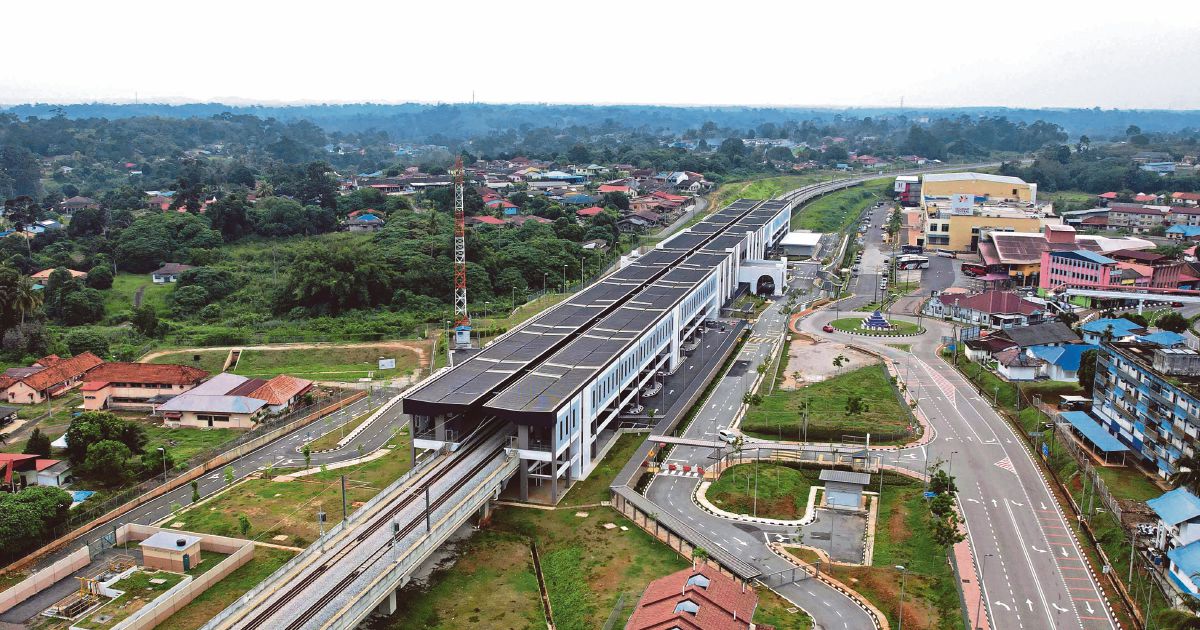
Keretapi Tanah Melayu Berhad (KTMB) is significantly ramping up rail services to accommodate heightened travel demand during this weekend's Johor state election. The national rail operator has announced plans to deploy an additional 7,464 seats across its Electric Train Service (ETS) network on the southern sector, a move aimed at facilitating voter mobility and ensuring citizens can easily return to their constituencies for the polls.
The expanded capacity represents a strategic response to anticipated congestion on the southern corridor, which serves critical transport links connecting Kuala Lumpur with the southern regions. During state elections, voter participation depends heavily on transportation accessibility, particularly for those working or residing outside their home constituencies. By supplementing regular service capacity, KTMB is attempting to remove logistical barriers that might otherwise discourage electoral participation among commuters and migrant workers.
Complementing the additional seating, KTMB has introduced a 20 per cent fare reduction across qualifying services, a substantial incentive designed to make rail travel more economically attractive compared to alternative transport modes. This pricing strategy targets working-class and middle-income voters who typically shoulder significant commuting costs. The discount effectively positions rail as a competitive alternative to both private vehicles and coach services during the election period, potentially reducing congestion on highways while channelling voters toward established rail infrastructure.
The timing of this announcement reflects recognition within KTMB's management of the critical role public transport plays in democratic participation. State elections in Malaysia have historically seen turnout influenced by accessibility and cost factors. When transport becomes prohibitively expensive or capacity-constrained, certain voter segments—particularly younger professionals and contract workers—face genuine impediments to casting their votes. By addressing these friction points, the rail operator is effectively removing structural barriers to participation.
For Malaysian commuters regularly using the southern ETS corridor, this development carries broader implications beyond the immediate election cycle. It demonstrates KTMB's capacity to mobilise additional rolling stock and scheduling flexibility, suggesting potential for similar expansions during other peak-demand periods. The 7,464-seat increase is substantial enough to warrant discussion about whether existing capacity planning adequately reflects genuine passenger demand outside of election seasons.
The southern ETS sector serves commuters travelling between Kuala Lumpur, Selangor, and Johor, encompassing a significant portion of Malaysia's most economically productive regions. Regular users often cite overcrowding during rush hours, particularly on services connecting Kuala Lumpur Sentral with major stations including Bandar Tasek Lestari, Putrajaya, Seremban, and Johor Bahru Sentral. The ability to introduce this quantity of additional capacity suggests that previous complaints about limited services may warrant revisiting from operational and investment perspectives.
Statewide elections in Johor carry particular electoral significance within the Malaysian context, given the state's size, population density, and economic importance. Johor remains Malaysia's second-largest state by population and a crucial swing region in national political calculations. Facilitating voter participation through improved transport infrastructure represents a bipartisan acknowledgment that democratic legitimacy depends partly on removing practical obstacles to voting.
The implementation of fare discounts for voters demonstrates KTMB's responsiveness to political economy considerations, though such measures naturally raise questions about subsidy structures and operational sustainability. Whether such discounts become standard during future elections or remain election-specific measures will influence long-term expectations regarding rail pricing and public transport accessibility across Malaysia's transport network.
Regionally, Malaysia's approach to supporting voter mobility through enhanced public transport contrasts with patterns observed in several neighbouring Southeast Asian democracies, where transport accessibility during elections remains inconsistently addressed. KTMB's proactive intervention potentially establishes a precedent influencing how other transport operators might consider their responsibilities during democratic processes.
For Johor voters, particularly those resident outside the state, the expanded services and discounted fares represent tangible enablers of participation. Workers in Kuala Lumpur and Selangor who maintain voter registration in Johor constituencies now face fewer legitimate reasons for non-participation based on transport cost or availability. The measure therefore functions as a practical recognition that modern Malaysia's internal migration patterns create constituencies dispersed geographically, requiring corresponding adaptations in support infrastructure.
Beyond the immediate election context, KTMB's announcement invites consideration of how public transport operators might routinely approach capacity planning, pricing, and service frequency. If an additional 7,464 seats prove feasible during election periods, questions emerge regarding why such capacity appears unavailable during regular operations. The operator's evident flexibility suggests that investment priorities and operational decisions involve discretionary elements worthy of ongoing scrutiny from both commuters and policymakers concerned with transport accessibility and economic efficiency.
The combination of expanded capacity and reduced fares during the Johor state election represents KTMB's calculated intervention in facilitating democratic participation. Whether this becomes standard practice for state elections, or remains a limited initiative, will shape perceptions regarding the national rail operator's institutional role in supporting Malaysia's electoral system.

