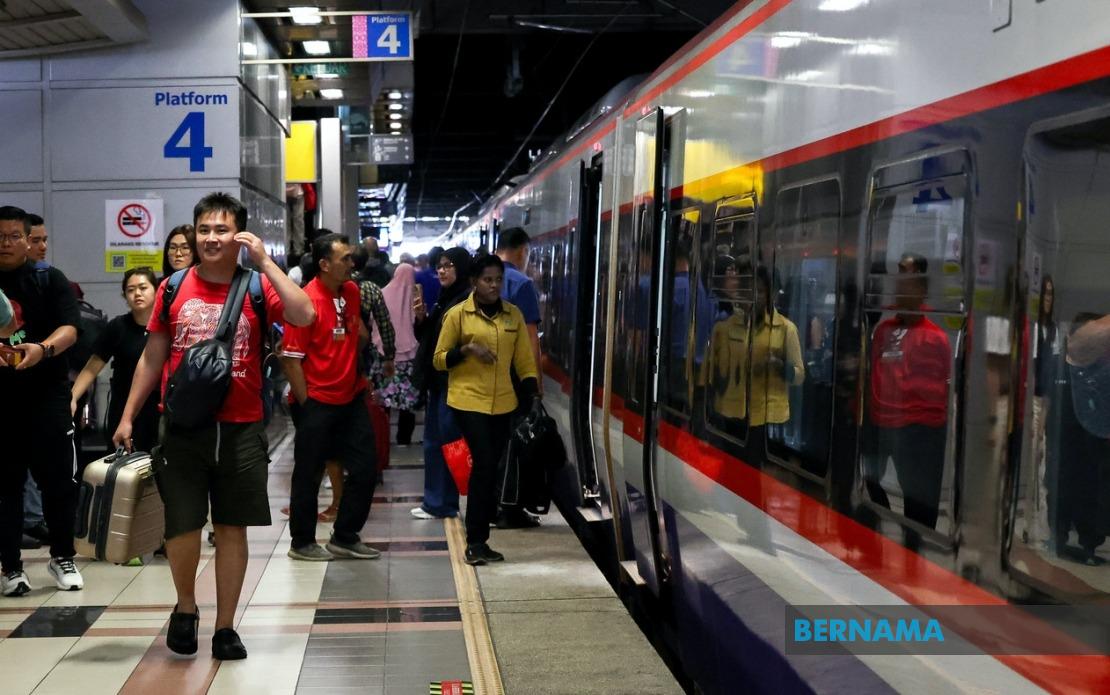
Keretapi Tanah Melayu Berhad (KTMB) is rolling out a second phase of expanded rail capacity for the Johor state election, making available 7,464 additional seats on the Electric Train Service to manage the anticipated surge in voter movement between Kuala Lumpur and the southern state. The decision reflects mounting public demand and represents the railway operator's commitment to facilitating smooth travel logistics during a key political event that has drawn heightened interest from across Malaysia.
The transport initiative concentrates on two principal corridors: the JB Sentral-Gemas-JB Sentral route and the KL Sentral-JB Sentral-KL Sentral route, both critical arteries for voters and their families returning to Johor to cast their ballots. By positioning services on these established pathways, KTMB capitalises on existing infrastructure while directly addressing the geographical patterns of electoral participation, where many registered voters work or study in the Klang Valley but maintain constituency ties in Johor.
This expansion materialised after an earlier ticket release in mid-June sold out completely, signalling genuine appetite among travellers for discounted rail alternatives to driving. The velocity of that initial uptake prompted KTMB management to accelerate deployment of further capacity, deploying four supplementary services on each route over a concentrated three-day window from July 10 to 12. Each daily cohort accommodates 2,488 passengers, delivering substantial relief to what typically becomes a congested travel corridor during long weekends and politically significant dates.
The promotional framework underpinning this effort carries commercial and social dimensions. By offering a standardised 20 per cent fare reduction across all temporary services, KTMB reduces the cost barrier that might otherwise nudge voters and their companions toward private vehicles, thereby easing pressure on the federal highway system and associated safety risks. For voters operating under tight budgets—a consideration affecting younger first-time voters, workers on modest incomes, and families with multiple members travelling—the discount substantively improves affordability and accessibility to democratic participation.
Ticket distribution follows a staggered timetable designed to prevent server overload and ensure orderly sales progression. The JB Sentral-Gemas-JB Sentral route opened sales at 3:00 PM on July 7, while the KL Sentral-JB Sentral-KL Sentral segment commenced the following morning at 9:00 AM on July 8. Staging the release across these intervals allows KTMB's digital infrastructure and booking systems to manage transaction volume without technical disruption, a practical consideration given that online platforms often buckle during sudden demand spikes accompanying major national events.
KTMB's communication strategy emphasises cashless, advance purchase mechanisms through the KITS Style mobile application, the operator's official website, and kiosk terminals stationed at principal railway hubs. This digital-first approach aligns with broader Malaysian infrastructure trends encouraging contactless transactions while simultaneously generating real-time visibility into travel demand patterns. The shift away from physical ticket counters also streamlines station congestion and reduces interpersonal contact—factors that gained operational salience post-pandemic and remain relevant for high-volume transit events.
Practical passenger guidance issued by KTMB reflects operational realities common to peak-demand railway services across Southeast Asia. The directive to arrive thirty minutes before scheduled departure, combined with the five-minute platform closure protocol preceding train movement, establishes buffer margins that prevent last-minute rushes, reduce safety incidents on crowded platforms, and ensure trains depart punctually. These seemingly administrative details become consequential during election weekends when station footfall may double or triple normal levels, creating congestion that operators and passengers must actively manage.
The Johor election context amplifies significance beyond routine rail operations. As a major state election involving one of Malaysia's most populous and economically vital jurisdictions, the voting event draws heightened participation rates and necessitates expanded transportation infrastructure to accommodate the mobility demands of the electoral process. By proactively expanding capacity rather than passively managing congestion, KTMB demonstrates institutional readiness to support democratic participation as a public good, positioning rail transport as a viable alternative to road travel that can absorb surge demand.
For the broader Malaysian transport ecosystem, this intervention illustrates evolving appreciation for rail's role in managing peak-demand scenarios without expanding highway infrastructure. The public-private coordination implicit in KTMB's pricing discounts and service expansion, combined with explicit promotion of the offering, shows how state-owned enterprises can flexibly respond to time-bound, geographically concentrated travel events. Regional neighbours and Southeast Asian transport planners often study such initiatives when evaluating how rail networks can support civic participation and election administration more broadly.
The availability of contact details—the KTMB Call Centre at 03-9779 1200 and social media channels—ensures travellers can verify ticket status, confirm schedules, and address booking complications before election weekend. This customer service infrastructure becomes particularly valuable for older voters, rural passengers less accustomed to digital ticketing, and families coordinating group travel. By maintaining multiple touchpoints, KTMB acknowledges diverse preferences in how different Malaysian population segments interact with formal transit systems.
Ultimately, this transport mobilisation underscores how democratic processes depend on unglamorous logistical capacity. Expanding railway seats addresses fundamental prerequisites for participation—enabling voters to reach polling stations reliably and affordably. As Malaysian electoral engagement continues evolving and states like Johor attract heightened national attention, transport operators increasingly recognise that facilitating voter mobility constitutes an essential function of enabling democratic institutions to function effectively across a geographically dispersed population.

