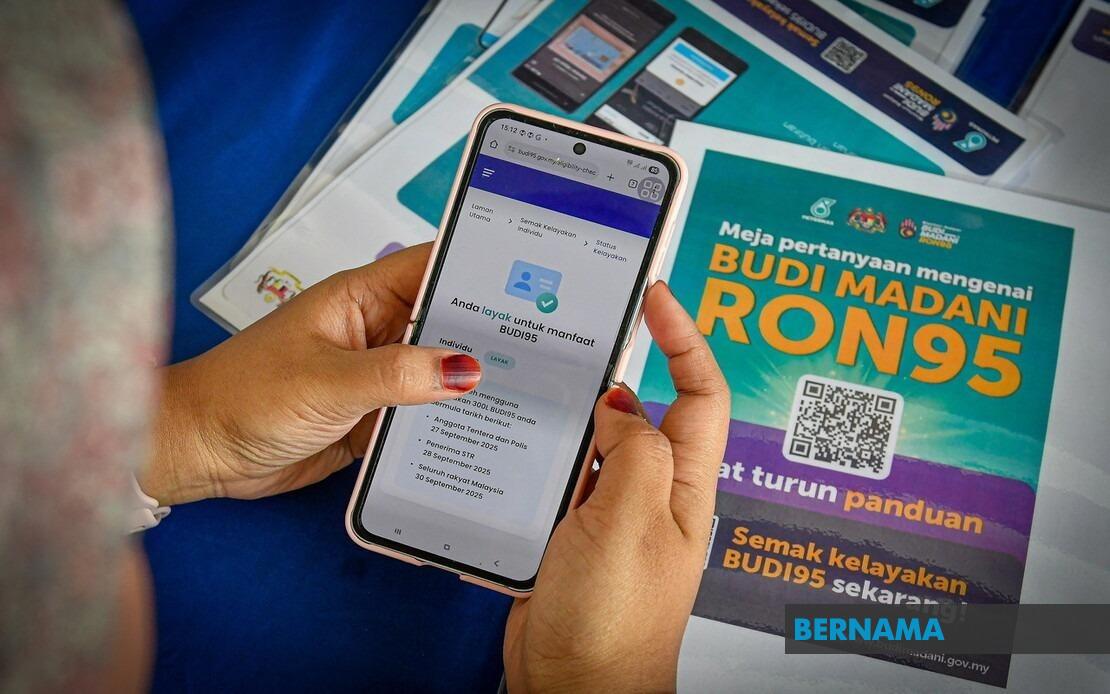
The Ministry of Domestic Trade and Cost of Living (KPDN) has committed to studying mechanisms that could extend targeted assistance to island communities across Peninsular Malaysia who depend on private boats for essential transport, particularly through the BUDI MADANI fuel subsidy programme. The undertaking emerged during parliamentary debate as the ministry acknowledged the distinct hardships faced by residents in remote island locations who must travel to the mainland for employment, education, and services, with significantly elevated fuel costs compared to urban populations.
Deputy Minister Datuk Dr Fuziah Salleh signalled the ministry's openness to developing solutions during the Dewan Rakyat's Special Chamber session on July 1, indicating that officials are prepared to explore pathways for delivering customised relief to this disadvantaged group. The commitment directly responds to concerns raised by Muhammad Islahuddin Abas of Mersing, who pressed for enhanced BUDI95 allocation quotas specifically for island dwellers in his Johor constituency. Mersing, situated on the east coast with numerous inhabited islands, faces distinct logistical challenges that amplify transportation expenses for residents who must cross open water daily.
The higher petrol consumption endured by island communities reflects both geographical isolation and the absence of alternative transport infrastructure. Unlike mainland residents who can utilise public buses or ride-sharing services, boat-dependent communities face fixed fuel requirements simply to access basic amenities and economic opportunities. This structural disadvantage means that standard subsidy mechanisms designed for general populations often fail to adequately reflect the true cost burden experienced by these isolated groups. By signalling willingness to examine tailored solutions, KPDN acknowledged that one-size-fits-all approaches to fuel assistance may not serve Malaysia's most geographically marginalised populations effectively.
Beyond the island communities issue, the ministry is simultaneously reviewing operational procedures governing subsidised diesel provision to elderly care facilities run by non-governmental organisations. Currently, these institutions remain ineligible for the subsidised diesel fleet card scheme despite substantial transport requirements for welfare operations and geriatric services. The barrier stems from organisational structure rather than operational necessity: facilities registered under the Registrar of Societies qualify for different regulatory oversight than commercial entities registered with the Companies Commission, creating administrative categories that exclude legitimate social welfare providers.
Fuziah explained that bridging this gap requires developing supplementary procedural steps to accommodate both registration frameworks within a single assistance programme. This situation exemplifies how administrative classification can inadvertently create inequitable outcomes, as elderly care homes operated by NGOs serve vulnerable populations with genuine transport needs yet fall outside established subsidy parameters. The ministry's commitment to procedural refinement suggests recognition that regulatory flexibility may be necessary to serve marginalised sectors effectively without compromising programme integrity or fiscal accountability.
Separately, Datuk Seri Dr Wee Ka Siong raised concerns regarding subsidised diesel access under the Subsidised Diesel Control Scheme (SKDS) for sectors including tourism and construction that support economic activity and employment. Fuziah clarified that tourism remains excluded from SKDS 2.0 eligibility, as the current framework prioritises essential sectors such as food production and supply. This prioritisation reflects policy choices about which economic activities warrant government subsidy during periods of inflation management or fiscal constraint, though it creates challenges for tourism operators who depend on fuel-intensive transport services.
The tourism industry's exclusion from diesel subsidies reflects broader policy tension between maintaining fiscal sustainability and supporting sectors that generate significant employment and foreign exchange earnings. Peninsular Malaysia's tourism economy depends substantially on transport—coaches, boats, and vehicles ferrying visitors between attractions—making fuel costs a material operational expense that influences pricing and competitiveness. However, inclusion of tourism in subsidised schemes carries budgetary implications, particularly given Malaysia's fiscal pressures and the need to prioritise essential services.
These parliamentary exchanges underscore how fuel subsidy policy serves multiple constituencies with sometimes competing claims on government support. Island communities argue for relief based on geographic isolation and unavoidable transport dependence. NGO-operated care facilities contend they serve social welfare functions deserving public support. Tourism operators emphasise economic contribution and employment generation. Construction firms point to essential infrastructure roles. Each case presents legitimate arguments, yet accommodating all creates budgetary challenges and potential efficiency concerns about subsidy creep.
For Malaysian policymakers, these deliberations signal the need for more sophisticated subsidy targeting that recognises genuine hardship or economic necessity while maintaining programme integrity. The KPDN's willingness to examine mechanisms for island communities and NGO care facilities suggests incremental policy evolution rather than wholesale scheme transformation. Rather than expanding existing programmes indiscriminately, the ministry appears inclined toward creating supplementary pathways or revised procedures that can accommodate genuinely marginalised groups without fundamentally altering subsidy programme structure.
The island communities issue carries particular relevance for Malaysia's maritime economy and regional development strategy. Isolated island populations represent some of the nation's poorest and most economically marginalised citizens, yet their communities often support fishing industries, agricultural production, and emerging marine tourism. Supporting their transport viability through refined fuel assistance mechanisms could strengthen economic resilience in these regions while acknowledging genuine geographic disadvantage. Similarly, extending diesel access to NGO care facilities recognises that social welfare provision deserves similar policy consideration as commercial operations serving comparable populations.
Looking forward, KPDN's examination of these mechanisms will likely inform broader conversations about how Malaysia structures assistance for geographically isolated and socially vulnerable populations. As subsidy policy evolves, distinguishing between claims based on genuine hardship and those reflecting sectoral preference becomes increasingly important. The parliamentary exchanges suggest that Malaysian policymakers increasingly recognise this distinction and are prepared to develop more nuanced approaches rather than applying uniform assistance frameworks across inherently diverse circumstances.

