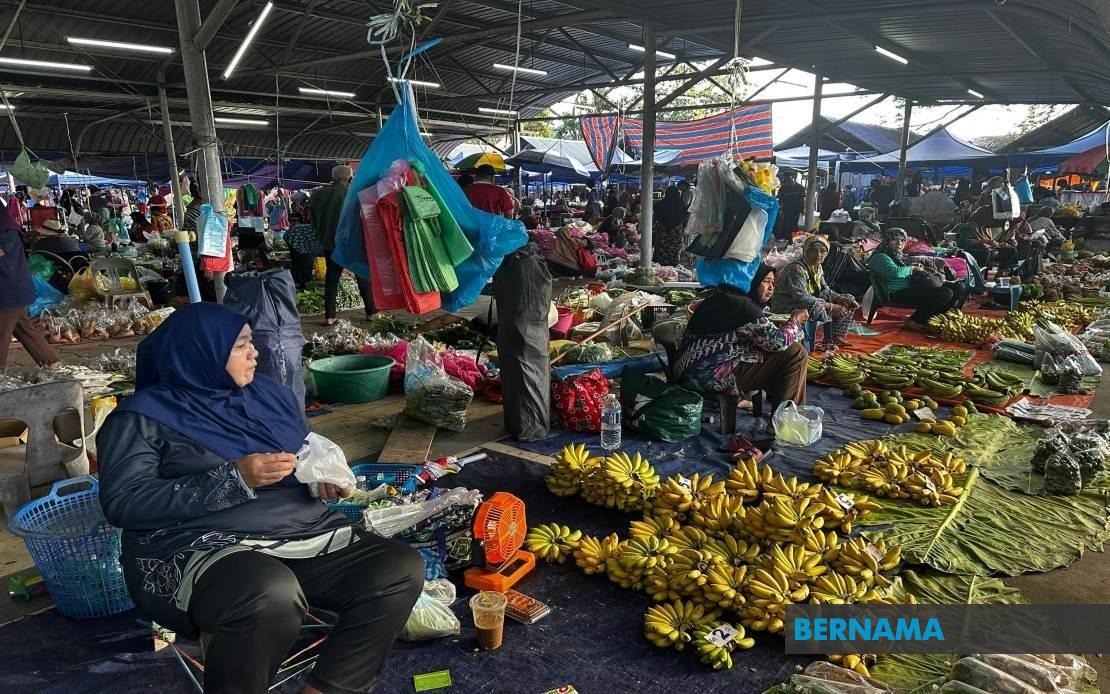
The path to securing UNESCO World Heritage Site recognition for Kota Belud Tamu, Sabah's iconic traditional marketplace, will demand considerable investment in research, documentation and scholarly preparation before any formal application can proceed, state assembly members were informed this week. Assistant Minister of Tourism, Culture and Environment Dr Andi Md. Shamsureezal presented the government's assessment during the Sabah State Legislative Assembly sitting, responding to concerns raised by Datuk Mohd Arsad Bistari about advancing the region's international cultural credentials through heritage designation.
The nomination framework established by UNESCO for World Heritage status represents one of the world's most stringent heritage recognition processes, and Sabah's officials have signalled they are approaching the Kota Belud application with appropriate caution. Dr Andi explained that the evaluation procedure requires rigorous assessments across multiple dimensions and extends across an extended timeline that demands patience and systematic preparation. This measured approach reflects international best practice, as rushed applications frequently encounter rejection or require substantial reworking before acceptance.
Central to the UNESCO nomination requirements is the need for comprehensive scholarly examination of both the physical assets and the living cultural practices bound to the Tamu marketplace. Researchers must document tangible heritage elements, including any historic structures, architectural features and archaeological materials present at the site. Simultaneously, investigators must capture the intangible dimensions of the market experience—the traditional knowledge systems, customary trading practices, and cultural rituals that give the Tamu its distinctive identity and social significance within Sabah's diverse communities.
The historical narrative supporting the application must be grounded in robust evidence drawn from academic sources, archival materials and scientific analysis. UNESCO's designation criteria require applicants to demonstrate what the organization terms "Outstanding Universal Value," a concept that demands proof the site possesses cultural, historical or natural significance extending beyond local or regional importance to hold meaning for humanity broadly. This threshold explains why documentation requirements are so comprehensive, as adjudicating committees must satisfy themselves that a location merits protection at the global level.
Kota Belud has already achieved partial international recognition within this framework through its designation as part of the Kinabalu UNESCO Global Geopark, officially recognized in May 2023. This earlier achievement establishes a foundation upon which the more ambitious World Heritage nomination can build, as it demonstrates the region's commitment to heritage conservation and qualifies it for consideration in other UNESCO recognition categories. The geopark status itself represents a sophisticated form of protection, integrating geological significance with cultural dimensions and sustainable development objectives.
Leveraging the geopark framework, Sabah Parks—the government agency leading the initiative—has implemented targeted programmes designed to strengthen heritage preservation while simultaneously broadening tourism engagement and economic opportunity. The "Tamu Geopark" initiative functions as both a conservation strategy and a development tool, positioning the marketplace as a living cultural venue rather than merely a historical artifact requiring protection. Through this approach, the market continues to serve its primary function as an active trading and social hub while becoming increasingly recognized for its cultural value.
The initiative has successfully elevated the Tamu's profile as a showcasing space for multiple dimensions of local heritage, including traditional gastronomy reflecting Sabah's culinary heritage, indigenous textile and clothing practices, locally-produced handicrafts, traditional artistic expressions, and community-developed geoproducts that connect cultural knowledge with natural resources. This multifaceted presentation makes the market economically valuable to local merchants and producers while simultaneously demonstrating to international evaluators that heritage preservation and community prosperity can be mutually reinforcing objectives rather than competing priorities.
For Malaysian and Southeast Asian observers, the Sabah government's deliberate pacing of the UNESCO nomination process offers a practical lesson in long-term heritage strategy. Rather than pursuing premature applications that might fail scrutiny, the state has opted to build systematically toward World Heritage designation through intermediate achievements and community-focused initiatives. This sequencing allows for the development of robust documentation, the strengthening of local institutional capacity, and the cultivation of stakeholder support—elements that strengthen any eventual formal application.
The recognition process also illustrates evolving international understanding of cultural heritage itself. UNESCO's frameworks have shifted considerably toward valuing living cultural practices and community participation, moving beyond exclusive focus on monumental structures. Kota Belud Tamu exemplifies this integration, as it is valued simultaneously for any historical structures it contains and for its ongoing role as a functioning cultural institution where traditional practices continue. This living heritage dimension often proves more challenging to document than physical archaeology, yet increasingly shapes how heritage bodies evaluate significance.
Sabah's experience with the Kinabalu Global Geopark designation provides valuable precedent for other Southeast Asian regions similarly positioned to pursue international recognition. The model demonstrates that heritage designations need not represent restrictions on community economic activity but instead can become frameworks for sustainable development when properly designed. As other Malaysian states and regional neighbours contemplate their own heritage preservation priorities, the Kota Belud case offers practical insights into strategic planning, stakeholder engagement, and realistic timelines for international recognition processes.

