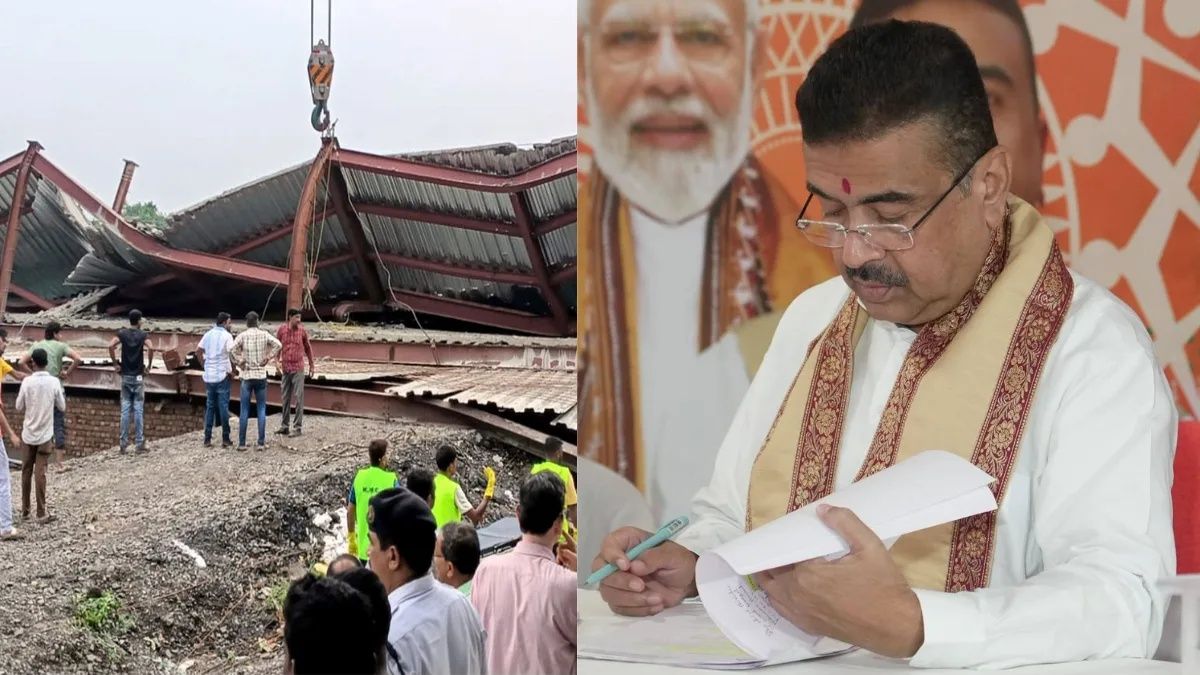
The rescue operation at the collapsed Taratala warehouse in Kolkata entered its second day with the death toll climbing to 11, as emergency personnel continue searching through the rubble for additional victims feared trapped beneath the debris. A body recovered on Thursday afternoon at 1.15pm was transported to the Trauma Care Centre at SSKM Hospital, bringing the confirmed fatality count to double figures, though the victim's identity remained unconfirmed at the time of reporting.
The disaster response has showcased coordinated efforts between federal and state authorities, with personnel from the Indian Army, the National Disaster Response Force and other agencies mobilised to the site. The ongoing search-and-rescue operation reflects the gravity of the situation, with officials expressing concern that additional workers may still be entombed within the collapsed structure. The seamless cooperation between different government tiers underscores the scale of the emergency response required to handle such a catastrophic structural failure.
West Bengal Chief Minister Suvendu Adhikari used his appearance in the state assembly to deliver a scathing critique of the previous municipal administration, attributing the disaster to systemic corruption and negligent oversight during the approval process. Adhikari produced documentary evidence suggesting that the Taratala warehouse design contained serious structural deficiencies that should have disqualified it from construction approval. The Chief Minister specifically highlighted documents bearing the signature of former Kolkata Municipal Corporation Mayor Firhad Hakim, alleging that approval was granted despite known design flaws that rendered the structure unsafe.
The political dimensions of the investigation centre on questions about how such a fundamentally unsafe building plan passed through the municipal approval system in the first place. Adhikari's assertions suggest that the responsibility extends beyond construction company negligence to encompass administrative and professional malfeasance at multiple levels. He questioned the conduct of structural engineers and government officials who signed off on the plans, intimating that their approvals may have been facilitated through improper channels rather than genuine technical assessment. This line of inquiry raises uncomfortable questions about professional standards and institutional accountability within Kolkata's municipal government.
Adhikari articulated a damning characterisation of the previous administration, suggesting that systematic corruption and the extraction of informal payments, colloquially referred to as "cut money," had transformed Kolkata into what he termed a "city of death." This inflammatory language reflects the political stakes involved, as the current Bharatiya Janata Party-led state government distances itself from the Trinamool Congress-administered municipal corporation that previously governed Kolkata. The Chief Minister's choice of rhetoric signals an intention to leverage the disaster narratively as evidence of administrative failure under the opposition party's stewardship.
Five individuals have been arrested in connection with the collapse, including the construction company's site supervisor, the metal fabricator responsible for the structural framework, the person holding the land lease, the labour contractor who supplied workers, and a broker allegedly involved in securing the municipal approval. These arrests span the entire chain of responsibility from design through execution to regulatory approval. However, the primary accused, Azgar, remains at large, suggesting that investigations are ongoing and additional details may yet emerge regarding the disaster's root causes. The involvement of a broker in the approval process particularly underscores allegations that the licensing system itself may have been compromised.
In response to the disaster, the Chief Minister announced a four-week moratorium on all non-essential construction activity across Kolkata and surrounding municipalities including Rajarhat-New Town, Maheshtala, Budge Budge, Pujali, Bishnupur, Sonarpur and Baruipur. During this suspension period, all previously approved building plans within these jurisdictions will undergo comprehensive audits to identify potential structural deficiencies. This sweeping intervention reflects the severity of public safety concerns and represents an extraordinary administrative measure, effectively halting normal construction operations across a vast metropolitan area.
The state government has established a high-level committee chaired by Additional Chief Secretary Rajesh Pandey to conduct the building plan audits. The committee brings together representatives from multiple expert institutions including the Indian Institute of Technology Kharagpur, the Rail India Technical and Economic Service, Indian Railway Construction Limited, state fire services, and the public works department, alongside municipal authorities. This multidisciplinary approach suggests a determination to apply rigorous technical standards to existing approvals, potentially identifying other structures that may pose similar risks.
Adhikari's statements in the assembly conveyed a commitment to severe consequences for those deemed responsible. He indicated that conviction could result not only in imprisonment but also in property confiscation, with seized assets potentially used to compensate victims' families. This suggests an aggressive prosecutorial stance and signals that the government intends to pursue maximum legal penalties available. The invocation of property seizure as a remedial measure indicates that authorities view the incident as fundamentally a matter of individual and institutional accountability rather than mere accident.
For Malaysian observers, the Kolkata collapse presents sobering parallels to infrastructure governance challenges across South Asia. The incident highlights vulnerabilities that can arise when municipal approval systems lack adequate technical oversight and transparency mechanisms. Malaysia's own construction regulatory frameworks, while generally more robust, serve as a reminder of the constant vigilance required to maintain building safety standards. The Kolkata case demonstrates how corruption in the approval chain can undermine even basic structural integrity requirements, a lesson relevant to any developing economy where rapid urbanisation creates pressure to expedite administrative processes.
The disaster and subsequent investigation reveal the importance of separating construction approval processes from political influence and informal financial arrangements. West Bengal's response, including the comprehensive audit and construction moratorium, represents an attempt at institutional reset following exposure of systemic failings. Whether such measures can permanently correct underlying governance problems remains uncertain, but the visible commitment to accountability sets expectations for future regulatory conduct. The incident serves as a regional cautionary tale about the consequences of allowing technical safety considerations to be subordinated to corrupt practices.

