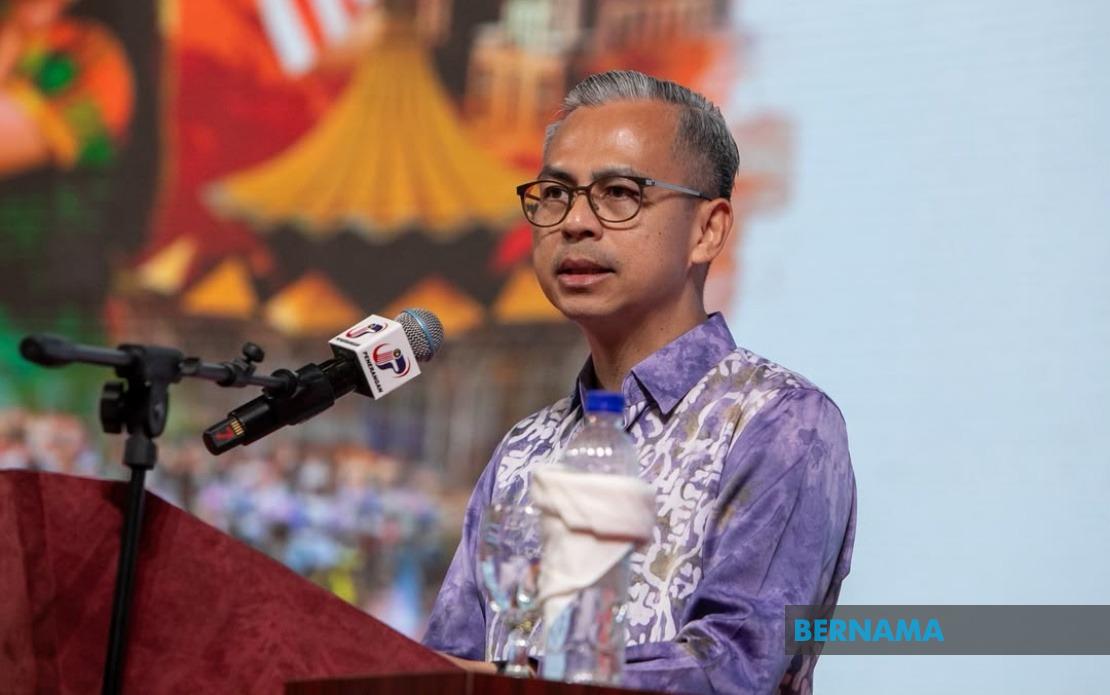
The Kembara Merdeka Jalur Gemilang (KMJG) convoy will maintain its role as a unifying national platform, according to Communications Minister Datuk Seri Fahmi Fadzil, who unveiled this commitment during the launch of the 2026 National Month and Fly the Jalur Gemilang campaign in Ipoh on July 19. The initiative is expected to feature prominently within Malaysia's broader independence celebrations, continuing a tradition designed to strengthen patriotic sentiment across the country.
Fahmi emphasised that despite fiscal constraints requiring prudent management of resources, fostering genuine patriotism and deepening public appreciation of Malaysia's hard-won independence will remain the government's core focus. The programme sits within a larger thematic framework for 2026, centred on "Malaysia MADANI: Kesejahteraan Dinikmati," which translates to "Malaysia MADANI: Shared Prosperity." This framing reflects an attempt to link national pride with tangible improvements in citizens' quality of life, a message particularly significant as Malaysia navigates complex economic and social challenges.
The KMJG convoy has historically served as a mobile platform for grassroots engagement, travelling across the country to reach communities beyond major urban centres. By maintaining this initiative alongside the broader National Month festivities, the government signals that patriotism is not merely ceremonial but should be an active, participatory engagement where ordinary Malaysians feel invested in national identity and cohesion. This approach recognises that unity cannot be imposed top-down but must be cultivated through repeated, meaningful encounters with national symbolism and values.
A companion initiative, the One House, One Jalur Gemilang campaign, will be intensified to encourage households nationwide to display the national flag. This grassroots mobilisation strategy aims to transform private spaces into expressions of national solidarity, creating visible landscapes of patriotism across residential areas. Flag-flying campaigns serve multiple functions: they reinforce collective identity, provide psychological anchors for national belonging, and create shared visual markers that transcend class, ethnic, and regional boundaries. For a country as diverse and geographically sprawled as Malaysia, such symbolic gestures carry particular weight.
The launch event itself underscored the significance the government attaches to these celebrations. Prime Minister Datuk Seri Anwar Ibrahim officiated the ceremony at the Sultan Azlan Shah Ministry of Health Training Institute (ILKKM SAS) in Tanjung Rambutan, lending prime ministerial authority to the initiative. His presence, alongside National Unity Minister Datuk Aaron Ago Dagang and Perak Menteri Besar Datuk Seri Saarani Mohamad, reflected a whole-of-government approach to constructing and promoting patriotic sentiment during a period of significant national transition and reform under the MADANI framework.
The choice of Ipoh as the launch location merits attention. Perak, as a state with substantial economic and demographic significance, represents both urban and rural communities. Holding the event there rather than in Kuala Lumpur signals that patriotic engagement must reach beyond the capital and involve all regions equally in national conversations. It also demonstrates sensitivity to regional stakeholder buy-in, particularly important for maintaining political cohesion across the federation.
Within the broader Southeast Asian context, Malaysia's emphasis on structured patriotic campaigns reflects a regional pattern. Neighbouring countries similarly employ flag campaigns and convoy-style initiatives to reinforce national identity, particularly during independence anniversaries. Yet Malaysia's multicultural composition adds complexity—patriotism must be inclusive, acknowledging that love for country transcends ethnic or religious identity. The framing of these campaigns around prosperity and shared wellbeing rather than narrow nationalism reflects this calculated inclusive approach.
The timing of these 2026 preparations, announced well in advance, allows government agencies and community organisations to coordinate involvement. Early planning enables broader participation, potentially amplifying the impact of these initiatives. It also provides space for refinement based on feedback from previous years' celebrations, ensuring that the KMJG convoy and flag campaigns remain resonant and relevant to contemporary Malaysian concerns rather than becoming merely ritualistic exercises.
The intersection of patriotism with the MADANI agenda—which emphasises shared prosperity—represents an attempt to redefine patriotic duty beyond symbolic gestures. By linking national pride to tangible governance goals around economic fairness, inclusivity, and wellbeing, the government frames patriotism as pragmatic rather than purely emotional. This rhetorical positioning acknowledges that for patriotic campaigns to resonate with ordinary Malaysians, they must address lived concerns about economic security, opportunity, and social justice.
Resource constraints mentioned by Fahmi also carry significance. Rather than scaling back celebrations entirely, the government is choosing strategic prioritisation—the KMJG convoy and flag campaigns are deemed essential enough to preserve despite broader austerity pressures. This allocation signals what the government considers non-negotiable for national cohesion, and the decision to maintain these specific initiatives suggests deep conviction that patriotic investment yields political and social returns outweighing financial costs.

