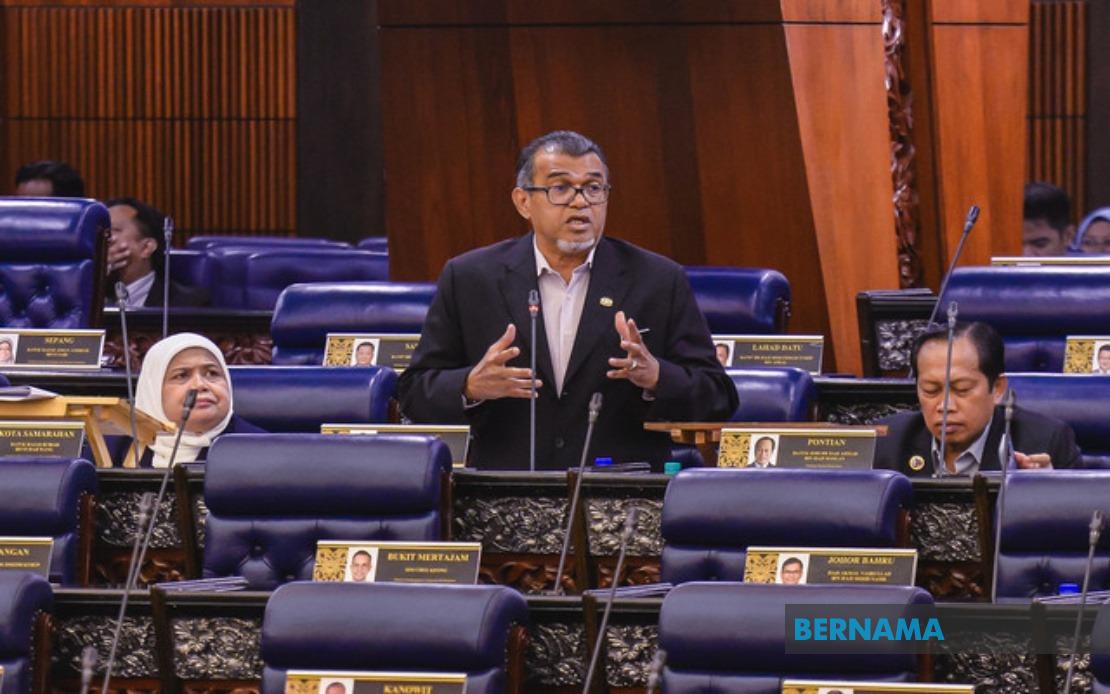
A long-awaited expansion of Kota Kinabalu International Airport worth nearly RM500 million cannot proceed until outstanding land and site issues are resolved between federal authorities and the Sabah state government, Deputy Transport Minister Datuk Hasbi Habibollah indicated during parliamentary Question Time. The project, which forms part of the broader RM2.3 billion airport development initiative unveiled in Budget 2026, has secured funding approval at the federal level, but remains contingent on settling practical matters related to property requirements, runway adjacency, and the precise location of expansion works with Sabah officials.
During his response to queries raised in the Dewan Rakyat, Hasbi emphasised that multiple technical and administrative hurdles must be cleared before construction can commence. While the companion Tawau Airport expansion project is already underway, the Kota Kinabalu initiative requires coordination between the Transport Ministry and the Sabah government on fundamental site details that have not yet been finalised. This reflects a common challenge in Malaysian infrastructure development, where airport expansions often involve navigating complex land tenure issues and coordinating multiple government stakeholders across federal and state jurisdictions.
The delay underscores broader tensions in how capital-intensive transport infrastructure is managed within Malaysia's federal structure. Though the federal government controls aviation policy and has allocated substantial resources for regional airport modernisation, land administration remains a state matter under Malaysia's constitutional framework. In Sabah's case, this dual governance arrangement has created a bottleneck where financial readiness and high-level policy commitment have not translated into concrete project commencement, a predicament familiar to observers of Malaysian infrastructure timelines.
When Prime Minister Datuk Seri Anwar Ibrahim announced the RM2.3 billion allocation during Budget 2026 tabling last October, the initiative was framed as part of the government's strategy to enhance connectivity across Malaysia's major regional hubs. The budget earmarked funds for airport developments in Penang, Kota Kinabalu, Tawau and Miri, with completion targeted for 2028. That timeline now appears increasingly optimistic for the Kota Kinabalu project, given that fundamental site negotiations remain incomplete well into the implementation phase.
For Kota Kinabalu, which serves as the principal aviation gateway for Sabah and handles significant passenger and cargo traffic, expansion is genuinely pressing. The existing facility has experienced capacity constraints during peak travel periods, and the planned improvements would enhance both tourism connectivity and business operations. However, the slow progress raises questions about the robustness of project planning at the federal level, specifically whether comprehensive land coordination with Sabah should have been completed before budget announcements were made.
Parallel to the KKIA expansion discussion, Hasbi fielded separate parliamentary inquiries regarding the future of Pangkor Airport, a facility that has languished in operational limbo since charter services were suspended in May 2022. The deputy minister acknowledged that despite previous commercial operations by carriers such as Berjaya Air and SKS Airways, the airport remains economically unviable for scheduled commercial services under current market conditions. Instead of pursuing artificial revival strategies, the government has opted for a pragmatic stance: the facilities will remain available for private aviation, military operations, helicopter services, emergency landings and flying doctor missions.
Hasbi's clarification that Pangkor Airport, along with the island airports at Redang and Tioman, have not been abandoned as white elephants reflects an important distinction often lost in public discourse about underutilised infrastructure. These facilities continue to serve genuine functions within Malaysia's aviation network, even if they no longer host passenger airline operations. Malaysia Airports Holdings Bhd maintains personnel at these locations to preserve assets and ensure readiness for the services they do accommodate, a cost the operator and government deem justified given the islands' tourism appeal and remote access requirements.
The government's openness to proposals from airlines willing to operate at Pangkor Airport represents a market-driven approach, with decisions ultimately dependent on commercial viability assessments by potential operators. However, this stance implicitly acknowledges that sea transport remains the default connectivity option for island destinations, a reality that limits aviation service profitability. For tourism and resident convenience, the current situation is suboptimal, yet forcing commercial aviation operations that cannot sustain themselves financially would represent poor resource allocation.
The divergent trajectories of the major airport expansion projects—Tawau moving forward while Kota Kinabalu awaits approvals—suggest inconsistent project preparation across Sabah's aviation infrastructure portfolio. Tawau's progress may reflect either superior coordination or the relative simplicity of that expansion compared to KKIA's more complex site requirements. For Malaysian investors and regional carriers eyeing Sabah as a hub, the uncertainty surrounding KKIA's expansion timeline creates planning difficulties, particularly as competing airports in the region may advance their own capacity improvements.
The Transport Ministry's emphasis on air connectivity as a tourism and economic driver is strategically sound, particularly for Sabah's competitive positioning within Southeast Asian aviation networks. Yet translating this strategic intent into concrete infrastructure improvements requires seamless coordination between federal funding mechanisms and state-level land administration. The current KKIA impasse illustrates how bureaucratic fragmentation can delay projects even when financial and political commitment ostensibly exists at the national level.
Moving forward, resolution of the KKIA expansion will likely depend on Sabah government officials and federal counterparts reaching consensus on land boundaries, property acquisition protocols, and environmental or heritage considerations related to the expansion footprint. Once these administrative hurdles clear, project momentum could accelerate, though the 2028 completion target may require aggressive construction scheduling. For Malaysia's broader aviation strategy and Sabah's development aspirations, timely resolution of these land matters has become essential.

