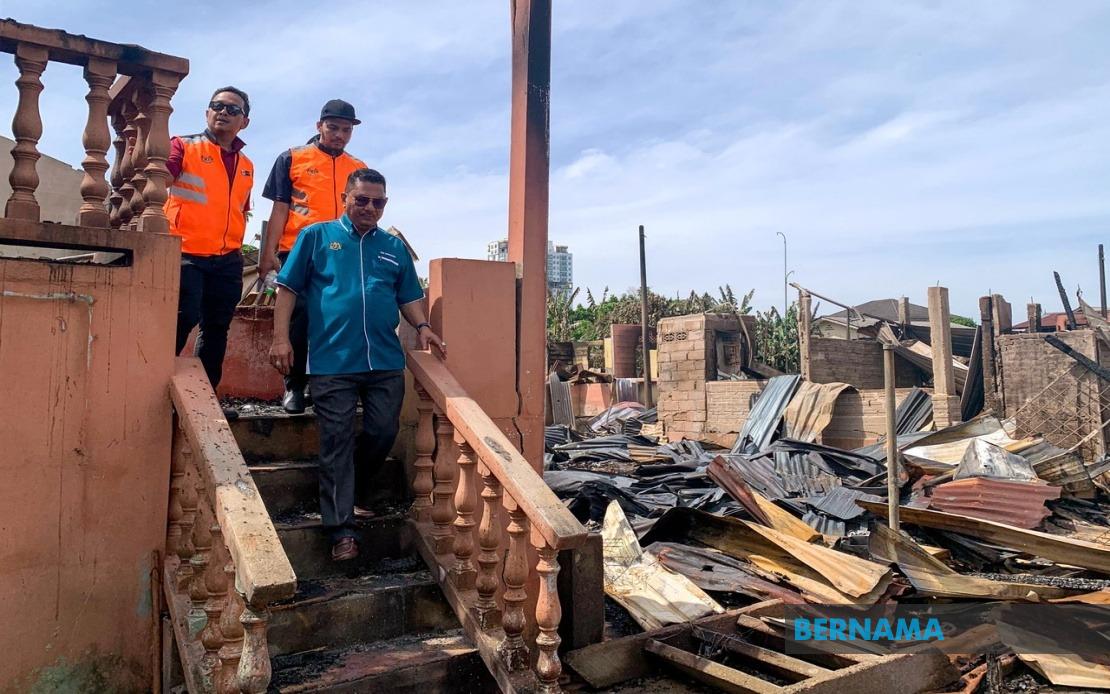
A major fire that ravaged a residential community in Kampung Gok Kapur, Kota Bharu on June 8 has been traced to a seemingly routine domestic activity gone dangerously wrong. The blaze consumed 27 houses and left 110 residents displaced, forcing families to seek refuge at a temporary evacuation shelter established at the nearby Mukim Banggol Mosque. Through detailed forensic investigation, the Kelantan Fire and Rescue Department has determined that the incident stemmed from an impulsive act—someone deliberately using an open flame to burn a pile of papers directly inside a residential kitchen.
Kelantan JBPM director Farhan Sufyan Borhan disclosed that investigators from the department's Fire Investigation Forensic Unit uncovered the precise sequence of events through examination of physical evidence and witness statements gathered at the scene. The critical moment came when a gas lighter was applied to papers stacked in the kitchen area of one house, setting them ablaze. This seemingly contained burning activity quickly spiralled out of control as the uncontrolled flames ignited nearby combustible materials that were stored or accumulated in the immediate vicinity.
The investigation confirmed what authorities feared most—a complete absence of adequate precautions or awareness of fire risk. Rather than using safe disposal methods or conducting the activity in a suitable outdoor location with proper supervision, the individual opted for the most dangerous approach imaginable, setting alight combustible waste directly within the confined space of a residential kitchen. The consequences proved catastrophic, as flames breached the confines of that single structure and spread rapidly across adjacent properties, engulfing the tightly clustered wooden dwellings that characterise many Malaysian kampung settlements.
Such fire patterns are tragically common across Southeast Asia, where wooden construction, minimal fire safety infrastructure, and occasional disregard for fire prevention protocols create ideal conditions for rapid spread. The June 8 incident illustrates how quickly a moment of negligence can escalate into community-wide disaster. What began as an unwise domestic task transformed within minutes into an emergency that required mass evacuation and temporary relocation of more than one hundred people.
The classification of the fire's cause as negligence carries legal implications. Farhan Sufyan Borhan confirmed that the investigation report will now be forwarded to police and other relevant authorities for potential prosecution or further administrative action. This handover represents a critical step in the criminal justice process, as negligent acts resulting in property destruction and mass displacement can trigger charges under Malaysia's fire and safety legislation. The individual responsible may face liability for damages and potential criminal penalties.
Beyond the immediate incident, the fire underscores systemic vulnerabilities in residential fire safety across Malaysian communities. Many villages and informal settlements lack adequate early warning systems, accessible fire hydrants, or community fire prevention programmes. Residents often possess limited training in fire response or evacuation procedures, meaning disasters unfold chaotically without coordinated action. The fortunate absence of casualties in this case reflects luck rather than robust safety planning—had wind patterns shifted or evacuation begun minutes later, fatalities could easily have resulted.
The Fire and Rescue Department has seized upon the incident to reiterate critical safety messaging. Officials urge the public to exercise extreme caution whenever handling open flame sources, particularly in domestic environments where multiple flammable materials accumulate. Burning activities of any kind should never occur indoors or in close proximity to residential structures where fire can spread unchecked. Even outdoor burning demands careful supervision, clearance of surrounding combustibles, and proximity to water sources and emergency services.
For many Malaysian households, particularly in rural areas, the disposal of paper waste, cardboard packaging, and accumulated rubbish remains a challenge without formal municipal collection services. This practical difficulty sometimes drives residents toward dangerous solutions like backyard or indoor burning. However, such shortcuts carry unacceptable risks that extend far beyond individual households. In densely settled kampung environments, a fire originating in one kitchen threatens every neighbouring home within minutes.
The displacement of 110 residents highlights the human cost of such incidents. Families lost homes, possessions, and shelter simultaneously, depending entirely on emergency assistance and community support to survive the immediate aftermath. Rebuilding from such devastation requires months or years, placing enormous financial and psychological strain on affected households. Many residents likely lacked comprehensive fire insurance, meaning their losses remain largely uncompensated.
Kelantan's fire authorities have signalled their commitment to investigating the root causes of preventable disasters and bringing accountability mechanisms to bear. By thoroughly documenting negligence and forwarding findings to law enforcement, the JBPM reinforces that dangerous behaviour cannot pass without consequence. This accountability function serves a deterrent purpose, potentially discouraging similar reckless acts by other residents who might otherwise assume minor violations carry minimal risk.
The broader lesson for Malaysian communities extends beyond Kelantan. Every state experiences residential fires, and many originate from domestic negligence similar to the Gok Kapur case. Public education campaigns, school-based fire safety instruction, and community engagement programmes could significantly reduce such incidents. Fire and Rescue Departments across Malaysia might consider intensifying outreach in rural and informal settlements where awareness of fire hazards and safe disposal practices remains limited.
Moving forward, the Kelantan JBPM's intervention represents an important checkpoint in addressing residential fire prevention. Authorities have identified the specific failure, documented the cascade effect, and initiated accountability procedures. However, sustainable progress requires broader systemic changes—improved building codes for residential areas, expansion of municipal waste collection services, and consistent community education about fire dangers. Only through such comprehensive approaches can Malaysia reduce the frequency of tragic incidents like the Gok Kapur blaze.

