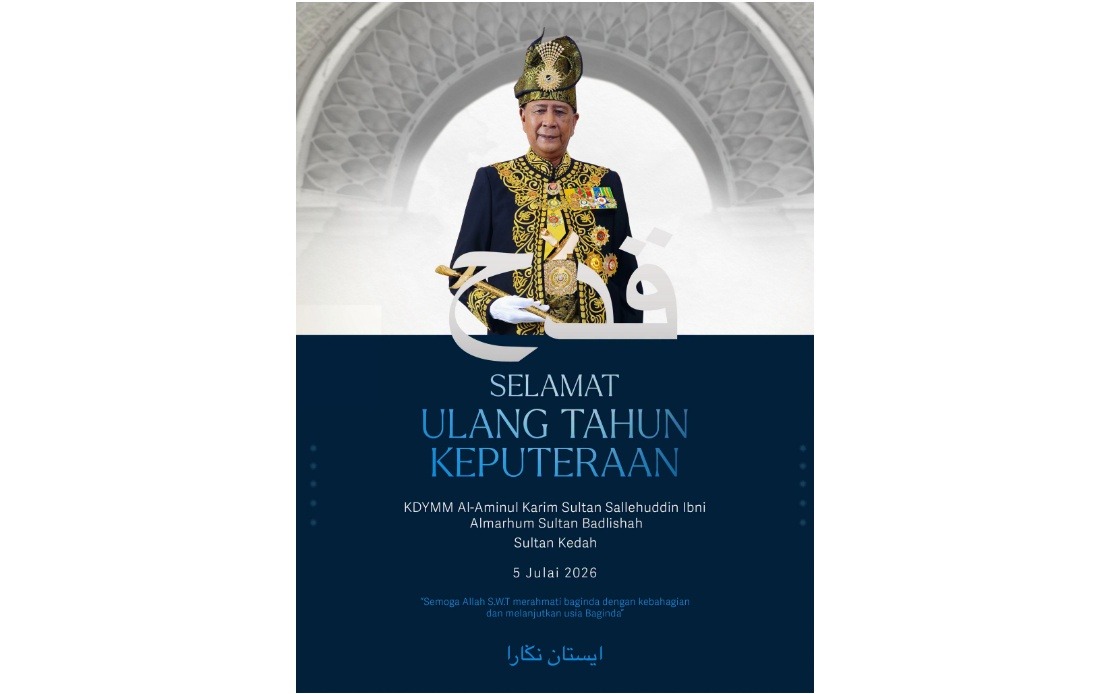
His Majesty Sultan Ibrahim, King of Malaysia, has extended warm birthday greetings to the Sultan of Kedah, Al-Aminul Karim Sultan Sallehuddin Sultan Badlishah, marking his 84th birthday. The gesture, announced through the official Facebook page of Sultan Ibrahim Sultan Iskandar, reflects the customary exchange of courtesies among Malaysia's royal houses on significant occasions.
In his message, His Majesty expressed his heartfelt prayers that the Kedah ruler would continue to enjoy Allah's blessings of contentment, robust health, and longevity. The royal greeting underscores the close bonds maintained between the constitutional monarch and the state sultans who form Malaysia's historic institution of hereditary rulers. These symbolic exchanges serve as important moments of national unity and continuity within the framework of Malaysia's constitutional monarchy.
Prime Minister Datuk Seri Anwar Ibrahim also joined in conveying celebratory wishes to Sultan Sallehuddin, demonstrating the government's respect and recognition of the state sultanate. The Prime Minister's message, similarly shared on his official social media presence, extended blessings not only to the Kedah ruler but also encompassed his royal consort, Sultanah Maliha Tengku Ariff, and the broader Kedah royal family.
In his statement, Anwar Ibrahim articulated hopes that Sultan Sallehuddin and his family would remain recipients of divine mercy, guidance, and protection. The Prime Minister invoked the traditional expression "Daulat Tuanku. Dirgahayu Tuanku," affirming the sovereignty and enduring well-being of the royal household. This ceremonial language carries deep significance within Malaysia's constitutional framework, where the sultans hold ceremonial and symbolic importance as guardians of Islam and Malay-Muslim culture in their respective states.
Sultan Sallehuddin's tenure as Kedah's ruler represents a substantial period of continuous service to the northern state. His 84 years mark a significant milestone in the life of a prominent figure within Malaysia's sultanate system. The Kedah royal house, one of Malaysia's oldest and most historically significant sultanates, has played an enduring role in the nation's political and cultural landscape since the country's formation.
The birthday recognition by both the King and Prime Minister reflects the carefully maintained protocol that characterises interactions between Malaysia's executive government and the institution of sultans. While the Yang di-Pertuan Agong holds the highest constitutional position as King, the nine state sultans retain their own ceremonial importance and symbolic authority within their respective territories. These occasions of mutual acknowledgement help reinforce the delicate balance between federal authority and state sovereignty that underpins Malaysia's constitutional arrangements.
The exchange of birthday wishes through social media platforms represents a modern evolution in how Malaysia's leadership communicates significant moments. By utilising Facebook, both the royal office and the Prime Minister reach not only formal political circles but also the broader Malaysian public, making these expressions of goodwill accessible to citizens. This democratisation of royal communication has become increasingly routine while maintaining the formal language and protocols befitting such exchanges.
Kedah's significance extends beyond mere ceremonial considerations. The state, positioned strategically in northern Peninsular Malaysia near the Thai border, has traditionally served as an important economic and cultural hub. The health and stability of the state's leadership, symbolised in part through the sultan's well-being, carries implications for the region's broader governance and development. The Kedah royal family's continued wellbeing thus resonates with considerations that extend into the practical administration of the state.
The timing and nature of these greetings underscore the consistent, predictable nature of Malaysia's institutional respect for its sultans despite broader political transformations the country has experienced in recent years. Regardless of shifts in government composition or electoral outcomes, the acknowledgement of royal occasions remains a constant feature of Malaysia's political calendar. This consistency serves as a stabilising element within Malaysia's political culture, reminding citizens of enduring institutions that transcend the fluidity of electoral politics.
For observers of Malaysian governance and constitutional practice, such exchanges illuminate the operational reality of Malaysia's unique system, where parliamentary democracy coexists with historic sultans who embody centuries of royal lineage. The greetings to Sultan Sallehuddin exemplify this coexistence, showing how contemporary political leaders respectfully engage with the traditional institution of monarchy. These moments, though ceremonial in appearance, reinforce the legitimacy and importance of both modern governance structures and historical institutions within the Malaysian constitutional order.

