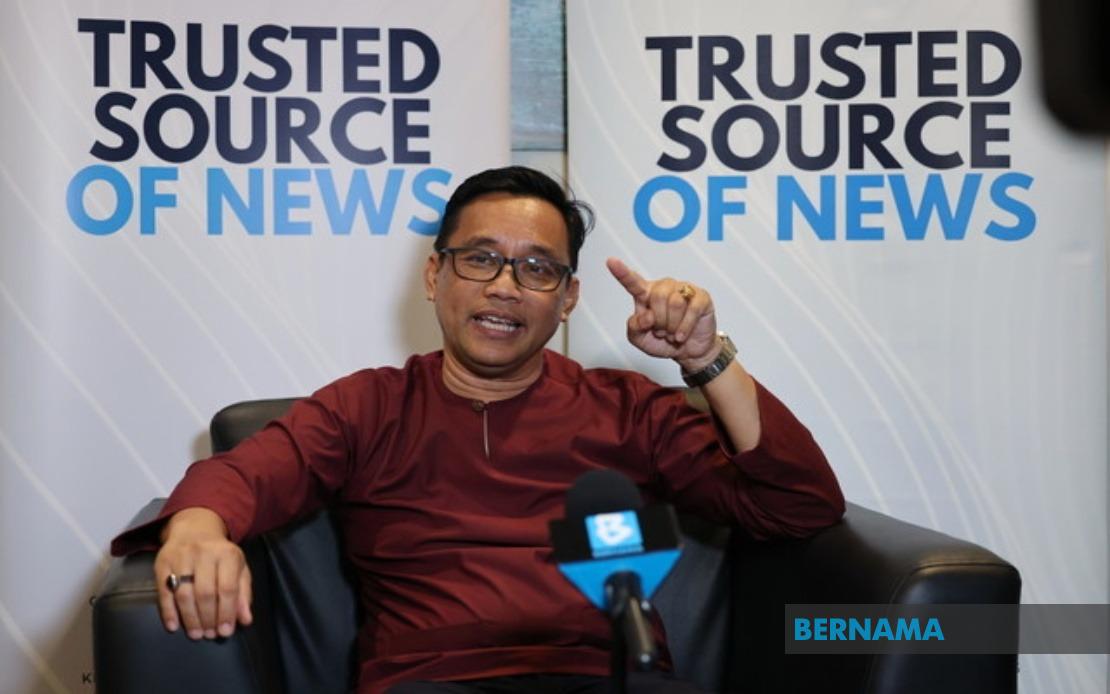
Mohd Khuzzan Abu Bakar, the Pakatan Harapan (PH) candidate for Semerah in the 16th Johor state election, is mounting a comeback bid focused squarely on delivering the development agenda that remained incomplete when the coalition lost control of the state four years ago. Rather than framing his return as a personal quest to reverse a previous electoral setback, Khuzzan has positioned himself as a custodian of interrupted public commitments — a strategic repositioning that reflects broader PH messaging in Johor ahead of polling on July 11.
The 58-year-old former Johor Youth, Sports, Culture and Heritage Committee chairman has identified a suite of unfinished priorities spanning physical infrastructure, environmental management, and economic opportunity. Among these, the Taman Sri Sulong Youth Mini Complex stands out as a signature project requiring completion, whilst longstanding water supply deficits affecting Semerah and recurring flash flood hazards in Batu Pahat and Tanjung Laboh represent chronic challenges demanding sustained attention. These issues resonate particularly in constituencies where infrastructure gaps have created tangible frustrations among voters, making them compelling electoral talking points.
Khuzzan's personal narrative strengthens his case for local legitimacy. Born in Jalan Mesjid, Batu Pahat, and married to a Semerah resident, he frames his candidacy as grounded in genuine community ties rather than opportunistic positioning. This biographical anchoring matters in Malaysian electoral politics, where local knowledge and family networks carry considerable weight in voter calculations. His assertion that he feels responsible for contributing back to the community taps into traditional expectations of elected representatives as locally embedded stakeholders rather than distant administrators.
The candidate has also articulated a vision for youth employment aligned with Johor's economic trajectory. As the state positions itself to attract investment in technology and knowledge-intensive sectors, Khuzzan's emphasis on creating pathways for younger workers reflects awareness that job creation must match evolving labour market demands. This messaging holds particular resonance given that Semerah's registered voter base includes 17,751 electors aged 18 to 39 — approximately 37.4 per cent of the 47,431 total — a demographic cohort genuinely concerned with economic mobility and sector-specific opportunities.
Campaign methodology has shifted markedly since the 2022 Johor election, with digital platforms now integral to grassroots mobilisation. Khuzzan's observation that senior citizens actively follow his TikTok account captures a genuine democratisation of social media engagement across age cohorts, particularly pronounced in urban and semi-urban areas like those within Johor. Platforms including Instagram and Threads have become standard channels for policy exposition and community activity documentation, supplementing rather than replacing traditional door-to-door outreach.
Youth-focused activities form the experiential complement to digital engagement. By anchoring campaigns around e-sports tournaments, sepak takraw competitions, and carrom matches, PH candidates including Khuzzan attempt to create memorable community experiences whilst positioning the party as culturally attuned to younger voters' recreational preferences. Simultaneously, structured exposure programmes on artificial intelligence and digital technology serve educational functions, signalling PH's commitment to workforce preparedness in an increasingly technology-dependent economy.
Khuzzan's background in banking informs his economic policy offerings, particularly regarding small and medium enterprise (SME) development. His proposal to strengthen community economies through enhanced SME support acknowledges that government financing schemes such as TEKUN Nasional and Amanah Ikhtiar Malaysia (AIM) require complementary business management guidance to yield sustainable outcomes. Many entrepreneurs access these schemes without adequate structured support for financial planning and operational scaling, creating a service gap that effective representatives might address through advocacy and coordination with relevant agencies.
The electoral context for Semerah differs materially from 2022, when post-pandemic economic recovery dominated political discourse. With 172 candidates contesting 56 state seats across Johor, the 16th election occurs amid more settled economic conditions, arguably permitting voters to focus on local governance performance and future development promises rather than crisis management. Early voting on July 7 and main polling on July 11 will test whether Khuzzan's emphasis on completion of delayed projects resonates sufficiently to overcome the 4,041-vote majority secured by BN-UMNO incumbent Mohd Fared Mohd Khalid in 2022.
Khuzzan has emphasised encouraging feedback from the B40 income group and e-Kasih card recipients, constituencies typically prioritised in PH messaging around social support and equitable development. These cohorts represent crucial swing voters in Malaysian state elections, particularly in semi-urban constituencies like Semerah where economic vulnerability remains palpable. The candidate's confidence in stronger voter turnout, including Johoreans working in Singapore, reflects awareness that commuter communities may display higher engagement when competitive races develop.
The broader political dynamics within Johor merit consideration. With BN-UMNO controlling state government since 2020, PH faces the challenger's burden of demonstrating meaningful policy alternatives whilst building sufficient ground organisation to overcome incumbent advantages. Khuzzan's specific candidacy in Semerah represents one element of a larger PH reclamation strategy across Johor's 56 seats, where the coalition seeks to reverse 2022 losses through refined messaging, improved digital infrastructure, and targeted focus on locally salient grievances including infrastructure gaps and economic opportunity.
The election will ultimately reveal whether voters prioritise backward-looking accountability for incomplete projects or forward-looking confidence in current governance. Khuzzan's framing of his return as mission-driven completion rather than redemption-seeking reflects sophisticated political messaging, but tangible evidence of progress on delayed commitments — or conversely, deterioration in service delivery quality — will likely prove more decisive than rhetorical positioning. For Malaysian observers monitoring Johor's trajectory as a bellwether state, the Semerah contest exemplifies how local development grievances intersect with broader coalition competition in shaping electoral outcomes.

