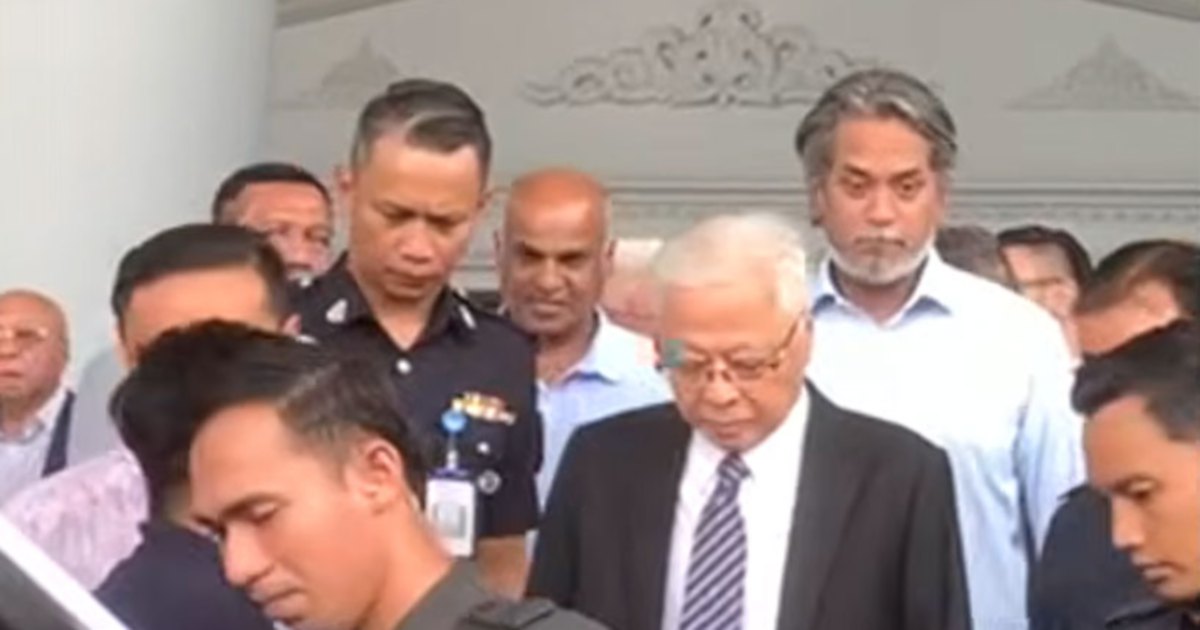
Former Umno Youth chief Khairy Jamaluddin's unexpected presence at charge proceedings involving ex-prime minister Datuk Seri Ismail Sabri Yaakob at the Kuala Lumpur Court Complex on Tuesday drew considerable scrutiny, with observers reading the symbolic gesture as evidence of cohesion within the party's upper echelons during a particularly delicate phase for the coalition.
The appearance underscores the complex web of relationships within Umno, where factional alignments have historically shifted based on political expediency and personal allegiances. Khairy's decision to show up publicly signals a deliberate message—one that extends beyond mere courtroom attendance and speaks to a carefully calibrated narrative about party solidarity in an era when legal proceedings against senior figures have become an increasingly common feature of Malaysia's political landscape.
Ismail Sabri's legal challenges come at a time when Barisan Nasional remains engaged in delicate coalition negotiations and efforts to consolidate its position following the 2022 elections. The party faces concurrent pressures from multiple directions: managing the public perception of its leaders' legal troubles, maintaining internal discipline, and preserving the coalition's electoral viability. In this context, the presence of prominent party figures at court proceedings carries weighty implications about the party's capacity to project unity despite institutional stresses.
Khairy's trajectory within Umno has itself been marked by notable shifts in influence and positioning. His attendance at these proceedings suggests either a calculated demonstration of support for a fellow party member or a pragmatic recognition that party solidarity serves broader interests during reputationally challenging moments. The timing and visibility of such gestures matter considerably in Malaysian political calculations, where media coverage and public perception often carry consequences for factional positioning within ruling coalitions.
The courtroom scene reflects broader patterns in contemporary Malaysian politics, where the intersection of legal proceedings and political strategy has become increasingly pronounced. Senior party figures frequently coordinate their public appearances and statements to manage narrative control around sensitive matters. Khairy's presence therefore warrants interpretation not merely as a gesture of personal support but as part of a more orchestrated effort to frame legal proceedings within an acceptable political context.
Umno's internal dynamics have long been characterized by competing interests, regional power bases, and individual ambitions that occasionally surface dramatically but are more often managed through behind-the-scenes negotiations and calculated public displays. The party's capacity to maintain coherence during periods when its senior figures face legal scrutiny becomes consequently important for its broader political viability and for the stability of the Barisan Nasional alliance.
For Malaysian observers and political analysts, such moments offer valuable windows into the actual functioning of party hierarchies and the mechanisms through which political elites manage potential reputational damage. The courtroom appears increasingly to function as a stage where not only legal arguments but also political narratives are contested and shaped for public consumption. Khairy's attendance fits within this broader phenomenon, where the conduct and composition of observers become themselves newsworthy elements of proceedings that extend well beyond their purely judicial dimensions.
The implications of such displays resonate across Malaysia's political ecosystem. When prominent figures visibly support colleagues facing legal challenges, the message extends to party members, coalition partners, and the broader electorate about the nature of internal discipline, the weight of party loyalty, and the extent to which legal proceedings influence political standing. These considerations become particularly acute when the individuals involved occupy or have occupied positions of significant executive authority.
The Court Complex scene also reflects the evolution of Malaysian political communication, where presence itself constitutes a form of messaging in an age of constant media documentation and social media amplification. Political actors increasingly recognize that courtroom appearances by allies and supporters generate narratives that extend far beyond what words alone could accomplish. Such calculated visibility represents a sophisticated understanding of how political narratives are constructed and sustained within modern Malaysian discourse.
Moving forward, observers will likely monitor the participation patterns of other senior Umno figures in these proceedings, seeking to discern broader patterns about party positioning and the extent to which legal challenges to senior figures threaten the cohesion that Barisan Nasional requires to maintain its electoral dominance. These subtle choreographies of political support—whether displayed in courtrooms or elsewhere—continue to shape the underlying dynamics through which Malaysia's complex coalition politics actually functions.

