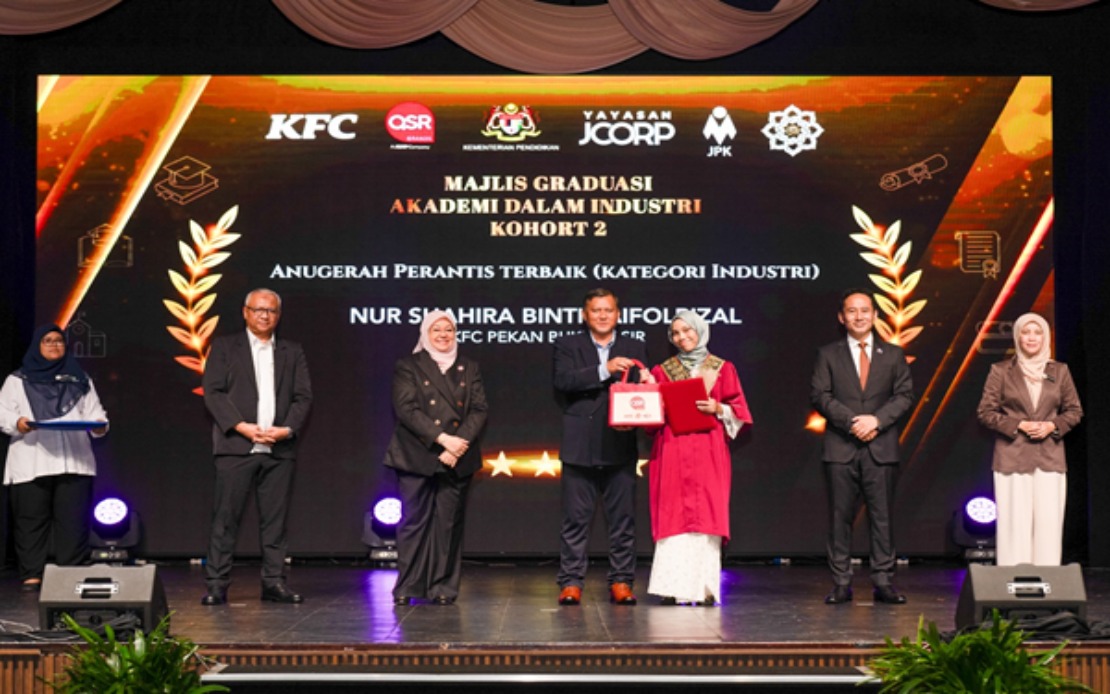
A strategic partnership between KFC Malaysia and Yayasan JCorp has produced another cohort of job-ready workers, graduating 37 students through the industry-education collaboration known as the ADI programme. The latest batch represents significant growth for the initiative, which has now trained a cumulative total of 60 graduates since its inception, establishing itself as a notable model for vocational development in Southeast Asia's quick-service restaurant sector.
The programme demonstrates a deliberate effort by QSR Brands to bridge the persistent gap between classroom learning and workplace expectations that often challenges young Malaysian workers entering their careers. By embedding trainees directly into KFC restaurant operations across Johor Bahru, the scheme provides genuine exposure to the rhythms and demands of commercial food service, from inventory management to customer interaction protocols. This approach differs markedly from purely theoretical training, as participants acquire competencies in real-time settings rather than simulated environments.
The educational framework underpinning the ADI initiative reflects Malaysia's broader push toward strengthening its technical and vocational education landscape. Ministry of Education TVET director Zulkernai Fauzi characterised the programme as exemplifying best practices in industry-education integration, suggesting it should serve as a blueprint for expansion across Malaysia's skills development ecosystem. His emphasis on recognised certifications combined with practical experience encapsulates a philosophy gaining traction among policymakers seeking to elevate vocational pathways as genuine alternatives to traditional academic routes.
Yayasan JCorp chairman Rozaini Mohd Sani positioned the initiative as a social mobility instrument, particularly valuable for young people from disadvantaged backgrounds who might otherwise lack structured access to professional skill development. This framing highlights how collaborative workforce programmes can simultaneously address employer labour shortages while creating genuine opportunity for youth populations, a balancing act critical to Malaysia's demographic and economic challenges as it grapples with an ageing workforce and the need for youth employment.
The second cohort's achievements suggest the model's effectiveness is reproducible and scalable. All 37 graduates attained full marks in the Vocational Stream Subjects examinations, alongside successful completion of Malaysian Skills Certificate qualifications at both Level 2 and Level 3. Furthermore, 95 percent passed the Sijil Pelajaran Malaysia examination, indicating the programme maintains academic rigour whilst developing practical competencies. These metrics provide quantifiable evidence that skills training need not compromise traditional educational standards.
QSR Brands chief human resources officer Dr Sharifah Musainah Syed Alwi reframed certification success as validation of genuine capability development rather than mere credential accumulation. Her distinction between presenting certificates and recognising students who have actually managed restaurant operations underscores a quality-assurance orientation often absent from discussion of vocational qualifications. This emphasis on demonstrated competency rather than paper credentials resonates with employer frustrations across Southeast Asia regarding skills mismatches and graduate readiness.
The training curriculum itself reflects practical prioritisation of sector-specific competencies. Participants underwent instruction in fast food preparation and service vocations whilst simultaneously gaining operational experience in customer service, food safety compliance, and restaurant management fundamentals. This dual-track approach exposes trainees to both the technical dimensions of their role and the organisational context within which those skills operate, preparing them for the interdependencies that characterise actual workplace environments.
The ADI programme's origins in June 2023 position it as a pioneer within Malaysia's quick-service restaurant industry, emerging from collaboration between KFC Malaysia, the Department of Skills Development under the Ministry of Human Resources, and the Ministry of Education. This tripartite arrangement—combining private sector operational expertise, government vocational infrastructure, and educational oversight—represents the institutional coordination increasingly necessary for effective skills development in competitive labour markets.
The inaugural cohort of 23 students, who completed their industrial training in March 2025, established the programme's foundational success, demonstrating that the model could produce certified graduates capable of contributing meaningfully to QSR operations. The expansion to 37 graduates in the second cohort suggests not merely replication but potential refinement of processes, curriculum design, and employer engagement mechanisms, indicating the programme may be hitting an operational stride.
For Malaysian policymakers and employers, the ADI initiative offers a template addressing chronic skills gaps without requiring massive public sector retraining investments. By positioning private employers as co-educators and leveraging their operational infrastructure as teaching venues, the scheme distributes both costs and responsibilities whilst maintaining quality oversight through existing education ministry frameworks. This model holds particular relevance for Malaysia's aspirations toward higher-value manufacturing and service sectors, where technical competency combined with professional standards becomes increasingly essential.
The award recognitions given to outstanding performers—Best Apprentice in Industry and SPM categories, plus documentation excellence—introduce meritocratic differentiation within the cohort, signalling that the programme values both workplace excellence and academic achievement. Such recognition mechanisms reinforce professional identity development among graduates, positioning vocational completion as a genuine accomplishment rather than a consolation alternative to university education.
Looking forward, the success of consecutive ADI cohorts suggests potential for replication across other sectors and geographic locations within Malaysia. Restaurant operations, whilst labour-intensive, share fundamental management and compliance requirements with hospitality, retail, and food manufacturing industries, making the underlying model potentially transferable. Should QSR Brands and government partners scale the initiative, they would demonstrate that meaningful skills development combining education with paid work experience remains viable at scale within developing economy contexts.

