The Ministry of Human Resources (KESUMA) has announced a comprehensive intervention strategy to address joblessness stemming from global supply chain disruptions, deploying Technical and Vocational Education and Training (TVET) programmes as the primary vehicle for workforce transition. During the launch of related initiatives in Johor Bahru on June 23, Human Resources Minister Datuk Seri R. Ramanan outlined how the ministry would facilitate upskilling and reskilling for workers rendered jobless by the ongoing international logistics and manufacturing challenges. The approach signals growing recognition within Malaysia's policymaking apparatus that supply chain fragmentation—a persistent legacy of pandemic-era disruptions and geopolitical tensions—continues reshaping employment landscapes across Southeast Asia.
The initiative targets workers across three traditionally vulnerable sectors: services, manufacturing, and construction. These industries have borne the brunt of supply chain volatility, with port congestion, semiconductor shortages, and shipping cost inflation forcing companies to restructure operations and, in many cases, reduce headcount. By concentrating support on these specific economic pillars, KESUMA acknowledges the uneven impact of global disruption; while some sectors have rebounded, these three remain under persistent strain. Manufacturing, long a cornerstone of Malaysia's export economy and employment base, faces particular challenges as multinational producers reassess sourcing strategies and production locations in response to changing international dynamics.
Central to the government's response is mobilisation of PERKESO's MYFutureJobs platform, a digital labour-matching system designed to connect displaced workers with available opportunities. Beyond simple job listings, the platform incorporates structured job-matching processes intended to ensure alignment between worker qualifications and employer requirements. This systematic approach represents an evolution from passive unemployment benefit administration towards active labour market engagement. For Malaysian workers accustomed to traditional employment pathways, the emphasis on deliberate skill-matching represents a shift in how government-supported redeployment functions, prioritising outcome-oriented placement over merely absorbing workers into generic programmes.
The TVET dimension addresses a structural challenge within Malaysia's workforce development ecosystem. Historically, technical and vocational pathways have carried lower social prestige than university credentials, yet demographic and sectoral shifts increasingly demand skills that TVET institutions uniquely provide. By channelling displaced workers through TVET programmes, KESUMA aims to redirect human capital towards occupations experiencing skill shortages—positions in skilled trades, maintenance, logistics, and service operations where supply chain improvements have paradoxically created hiring demand. This represents potential alignment between labour supply and employer needs, though success depends heavily on programme quality, instructional capacity, and wage competitiveness of resulting positions.
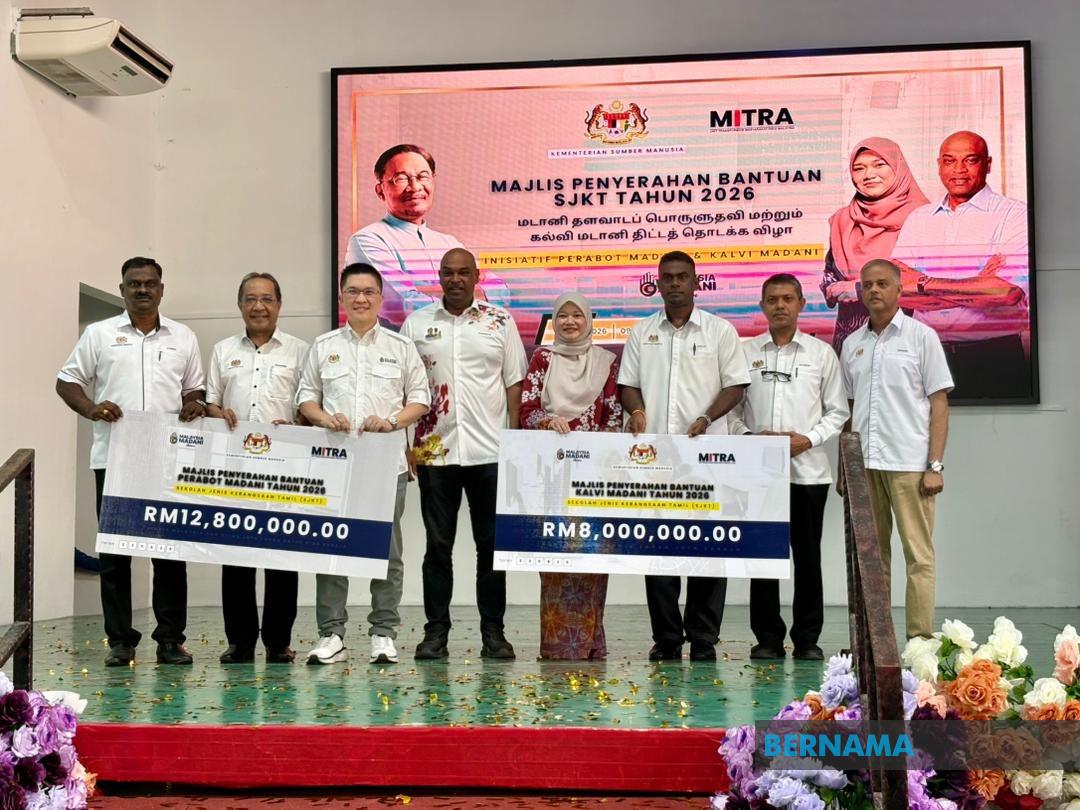
Beyond the supply chain crisis response, KESUMA also unveiled the MADANI Furniture Initiative, a RM12.8 million undertaking designed to equip Tamil-medium government-aided schools with essential classroom infrastructure. The initiative will benefit nearly 40,000 pupils and over 5,000 educators across 361 institutions, with deliveries of high-quality furniture and equipment—tables, chairs, storage cabinets, and ventilation fans—scheduled in phases through August. This infrastructure investment addresses long-standing disparities in resource allocation between schools using different mediums of instruction, a persistent equity concern within Malaysia's education system. Tamil vernacular schools, which serve communities often facing socioeconomic disadvantages, have historically received lower per-capita resource allocation than counterparts using other languages.
Complementing furniture provision is the RM8 million KALVI MADANI Programme, exclusively benefiting approximately 10,410 Indian pupils enrolled in 315 selected Tamil schools. The programme's scope spans multiple dimensions of educational support: free tuition delivered outside regular school hours, nutritional assistance addressing food insecurity among vulnerable pupil populations, provision of learning devices and educational materials, and initiatives directly supporting teacher welfare. This multifaceted approach acknowledges that classroom performance and educational outcomes depend not solely on instruction quality but on holistic student wellbeing, including nutrition, access to technology, and educator morale. For schools serving lower-income communities, such comprehensive support can meaningfully reduce barriers to learning and educational completion.
The bundled announcement of supply chain crisis response alongside school infrastructure initiatives reflects broader Malaysian policy thinking connecting workforce development with educational equity. Officials present at the Johor Bahru launch—including Education Minister Fadhlina Sidek and Deputy Minister Wong Kah Woh—emphasised integration across government domains. This coordination suggests awareness that addressing displacement requires simultaneously strengthening foundational education systems, ensuring future cohorts possess credentials and skills aligned with evolving labour market needs. Supply chain disruptions that displace current workers underscore urgency in preparing younger populations through enhanced TVET pathways and equitable access to quality instruction.
From a regional perspective, Malaysia's intervention model carries implications for Southeast Asia's broader economic resilience. As neighbouring countries encounter similar supply chain disruptions and workforce displacement, the combination of active labour market programmes with grassroots educational investment offers a policy template. Nations across ASEAN face comparable challenges: ageing manufacturing bases, demographic shifts, and the necessity of transitioning workforces toward higher-value activities. Malaysia's demonstrated commitment to supporting affected workers through systematic reskilling, rather than allowing displacement to generate prolonged joblessness, reflects strategic thinking about social cohesion and economic dynamism. Countries tracking Malaysia's approach may identify elements applicable to their own circumstances.
However, success of these initiatives depends on implementation rigour and sustained political commitment. TVET programmes require ongoing investment in instructor training, equipment maintenance, and curriculum updates ensuring relevance to evolving employer requirements. Job-matching platforms function effectively only when they aggregate current, detailed labour market intelligence and when employers actively engage rather than treating the system as peripheral. Infrastructure investments in schools prove transformative only when accompanied by adequate operational funding for maintenance and sustained delivery of complementary programmes like nutrition and tuition support. The policy announcements, while welcome, represent beginning points rather than complete solutions; realising their potential requires bureaucratic execution matching the ambition embedded in programme design.
The supply chain crisis response also implicitly acknowledges that Malaysia cannot insulate itself from global economic disruptions through protectionist measures; instead, the government's strategy involves rapidly adapting workforce capabilities to changing circumstances. This acceptance of openness to international commerce, coupled with deliberate investment in human capital adjustment, reflects pragmatic economic liberalism modulated by social protection concerns. For Malaysian workers facing dislocation, the availability of government-supported reskilling through TVET and structured job-matching offers genuine pathways toward reemployment rather than dependency on income support alone. Whether these pathways materialise into stable, adequate employment depends substantially on programme implementation fidelity and broader economic conditions determining employer hiring behaviour in coming months.

