Kenya's High Court has found Health Minister Aden Duale in contempt of court for continuing construction of a contentious American-backed Ebola quarantine facility, even after multiple judicial orders halted the project. High Court Judge Patricia Nyaundi delivered the ruling on Monday, determining that Duale had persistently violated court directives suspending the initiative at Laikipia Air Base in Nanyuki, Laikipia County. The judge has ordered Duale to appear personally before the court on Tuesday to present mitigation arguments and face sentencing, marking an unusual escalation in a dispute that has divided Kenyan society and tested the separation of powers.
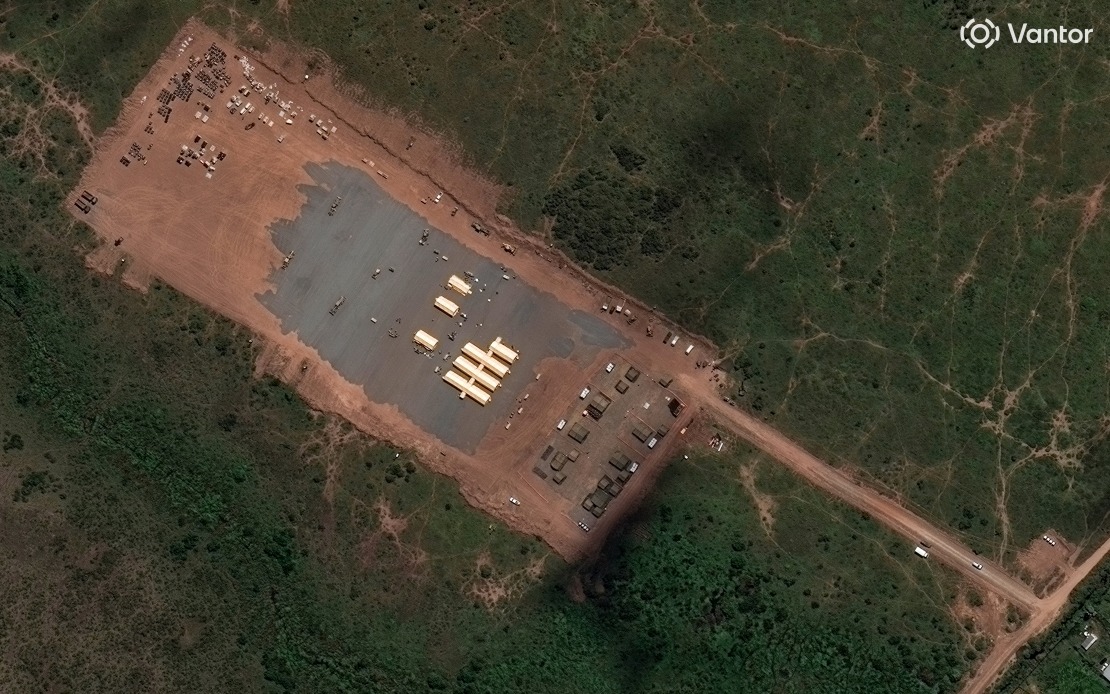
The flashpoint is a planned 50-bed quarantine and isolation centre positioned approximately eight kilometres west-northwest of Nanyuki town and roughly 200 kilometres north of Nairobi. According to government explanations, the facility would serve as a containment zone for American personnel potentially exposed to Ebola virus during response operations tied to outbreaks in the Democratic Republic of the Congo and neighbouring countries. The project emerged from discussions between President William Ruto and President Donald Trump, with Ruto framing it as part of a longstanding bilateral health partnership. However, this framing has generated considerable backlash domestically, with many Kenyans viewing it as capitulation to foreign interests at the expense of national sovereignty and local safety.
The constitutional rights organisation Katiba Institute initiated the legal challenge by filing a petition arguing that the initiative violated multiple constitutional safeguards. The petition contended that the facility raised serious constitutional questions, presented genuine public health risks, and had been approved without adequate transparency or meaningful consultation with affected communities. The High Court accepted these arguments on May 28 and confirmed the suspension on June 2, issuing explicit orders directing the government to cease all construction and related activities. Despite these clear judicial directives, Duale's ministry continued commissioning work at the site, prompting Nyaundi to find him in continuing contempt.
Government officials and diplomatic representatives have mounted a vigorous defence of the project. The Ministry of Health has characterised the facility as an essential component of Kenya's Ebola preparedness infrastructure, arguing that the country's geographical position as a regional transport hub, diplomatic centre, and commercial crossroads exposes it to elevated disease transmission risks. The United States Embassy in Nairobi has similarly stressed that the facility poses no threat to surrounding communities and represents a contribution to regional capacity-building for detecting, isolating, and responding to infectious disease outbreaks. These arguments, however, have failed to allay public and parliamentary concerns about the project's necessity, transparency, and potential implications for Kenyan autonomy.
The dispute has become one of Kenya's most fractious recent public health controversies, drawing opposition from a broad coalition of actors. Opposition politicians, civil society organisations, religious leaders, and local county government officials have all voiced strong objections. In Laikipia County itself, the controversy has translated into sustained public demonstrations, with protesters demanding that authorities respect both court orders and community consent. These demonstrations have become increasingly volatile, with police and rights groups recording at least three deaths during clashes linked to the facility dispute. The loss of life has further polarised the debate and intensified scrutiny of government decision-making around the project.
From a regional perspective, the Kenyan controversy reflects broader geopolitical tensions concerning foreign military and health infrastructure on African soil. Southeast Asian nations, including Malaysia, have encountered similar dynamics when negotiating health cooperation arrangements with major powers. The Kenya case illustrates how disputes over disease containment facilities can become proxies for larger questions about national sovereignty, transparency in bilateral agreements, and the balance between pursuing international partnerships and respecting domestic democratic processes. The manner in which Kenya's courts have intervened—and the government's apparent disregard for judicial authority—sends significant signals about institutional independence and the rule of law across the continent.
The timing of the dispute carries additional significance given that Ebola outbreaks in Central Africa have genuinely posed regional transmission risks in recent years. Public health experts acknowledge that Kenya, as a major aviation hub with connections throughout East and Central Africa, could reasonably serve as a location for enhanced quarantine capacity. Yet the controversy reveals how legitimate public health concerns can become entangled with questions of process, consent, and institutional integrity. When governments pursue necessary health infrastructure through opaque channels and override judicial safeguards, they undermine public trust precisely when disease preparedness depends on community cooperation and confidence in official institutions.
Duale's forthcoming court appearance represents a critical test of judicial authority in Kenya. The contempt finding and pending sanctions could establish important precedent regarding ministerial accountability and compliance with court orders. If the judge imposes significant penalties, it might signal to other officials that defying the judiciary carries genuine consequences. Conversely, if sanctions prove symbolic or minimal, the ruling may become largely performative, failing to alter the government's conduct regarding the facility. Either outcome will reverberate through Kenya's legal and political establishments and potentially influence how other African governments approach similar disputes involving foreign health infrastructure and judicial intervention.
Looking ahead, resolution of the Laikipia facility dispute will likely require negotiation extending beyond the courtroom. The government may seek to restructure the project in ways that address the constitutional and transparency concerns raised by the High Court and civil society organisations. Alternatively, sustained pressure from opposition, protests, and international attention might force abandonment of the current proposal in favour of a fundamentally different approach. For Malaysia and other Southeast Asian nations monitoring developments, the Kenyan experience offers cautionary lessons about the necessity of genuine public consultation, transparent intergovernmental negotiations, and institutional respect when pursuing international health cooperation agreements, particularly those involving quarantine, isolation, or disease surveillance infrastructure.