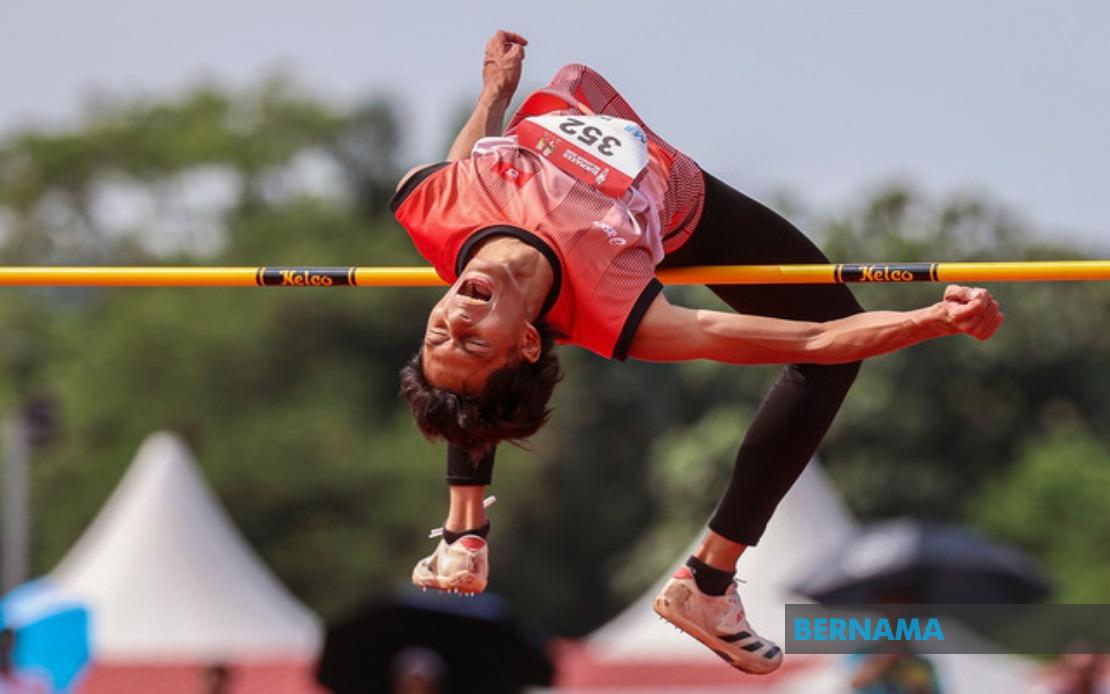
Dzul Darwisy Adam Khairulaswari's trajectory in Malaysian athletics took a dramatic upward turn at the Selangor 2026 Malaysia Games, where the 18-year-old Kelantan high jumper captured the national championship title with a commanding performance at the Universiti Putra Malaysia Sports Centre. The victory represents a remarkable reversal of fortune from just two years ago, when Darwisy finished a modest 11th place at the Sarawak SUKMA edition, seemingly lost in the middle of the competitive field.
Clearing 2.09 metres to clinch the gold medal, Darwisy delivered Kelantan's second athletics gold of the biennial games while establishing himself as a breakthrough talent in Malaysia's track and field landscape. His winning height edged out a pair of formidable Kedah competitors, with Muhamad Nawawi Mohamad taking silver at 2.07 metres and Muhammad Naufal Zulkifli securing bronze at 2.04 metres. The composition of the podium underscores the competitive calibre of Malaysia's high jumping talent pool, with multiple athletes now operating comfortably above the 2.04-metre threshold.
For Darwisy personally, this triumph carries extraordinary significance as his maiden victory at a major national championship. The teenager had spent the preceding years grinding through competitive ranks without tasting success at the highest levels, making his breakthrough particularly poignant. Speaking to media after his final, Darwisy expressed the emotional weight of the achievement, framing it as both personal vindication and answered prayers from his family and supporters. His previous competition history included a third-place finish at the 2023 Malaysian School Sports Council championships when competing in Form Three, a respectable but ultimately unspectacular result that suggested incremental rather than exponential progress.
What makes Darwisy's ascent noteworthy is the apparent acceleration in his development trajectory this year. He acknowledged that his improvements had stalled following his MSSM placing, but a recent surge in form has seen him make genuine strides toward elite status within Malaysian athletics. This pattern—characterized by plateaus followed by breakthrough moments—is not uncommon in high jumping, where technical refinement and physical maturation can suddenly unlock substantial performance gains. The presence at the Serdang final of Lee Hup Wei, the former national high jump champion and current national reserve coach, added institutional weight to the occasion, signalling recognition of the emerging talent pool.
Darwisy's pathway has not been without physical obstacles. During this very competition, the young athlete managed pain from a chronic back injury that threatened to derail his participation entirely. Despite carrying this burden throughout the games, he not only competed but elevated his personal best from 2.03 metres—a mark he had held previously—to the championship-winning 2.09 metres. This demonstrated resilience amid adversity, suggesting both mental fortitude and an underlying physical capacity that compensated for the discomfort.
The gap between his performance and his original aspirations, however, underscores the relentless nature of elite athletics. Darwisy had targeted clearing between 2.13 and 2.15 metres entering the championships, meaning his actual performance, while gold-medal worthy, fell short of his internal benchmarks by several centimetres. This somewhat sobering reality check should not diminish his achievement, but rather contextualizes it within the broader competitive environment where Malaysian athletes increasingly operate in international frameworks and must meet external standards.
Looking forward, Darwisy has articulated an ambitious roadmap that reflects the mentality of an athlete now believing in his own potential. His immediate target is surpassing 2.16 metres, a height he views as a qualifying threshold for next year's SEA Games. This regional championship represents a significant step up in competition, where he would face elite Southeast Asian performers who regularly operate above 2.15 metres. Breaking the 2.16-metre barrier would position him credibly for international selection, signalling that Malaysia possesses a genuine medal contender at regional level.
Beyond SEA Games qualification, Darwisy has set his sights on the SUKMA record, currently held by A. Kavee Alagan of Negeri Sembilan at 2.21 metres, established during the 2012 Pahang edition. This record represents approximately 12 centimetres above his current personal best—a substantial but not insurmountable gap in high jumping terms. Chasing historical records provides both motivation and a concrete target, though it also illustrates how compressed the elite segment of Malaysia's high-jump talent pool remains, with records occasionally spanning more than a decade without challenge.
For Malaysian athletics development, Darwisy's emergence offers encouraging signals about pipeline development outside traditionally dominant centres. Kelantan's success here—delivering two golds in athletics—suggests that structured talent identification and coaching programmes extend beyond the peninsula's metropolitan corridors. The participation and competitive output of Kedah athletes, particularly the silver and bronze medallists, further suggests that investment in regional athletics infrastructure is yielding measurable returns.
Darwisy's journey from 11th place to national champion within a two-year window also raises questions about performance variability and the factors differentiating breakthrough years from plateaus. Whether his improvement stems from coaching changes, equipment upgrades, altered training methodologies, or simply the natural progression of physical maturation remains an open question. For Malaysian athletics stakeholders and aspiring high jumpers observing this narrative, the lesson is clear: consistency in training and resilience through setbacks can suddenly crystallize into championship moments that appear to come from nowhere—though in Darwisy's case, the foundation was evidently being laid across multiple competitive seasons.

