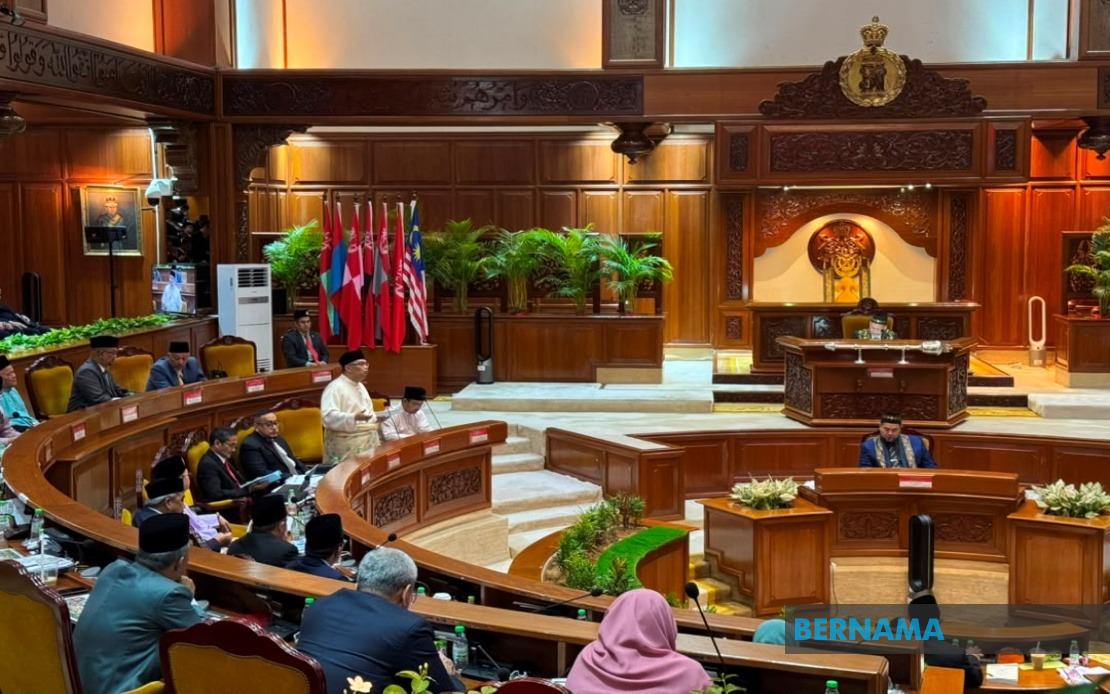
Kelantan's state legislative assembly has unanimously passed the Syariah Criminal Offences (Kelantan) Bill 2026, representing a significant legislative development in the state's efforts to establish a comprehensive Syariah criminal framework. The Bill received backing from all assembly members during proceedings on August 12, with Deputy Menteri Besar Datuk Dr Mohamed Fadzli Hassan presenting the legislation while Menteri Besar Datuk Mohd Nassuruddin Daud and five other state assemblymen from constituencies including Pasir Tumboh, Melor, Galas, Jelawat, Kota Lama and Chempaka participated in detailed debate.
The new Bill constitutes a comprehensive legislative undertaking, structured across nine distinct parts with 62 clauses and supporting schedules. Among its key provisions are measures addressing the obligation to perform obligatory prayers, safeguarding of bodily integrity, protection of mental faculties, and a system of restorative justice mechanisms. The legislation prioritises whipping as a form of punishment and introduces a compounding mechanism designed to provide flexibility in enforcement and case resolution.
This legislative initiative emerges from a significant constitutional challenge that reshaped the landscape of Syariah criminal law in Malaysia. In February 2024, the Federal Court delivered a landmark 8-1 majority ruling that effectively invalidated sixteen of eighteen provisions contained in the Kelantan Syariah Criminal Code (I) Enactment 2019. The court determined that the state legislative assembly lacked constitutional authority to enact offences that fell within Federal legislative jurisdiction, triggering a substantial legal and political debate regarding the appropriate division of powers between federal and state governments in matters concerning Syariah criminal legislation.
The catalyst for the Federal Court challenge was a petition filed by a Kelantan-based lawyer, whose legal action prompted broader discussion about federalism and religious law in Malaysia's constitutional framework. The ruling created immediate uncertainty about the enforceability of the 2019 Enactment, forcing Kelantan to fundamentally reconsider its approach to Syariah criminal legislation. Menteri Besar Mohd Nassuruddin has emphasised that the new Bill was not hastily conceived but rather underwent meticulous development through multiple refinement stages before presentation to the assembly.
The architectural foundation of the 2026 Bill rests on what officials describe as a revitalisation process grounded in principles already embedded within the 2019 Enactment. This evolutionary approach suggests Kelantan sought to preserve the philosophical framework and policy objectives of its earlier legislation whilst recalibrating specific provisions to align with the Federal Court's constitutional parameters. The revision process involved careful analysis of which components potentially overstepped state legislative competence under the Federal Constitution.
For Malaysian legal observers and constitutional experts, the Bill represents an intriguing attempt to navigate the complex intersection of state autonomy and federal supremacy in Islamic law matters. The unanimity of the assembly's vote indicates broad political consensus within Kelantan, transcending typical partisan divisions. This unity suggests that stakeholders across the political spectrum view the legislation as a necessary corrective measure rather than a controversial partisan initiative, even as broader Malaysian society continues grappling with appropriate limits on Syariah criminal jurisdiction at state level.
The implications extend beyond Kelantan's borders. Other states possessing Islamic legal frameworks may scrutinise this Bill as a potential template for their own Syariah criminal legislation, particularly if they face similar Federal Court challenges. The detailed structuring and explicit recognition of constitutional constraints in the new Bill may inform how other jurisdictions approach Syariah legislative reform. Additionally, the legislation provides a practical case study in how federalism operates within Malaysia's dual legal systems, where state and federal authorities exercise concurrent and overlapping jurisdiction over Islamic matters.
Constutional scholars will likely examine whether the 2026 Bill successfully addresses the specific deficiencies identified by the Federal Court or whether it remains vulnerable to similar legal challenges. The nine-part structure and 62-clause framework suggest comprehensive coverage of potential Syariah offences, but the precise demarcation between state-legislable and federal-reserved offences remains legally contested terrain. The legislation's enforceability ultimately depends upon how courts interpret the constitutional boundary between legitimate state Syariah jurisdiction and federally-protected criminal law domains.
Practical enforcement considerations also merit attention. State religious authorities in Kelantan will need to implement the new provisions whilst ensuring compliance with constitutional requirements and the Federal Court's precedent. Training and guidance for religious enforcement officials, clear procedural protocols, and transparent application of the legislation will be essential to avoiding future legal challenges. The compounding mechanism and flexible punishment options introduced in the Bill suggest an attempt to provide administrators with discretionary tools whilst maintaining clear legislative parameters.
The passage of this Bill also reflects Kelantan's distinctive position within Malaysia as a state with particularly comprehensive Syariah legal structures and strong commitment to Islamic legal development. Under leadership that prioritises Islamic governance, the state has demonstrated determination to maintain robust Syariah criminal frameworks despite constitutional constraints. The unanimous legislative endorsement signals that this commitment transcends typical political boundaries within the state assembly, though it will ultimately face judicial assessment if constitutional challenges emerge.
Looking forward, the actual operation of the 2026 legislation will demonstrate whether the revised framework successfully resolves the constitutional difficulties that undermined its predecessor. Religious enforcement agencies, legal practitioners, and ordinary citizens subject to these laws will generate practical experience that may reveal unforeseen complications or validate the legislative approach. Additionally, the Federal Court's jurisprudence may evolve, potentially providing clearer guidance on permissible state Syariah criminal legislation.

