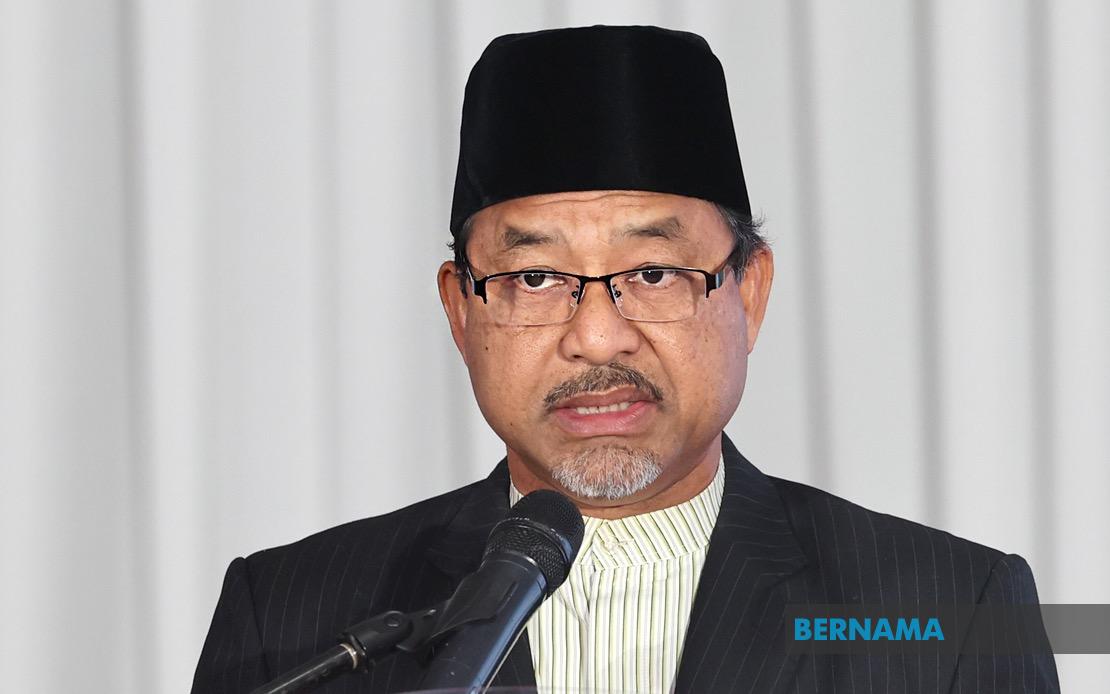
Kelantan has successfully maintained forest cover across more than half its land area, demonstrating the northeastern state's commitment to environmental stewardship aligned with national policy objectives. The forested landscape spans 778,708.34 hectares, representing 51.79 per cent of Kelantan's total territorial expanse, according to an assembly statement made by Menteri Besar Datuk Mohd Nassuruddin Daud during deliberations at the state legislative assembly in Kota Bharu.
This achievement carries significance beyond regional boundaries, as Kelantan's forest retention directly supports the broader Peninsular Malaysia Forestry Policy framework, which establishes a minimum threshold of 50 per cent forest and tree coverage across the country. By surpassing this baseline requirement, the state demonstrates that environmental conservation remains operationally feasible within a context of broader economic activities and administrative priorities. The maintenance of forest density at these levels proves particularly important for a state navigating the balance between preserving natural capital and pursuing development initiatives.
The Menteri Besar outlined the multi-layered approach guiding Kelantan's forest management strategy. The state government, operating through its Forestry Department, has adopted systematic protocols for identifying government-held land parcels that meet criteria for formal gazettal as Permanent Reserved Forests, commonly abbreviated as HSK in Malaysian forestry terminology. This designation provides legal protection and ensures long-term preservation of these critical ecosystems, preventing conversion to alternative land uses that might otherwise prove economically tempting.
Further strengthening the protective framework, the state has implemented formal procedures for classifying protected forests according to designated functional categories, as established under Section 10(1) of the National Forestry Enactment (Adoption) (Amendment) (No. 3) 2025. This regulatory apparatus allows authorities to tailor conservation measures to specific forest purposes, whether prioritising biodiversity protection, watershed management, or recreational access. The differentiated classification system reflects modern forest management approaches that recognise diverse ecological and social values within forested landscapes.
Beyond defensive measures safeguarding existing forests, Kelantan has embraced proactive regeneration initiatives. The state participates actively in the Greening Malaysia campaign, deploying forest restoration and tree-planting programmes designed to enhance overall canopy coverage and ecosystem resilience. These programmes extend conservation efforts beyond simply protecting remnant forests toward actively rebuilding forest ecosystems in degraded areas, addressing the cumulative effects of previous land-use changes and supporting long-term forest persistence.
Kritical to Kelantan's forest sustainability framework is the deliberate balancing of conservation imperatives against legitimate economic development aspirations. Rather than treating these objectives as mutually exclusive, the state government has articulated a philosophy of sustainable equilibrium, where Permanent Reserved Forests receive robust protection while development activities proceed in compatible zones. This measured approach acknowledges that contemporary governance must serve both environmental and economic constituencies, avoiding the false choice between absolute preservation and unrestricted exploitation.
The sustainability framework explicitly incorporates intergenerational equity principles, ensuring that present-day resource management decisions do not foreclose options or degrade environmental assets available to future Kelantan residents. This orientation aligns with global sustainability thinking, translating abstract principles into concrete forest management commitments. It reflects recognition that forest ecosystems provide services—water regulation, carbon sequestration, biodiversity habitat—whose value may not be fully appreciated through conventional market pricing but whose loss would impose substantial long-term costs.
Technological innovation features prominently in Kelantan's contemporary forest protection architecture. The state has integrated advanced monitoring systems capable of detecting forest area changes and identifying potential encroachment threats at early stages, before problems become entrenched or difficult to remedy. These technological applications represent a significant upgrade from historical reliance on periodic patrols and reactive enforcement, enabling more responsive and precisely targeted conservation interventions.
The verification protocol employed by Kelantan authorities demonstrates procedural rigour and commitment to evidence-based enforcement. When monitoring systems flag potential encroachment or forest cover loss, field teams conduct ground-level patrols and inspections to verify findings before initiating formal enforcement action. This stepped approach prevents false positives from triggering unnecessary confrontations whilst ensuring that confirmed violations receive prompt attention, balancing administrative efficiency with respect for affected parties.
Kelantan's forest management experience offers pertinent lessons for other Malaysian states and Southeast Asian jurisdictions grappling with forest loss pressures. The northeastern state demonstrates that maintaining forest cover above critical thresholds remains achievable when supported by adequate institutional capacity, clear legal frameworks, technological tools, and political commitment. For Malaysia's broader forest conservation agenda, Kelantan's sustained achievement suggests that national forestry policy targets remain realistic even in states facing competitive pressures for agricultural conversion or resource extraction.
The specific focus on protecting Permanent Reserved Forests whilst pursuing complementary restoration activities provides a replicable model combining defensive and offensive conservation strategies. Rather than accepting static forest boundaries, the approach actively strengthens the overall forest resource base through targeted planting programmes. This dynamic framework proves more resilient than purely preservationist approaches that lack mechanisms for restoring degraded landscapes or expanding forest coverage in suitable locations.
For Malaysian policymakers and regional observers, Kelantan's forest stewardship demonstrates practical implementation of sustainability principles that often remain theoretical in policy documents. The state translates national forestry commitments into concrete hectare-specific targets, designates protected areas through formal legal mechanisms, deploys monitoring technology, and maintains enforcement capacity. This operational grounding provides evidence that achieving ambitious forest cover objectives requires sustained administrative effort and institutional capacity beyond rhetorical commitment.

