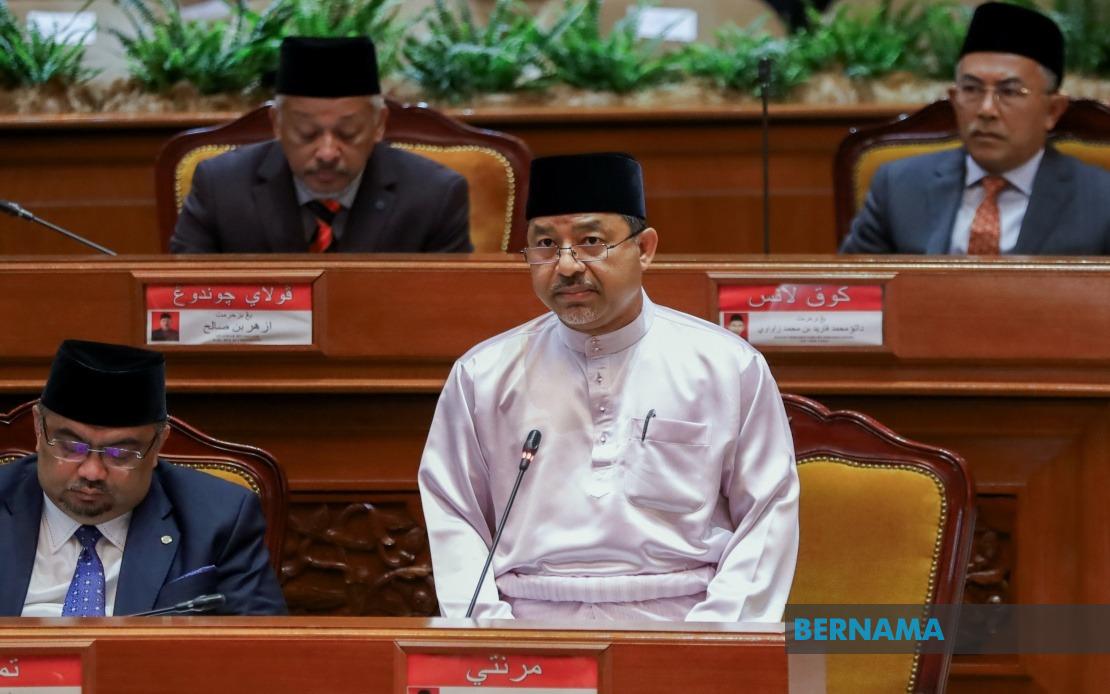
Kelantan's dominance in Malay reserve land ownership remains unchallenged among Peninsular Malaysian states, with the northeastern state controlling 526,083 hectares representing 91.5 per cent of its total territory. Menteri Besar Datuk Mohd Nassuruddin Daud disclosed these figures during a State Legislative Assembly sitting in Kota Bharu, confirming data compiled through June 2026. The reserve land is distributed across 816,020 individual ownerships, reflecting a deeply embedded structure of indigenous land tenure that has shaped Kelantan's economy and society for generations.
The state's non-Malay reserve landholdings occupy a substantially smaller footprint, comprising only 48,344 hectares or 8.4 per cent of Kelantan's total land area, held through 43,255 separate titles. This pronounced imbalance underscores how thoroughly Malay reserve provisions have shaped property distribution patterns in the state. The combined figures yield a total of 574,427 hectares of recorded land ownership involving 859,275 titles across all eleven districts, providing a comprehensive snapshot of Kelantan's property landscape as administered through state records.
Kelantan's pre-eminence in reserve land holdings carries significant implications for Malaysian federalism and indigenous land rights frameworks. The Malay Reservations Enactment, a colonial-era statute inherited and perpetuated through Malaysia's constitutional architecture, designates certain land specifically for Malay and Muslim ownership. Kelantan's exceptionally high proportion—over nine-tenths of total land—reflects both the state's historical demographics and deliberate policy choices to maintain these restrictions. This concentration distinguishes Kelantan from other states where reserve land, whilst substantial, occupies lesser percentages of total territory.
Distribution across Kelantan's eleven districts reveals considerable geographic variation in reserve land concentration. Gua Musang emerges as the single largest holder with 122,735 hectares, benefiting from its expansive territory and lower population density. Pasir Mas and Tanah Merah follow with 56,656 and 56,246 hectares respectively, while Kuala Krai accounts for 53,473 hectares. This geographic dispersal means that reserve land protections affect different districts with varying intensity, creating distinct property market dynamics and ownership opportunities across the state. The distribution reflects historical settlement patterns, with more developed coastal districts showing different reserve land concentrations than interior agricultural and forested regions.
Percentage analysis reveals even starker concentration in certain districts. Tanah Merah achieves the highest proportion at 99.9 per cent reserve land coverage, effectively rendering the district almost entirely subject to these ownership restrictions. Tumpat, Pasir Puteh, Bachok, Pasir Mas, Kota Bharu, and Jeli follow with similarly elevated percentages. This means residents in these districts encounter virtually universal restrictions on land transactions, creating a unified property regime where Malay ownership predominates and non-Malay participation remains marginal. The practical consequence involves limited market mechanisms for certain populations and concentrated wealth consolidation among Malay landowners.
Kelantan has recorded no reduction in Malay reserve land area during the period examined, suggesting successful preservation of these holdings despite potential pressures from development, urbanisation, and economic changes. This maintenance reflects both state government commitment to reserve land protection and limited conversion of reserve status to other uses. The absence of erosion contrasts with some other states where industrial development or urban expansion has necessitated reserve land transfers to alternative designations. Kelantan's achievement in preserving these holdings intact demonstrates effective administrative control and political will to sustain historical land allocations.
The legislative framework governing these reserves provides state authorities with substantial regulatory powers. Section 13A of the Kelantan Malay Reservations Enactment explicitly permits non-Malay property ownership within reserve areas, introducing a degree of flexibility within the broader restriction framework. However, the same provision grants state administrators discretionary authority to regulate such transactions, including complete prohibition when deemed necessary to protect reserve land interests. This dual arrangement allows controlled exceptions whilst maintaining the essential protective structure, creating a regulated property market rather than an absolute closure.
The interplay between reserve land preservation and Malaysia's multicultural property landscape creates ongoing policy tensions. Reserve provisions aim to protect indigenous Malay-Muslim economic interests through guaranteed land access and ownership restrictions. Yet these measures also constrain property market efficiency, limit non-Malay investment opportunities, and create administrative complexity. Kelantan's particularly high reserve land proportion intensifies these dynamics, concentrating restrictions more heavily than in states with more balanced reserve-to-non-reserve land ratios. The state thus represents both an exemplar of reserve land protection and a case study in the potential costs and benefits of such preservation.
For Malaysian investors and property developers, Kelantan's reserve land concentration shapes commercial strategy and opportunity assessment. The extremely limited non-reserve land—just 48,344 hectares—constrains where non-Malay investors can acquire property or develop commercial ventures. This scarcity potentially drives value appreciation in non-reserve parcels whilst limiting overall market competitiveness. Developers undertaking projects in Kelantan must navigate reserve restrictions, potentially seeking exceptions or partnering with Malay counterparts. The state's reserve land structure therefore functions as a significant regulatory determinant of business activity and investment flows.
Regional perspectives on Kelantan's reserve land holdings intersect with broader Southeast Asian discussions regarding indigenous land rights and economic protection. While Malay reservations represent a distinctly Malaysian approach, other countries employ comparable mechanisms—Thailand protects certain lands for ethnic minorities, Indonesia reserves forest territories, and the Philippines designates indigenous cultural communities' lands. Kelantan's comprehensive implementation demonstrates one model for balancing indigenous economic protection with property market functionality, offering comparative lessons for neighbouring jurisdictions addressing similar questions about land tenure and indigenous welfare.

