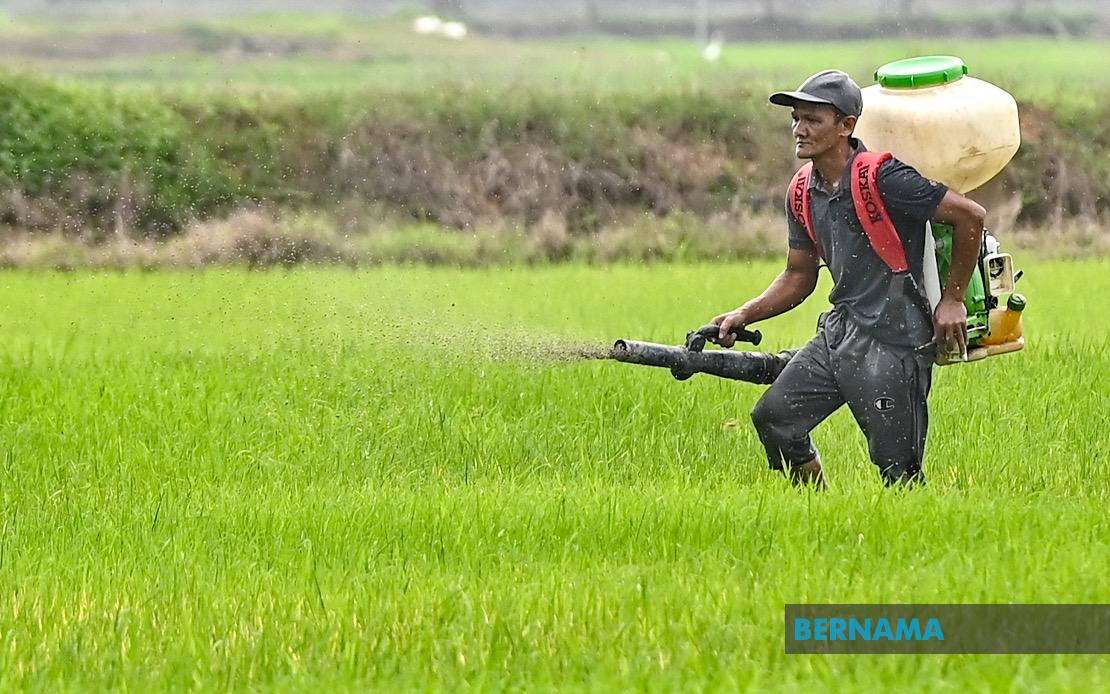
The Kelantan government is stepping up its commitment to agricultural development by channelling RM3.64 million into the state Agriculture Department this year, funding a comprehensive suite of 10 projects designed to modernise farming practices and expand food production across the state. Datuk Tuan Mohd Saripudin Tuan Ismail, chairman of Kelantan's Agriculture, Agro-Food Industry and Commodity Committee, revealed the allocation while responding to a legislative assembly question about the state's food security strategy, underscoring the administration's focus on transforming the sector into a more productive and commercially viable pillar of the economy.
The investment initiatives span a broad range of agricultural pursuits, from reclaiming dormant farmland to intensifying padi cultivation and diversifying into high-value commodity crops. Vegetable and fruit production schemes feature prominently, reflecting growing consumer demand in the region, while entrepreneurship development programmes aim to create pathways for farmers to transition from subsistence-level operations to market-oriented enterprises. This multi-pronged approach signals recognition that agricultural transformation requires not just capital injection but also structural changes in how farming is organised and commercialised across the state.
Commercial agriculture is being actively bolstered through the Kelantan State Agriculture Development Corporation (PKPNK), which operates flagship projects including sophisticated chilli fertigation systems, honeydew melon cultivation, and hydroponic vegetable farming at Rong Chenok Agro Valley. These facilities represent a shift toward technology-intensive agriculture, reducing water consumption and increasing yield consistency—crucial advantages in Malaysia's tropical climate where seasonal variability and pest pressures can devastate traditional farming. The hydroponic model particularly offers promise for year-round production and reduced dependency on seasonal rainfall, a consideration increasingly relevant amid climate variability.
Kelantan's livestock sector has become a notable employment generator, with more than 380 breeders now participating in state-supported programmes covering cattle, goats, sheep, deer, buffalo, and quail production. Government provision of equipment and technical support has lowered barriers to entry for smallholder farmers, enabling rural communities to diversify income streams beyond traditional crops. The breadth of livestock species reflects efforts to cater to diverse market demands and cultural preferences across Kelantan and neighbouring states, positioning local producers to supply regional markets more comprehensively.
The fisheries and aquaculture sector demonstrates particularly impressive momentum, with RM382,094 distributed among 122 breeders during the period under review. Kelantan's aquaculture output reached 7,901.74 tonnes valued at RM76.2 million in 2025, with authorities targeting 8,000 tonnes for the current year—a modest but realistic growth projection. The state has invested substantially in breeding infrastructure, constructing over 130 artificial hatcheries and releasing 1.26 million fish and prawn fry into public waters, efforts that simultaneously boost wild fish stocks and support commercial breeders through fingerling supply chains.
PKPNK's own aquaculture operations underscore the corporation's significance as a production anchor. Its catfish hatchery produces up to one million fry annually, while tilapia production reaches 500,000 fry per year, providing seedstock for downstream commercial farmers and recreational fishing communities. The white prawn project at Pantai Geting, Tumpat, has become a flagship operation, generating approximately 400,000 kilogrammes annually and demonstrating that Kelantan can compete in premium aquaculture segments. These facilities create multiplier effects throughout rural economies, supporting feed suppliers, transport operators, and processing enterprises.
Beyond production, the state has constructed critical marketing infrastructure to help farmers access consumers and command fair prices. As of June, 1,560 entrepreneurs benefited from 74 marketing facilities and 99 retail outlets operated or facilitated by the government. This downstream investment recognises that production capacity means little without reliable distribution channels—a lesson learned across Southeast Asia where many agricultural initiatives falter at the commercialisation stage.
The Kota Bharu Rural Transformation Centre (RTC) stands as the flagship marketing institution, serving as both an agro-food distribution hub and workspace provider. Housing approximately 800 entrepreneurs, the centre has generated RM4.16 billion in cumulative sales since 2012, demonstrating the viability of collective marketing arrangements where smallholders pool products and share retail space. Such models reduce individual farmer exposure to supply-chain risks while providing urban consumers with convenient access to fresh, locally-produced goods—a growing preference among Malaysian consumers increasingly conscious of food provenance and freshness.
Kelantan's agricultural push carries significance beyond state boundaries, as the region sits within Malaysia's broader food security framework. With domestic agricultural production meeting only approximately 25 per cent of the country's food needs, state-level initiatives in high-production areas like Kelantan contribute meaningfully to national self-sufficiency goals. The emphasis on diverse commodity production—from vegetables to aquaculture products—addresses multiple nutritional needs rather than concentrating on single crops, a more resilient approach to food system planning.
The strategic focus on entrepreneurship and value-addition reflects sophisticated policymaking beyond simple production subsidy. By investing in marketing infrastructure, training, and small-business support alongside farm production inputs, Kelantan positions agricultural development as a rural economic development tool. This approach can generate sustained livelihoods rather than creating temporary employment spikes, encouraging younger generations to view farming as a viable career path—crucial as agricultural labour forces age across Southeast Asia.
For Malaysian policymakers and neighbouring state governments, Kelantan's integrated approach offers a template. The combination of land utilisation programmes, technology adoption (hydroponics, hatcheries), livestock diversification, and downstream marketing infrastructure addresses constraints at multiple points in the agricultural value chain. Rather than viewing agriculture in isolation, the state treats it as interconnected with rural commerce, entrepreneurship, and food system resilience—frameworks increasingly recognised as essential for sustainable development in an era of climate uncertainty and global supply-chain volatility.

