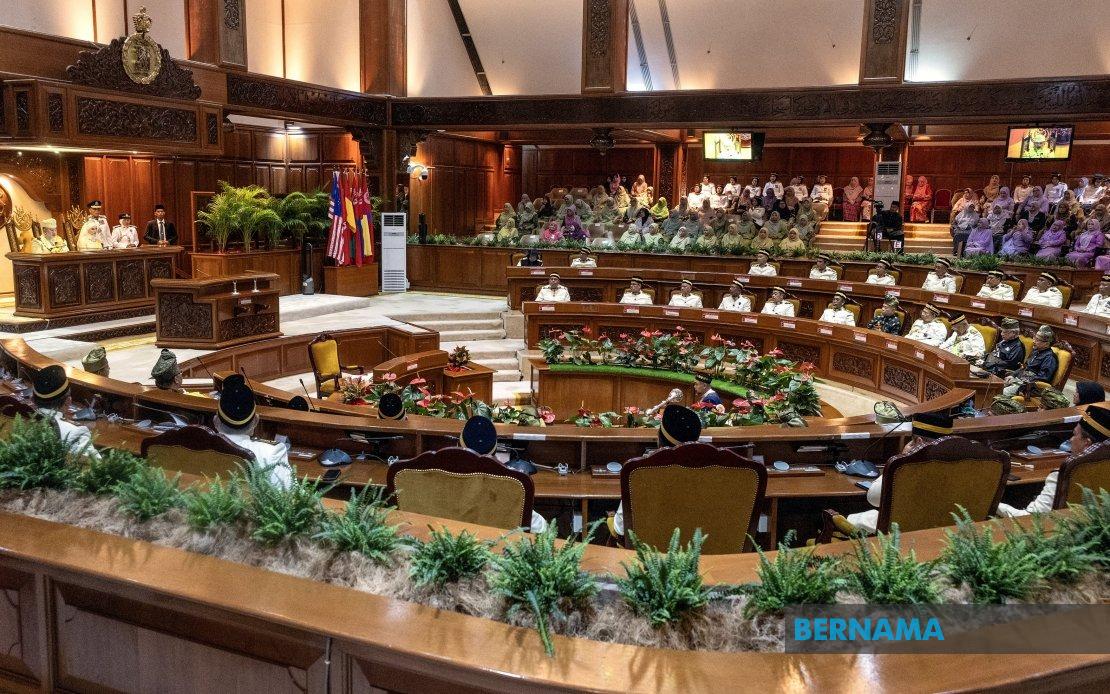
Kelantan's government will introduce sweeping changes to its Syariah criminal legislation when it tables the Syariah Offences (Kelantan) Bill 2026 at the State Legislative Assembly sitting scheduled for next Tuesday. The new legislation represents a significant response to a pivotal Federal Court decision that fundamentally reshaped the constitutional landscape governing the division of religious law-making powers between state and federal authorities across Malaysia.
Deputy Menteri Besar Datuk Dr Mohamed Fadzli Hassan outlined the rationale behind the legislative overhaul, explaining that the new Bill is designed to supersede the Kelantan Syariah Criminal Code (I) Enactment 2019 following the Federal Court's landmark judgment delivered on February 9, 2024. In that ruling, the court examined a constitutional challenge brought by Kelantan lawyer Nik Elin Zurina Nik Abdul Rashid and another party, ultimately determining that the state assembly had ventured beyond its proper constitutional boundaries when it enacted the 2019 legislation.
The implications of the Federal Court's decision extended far beyond Kelantan's borders. In an 8-1 majority verdict, the court declared 16 of the 18 challenged provisions of the 2019 enactment null and void, establishing the fundamental principle that state legislatures cannot create offences in areas already reserved for federal parliamentary authority. This judgment ignited considerable debate throughout Malaysia regarding how religious criminal law should be administered and where precisely the dividing line between state and federal jurisdiction should be drawn in Syariah matters—a question that touches on sensitive constitutional principles and federalism itself.
The drafting process for the new Kelantan Bill has been methodical and comprehensive, with preparatory work commencing in mid-2024. Mohamed Fadzli disclosed that the government established a dedicated Committee for the Amendment of the Kelantan Syariah Criminal Code (I) Enactment 2019, bringing together diverse expertise spanning civil law practitioners, Syariah legal specialists, university academics, constitutional law scholars, and serving Syariah judicial officers. This multidisciplinary approach reflects recognition that navigating the technical constitutional issues while maintaining religious and social objectives requires input from multiple professional perspectives.
Before formal presentation to the assembly, the draft legislation underwent rigorous review by the Kelantan Council of Ulama, operating under the auspices of the Kelantan Islamic Religious and Malay Customs Council (MAIK). This consultation process underscores the government's commitment to securing religious legitimacy and scholarly approval for the proposed changes, acknowledging that any Syariah legislation requires endorsement from Islamic authority structures to command public acceptance.
The new Bill encompasses a substantial legislative framework comprising nine distinct parts, 62 clauses, and one accompanying schedule. According to Mohamed Fadzli, the drafting methodology adhered strictly to the constitutional principle of "pith and substance," a legal doctrine that examines whether legislation's true character falls within a legislature's constitutional powers regardless of how it is formulated. This approach ensures the new Bill operates comfortably within the bounds established by the Federal Court's judgment while still advancing the state's regulatory objectives.
A notable feature of the proposed legislation is its incorporation of reformative provisions alongside the core criminal offences framework. The Deputy Menteri Besar emphasized that the Bill emphasizes religious obligations while simultaneously introducing several new provisions that modernize and reform Kelantan's Syariah criminal law architecture. This dual emphasis suggests the government intends to use this legislative opportunity not merely to comply with court directives but to enhance the substance and structure of religious law administration across the state.
The Federal Court's judgment, arising from Nik Elin Zurina Nik Abdul Rashid's constitutional challenge, prompted introspection across Malaysian states regarding their own Syariah legislation. The decision established that merely labelling something as a Syariah matter does not automatically grant state legislatures unlimited power to regulate it. Rather, the court confirmed that certain criminal offences, once enumerated in federal legislation, fall outside state competence regardless of their religious character. This principle holds significant implications for other states considering similar legislation, as it establishes constitutional boundaries that cannot be breached through creative legislative drafting.
Deputy Menteri Besar Mohamed Fadzli expressed confidence that all state assemblymen would support the Bill's passage, suggesting the government anticipates relatively smooth legislative progression. His confidence likely reflects prior consultation with coalition partners and political stakeholders during the extended drafting period. However, the legislative process will provide an opportunity for substantive debate about how Kelantan balances religious governance objectives with constitutional limitations—a conversation relevant to other Malaysian states facing similar issues.
For Malaysian and Southeast Asian observers, Kelantan's legislative response demonstrates how regional legal systems navigate the complex intersection of religious law and constitutional federalism. The Bill represents neither capitulation to court authority nor defiance of religious governance principles, but rather a careful attempt to craft legislation that satisfies both constitutional requirements and religious governance objectives. The upcoming assembly debate will reveal whether this balance has been successfully achieved and whether other states might adopt similar approaches to their own Syariah legislation frameworks.
The tabling of the Syariah Offences (Kelantan) Bill 2026 next week marks a pivotal moment in Kelantan's religious governance history. Beyond the technical legal questions, the legislation reflects broader questions about how Malaysian states exercise authority within a federal constitutional framework while maintaining religious and cultural commitments. The process undertaken—extensive drafting, multidisciplinary input, and Islamic scholarly consultation—may serve as a template for other jurisdictions confronting similar constitutional and legislative challenges in the years ahead.

