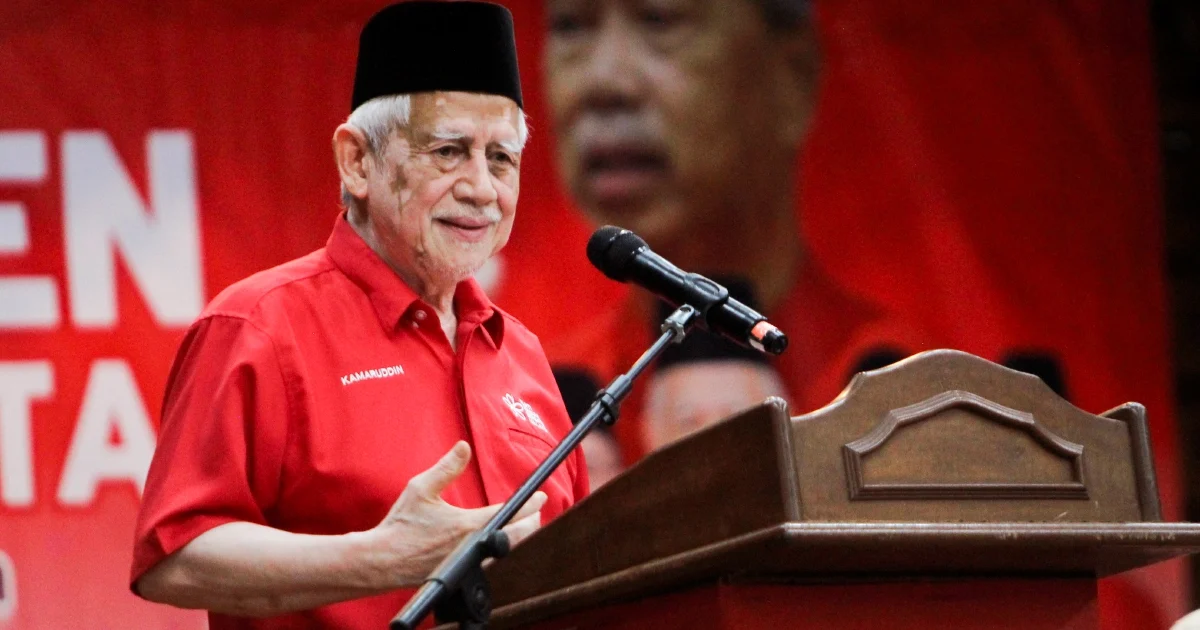
The Kelantan chapter of Bersatu has responded with apparent equanimity to Perikatan Nasional's recent move to excise two senior figures from its organisational hierarchy. The coalition announced its intention to drop both Datuk Seri Mohamed Azmin Ali and Datuk Dr Mohd Radzi Md Jidin from the leadership arrangement, a decision that the state-level party representatives say they anticipated and accept without resistance.
This measured response from Kelantan's Bersatu leadership speaks to a broader realignment within Perikatan Nasional, the informal coalition that has positioned itself as a check against the current federal government. The removal of these two individuals from the formal leadership structure represents a significant internal restructuring, yet the Kelantan delegates' calm acceptance suggests that such moves may have been telegraphed through party channels ahead of the public announcement.
Mohamed Azmin Ali has held various prominent roles within Malaysian politics, most notably serving as Selangor Menteri Besar and later as federal minister. His presence in Perikatan Nasional's framework has been consequential given his control over significant political networks and his ability to mobilise support across multiple constituencies. Similarly, Mohd Radzi Md Jidin's positions in government have positioned him as an influential figure within the broader coalition structure. Their simultaneous removal signals a deliberate recalibration of where power and decision-making authority will reside within the opposition bloc.
The state-level party's acceptance of this arrangement without apparent friction indicates that Kelantan Bersatu sees strategic advantage or at minimum no disadvantage in the reorganisation. State politics often operate on different rhythms and priorities than national-level manoeuvres, and it is plausible that the Kelantan branch views this reshuffle as purely a federal matter that does not materially affect its provincial operations or internal structure. The party's leadership in the state may also recognise that accommodating such changes without public complaint preserves party unity and avoids the appearance of internal discord.
For Malaysian political observers, such leadership adjustments within opposition coalitions warrant close scrutiny. Perikatan Nasional has attempted to position itself as a coherent alternative power structure, yet its member parties—including Bersatu, PAS, and others—frequently operate with divergent interests and priorities. When senior figures are removed from formal positions, the actual distribution of influence may remain unclear to outside observers, particularly when state-level branches do not publicly resist.
The Malaysian political landscape has become increasingly fluid in recent years, with parties and politicians regularly shifting alliances and positions. Kelantan, a state with a long history of PAS governance and influence, sits at an interesting intersection of Perikatan Nasional politics. Bersatu's presence there competes with PAS for dominance within the opposition coalition framework, and the party's muted response to the national leadership changes may reflect calculations about maintaining its position within that competitive environment.
The removal of Azmin and Radzi could also be understood as part of Perikatan Nasional's effort to clarify its leadership hierarchy and decision-making processes. Ambiguity about who holds actual power within coalition structures can undermine coherence and create confusion about messaging and policy direction. By formally excising these figures from the leadership line-up, the coalition may be attempting to establish clearer chains of command and reduce factional tensions that could arise from competing power centres.
It remains to be seen whether this restructuring will translate into more effective opposition politics or whether it signals deeper divisions that have simply been formally acknowledged. The Kelantan Bersatu branch's lack of public objection does not necessarily indicate broader contentment within the party with the direction being set at the national level. State parties often maintain strategic silence on federal matters to avoid becoming entangled in conflicts they cannot directly influence or control.
For Malaysian readers and regional observers monitoring opposition dynamics, this development underscores the complexity of coalition politics in Malaysia's multi-party environment. The removal of two significant figures from Perikatan Nasional's leadership does not automatically translate into a weaker opposition or a stronger one; rather, it reflects the coalition's ongoing attempts to adapt its internal structures to political realities and factional pressures. How effectively the coalition implements and sustains this reorganisation will likely determine its relevance in the evolving national political landscape.

