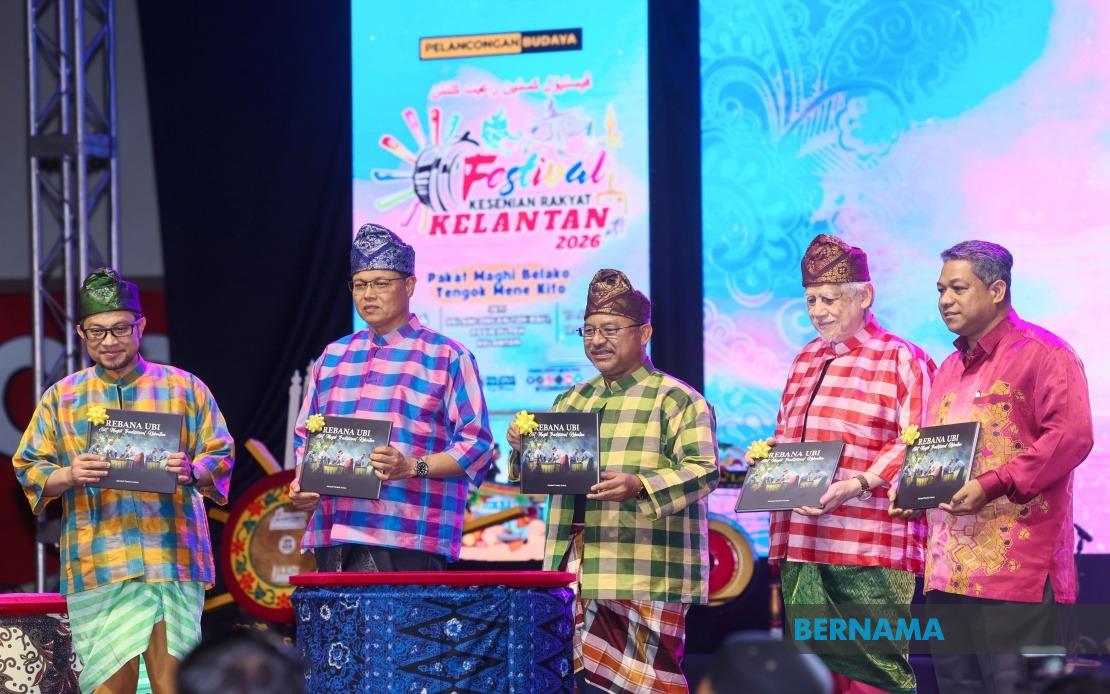
The Kelantan Arts Festival 2026, staged at Tok Bali Tourism Jetty in Pasir Puteh between July 1 and 4, reinforced the importance of preserving regional cultural traditions whilst strengthening the bonds that connect Malaysians across ethnic and geographic lines. Organised by the Tourism, Arts and Culture Ministry (MOTAC) through the National Department for Culture and Arts (JKKN), the four-day celebration provided a comprehensive showcase of Kelantan's distinctive artistic and cultural legacy, positioning the state as a custodian of Southeast Asian heritage in an era where such traditions face pressure from globalisation.
The festival's centrepiece was the "Titih Bonda Pusaka Ayahanda" special performance, a multi-racial percussion ensemble that symbolised social harmony through music and movement. By bringing together musicians from different communities on a single stage, the production embodied the Malaysia MADANI framework—the government's vision of establishing a prosperous, inclusive and resilient nation. This deliberate programming choice underscored how the arts can transcend divisive narratives and create spaces where Malaysians of all backgrounds celebrate shared cultural values, a message particularly resonant in Kelantan where cultural identity carries significant weight in the public consciousness.
The roster of performers illustrated the depth of artistic talent within the state. Roy Kapilla, Amy Search, Datuk Dr Lim Swee Tin, Paksu Agil, Megat Haikal and Zamry Gerak Khas represented different generations of Kelantan's entertainment landscape, from contemporary popular arts to traditional forms. The Dikir Barat Kala Mahajara ensemble and Mak Yong Kijang Mas troupe brought to the foreground the intricate, historically rooted performance traditions that define Kelantan's arts scene. Their participation signalled institutional commitment to ensuring these art forms reach younger audiences and remain economically viable for practitioners.
Beyond spectacle, the festival functioned as an interactive cultural learning hub. Traditional dance competitions targeting children introduced younger Malays to classical movement forms at a formative age, helping reverse the trend of waning youth participation in heritage arts. The Mek and Awe Comey traditional costume fashion show elevated historical dress codes into contemporary visual expression, demonstrating that cultural preservation need not mean stagnation. The ADABI cooking competition similarly celebrated Kelantan's distinct culinary traditions, recognising food as an integral, lived dimension of cultural identity that connects communities across generations.
The inclusion of folk sports demonstrations expanded the festival's scope beyond performing arts to encompass the full spectrum of cultural expression. These competitions, rooted in Kelantan's rural and coastal traditions, represent embodied knowledge systems developed over centuries. By staging them prominently, JKKN acknowledged that culture encompasses not merely what is performed on stage but what is practiced in daily life and community gatherings. This holistic approach resonates with contemporary heritage conservation thinking, which emphasises intangible cultural elements that bind communities together.
Craft product sales and exhibitions by government agencies and non-governmental organisations integrated economic dimensions into cultural celebration. Artisans gained direct market access whilst visitors discovered the economic value embedded in traditional skills. For Kelantan, where handicrafts represent a significant revenue stream for rural communities, such platforms provide crucial opportunities to sustain livelihoods whilst maintaining cultural continuity. NGO participation broadened the conversation to encompass broader social concerns—heritage conservation, community development, environmental sustainability—positioning culture not as isolated nostalgia but as integral to contemporary governance.
The community feast emerged as perhaps the festival's most inclusive element. Shared meals transcend ceremonial boundaries, creating organic spaces where strangers become momentary neighbours. In the context of heightened social polarisation across Malaysia, such occasions—however modest—provide countervailing experiences of genuine community cohesion. The elaborate decoration of the feast space transformed it from mere sustenance into ritual performance, reinforcing the Kelantan cultural principle that everyday activities carry aesthetic and spiritual dimensions.
Datuk Shaharuddin Abu Sohot's remarks as MOTAC secretary-general framed FKRK 2026 as aligned with broader national objectives. This institutional validation carries significance beyond ceremony. When federal ministries publicly champion state-level cultural initiatives, they signal that heritage preservation constitutes legitimate national policy, not peripheral local interest. For Kelantan, where cultural distinctiveness occasionally intersects with political tensions, such federal endorsement provides reassurance that the state's traditions merit protection and celebration.
The festival's governance structure—jointly managed by MOTAC, JKKN, the Kelantan state government, and private sector partner Nasrom Travel, with support from local authorities—exemplified collaborative federalism. Kelantan Menteri Besar Datuk Mohd Nassuruddin Daud's opening alongside State Tourism, Culture, Arts and Heritage Committee chairman Datuk Kamarudin Md Nor and JKKN director-general Mohd Amran Mohd Haris demonstrated alignment between state and federal cultural policy objectives. Such coordination, when functioning effectively, enables resource sharing and prevents duplication whilst respecting state autonomy over cultural matters.
For Malaysian tourism, the festival represents strategic positioning of Kelantan as a cultural destination rather than merely a geographic waypoint. As Southeast Asian travellers increasingly seek authentic cultural experiences beyond commercial entertainment zones, regional governments that invest in heritage conservation gain competitive advantage. Kelantan's festival calendar, linked to its distinctive arts ecosystem, offers visitors substantive engagement with living traditions rather than staged cultural tourism.
The broader significance extends to Malaysia's cultural diplomacy. In an era where soft power increasingly determines regional influence, governments invest in projecting cultural identity. Kelantan's arts heritage—from Mak Yong theatre to dikir barat vocal traditions—represents distinctive Malaysian cultural assets with Southeast Asian resonance. By celebrating these traditions domestically, Malaysia simultaneously constructs a cultural narrative for external audiences, positioning itself as a custodian of diverse, flourishing artistic traditions.
Moving forward, the festival's success depends on sustained institutional support and audience development. One-off celebrations, however vibrant, cannot reverse decades-long declines in participation in traditional arts. MOTAC and JKKN must translate the momentum generated by FKRK 2026 into ongoing programmes—training academies, equipment subsidies, performance circuits—that provide practitioners with viable career pathways. Without such structural support, even enthusiastically attended festivals risk becoming nostalgic interludes rather than catalysts for cultural renewal.
The Kelantan Arts Festival 2026 ultimately embodied competing imperatives that define contemporary cultural policy across Southeast Asia: honouring traditions whilst remaining relevant to contemporary audiences, celebrating local distinctiveness whilst promoting national unity, and sustaining heritage economically without commodifying it beyond recognition. That it managed to address these tensions, even provisionally, suggests the festival merited its role as a platform for both cultural expression and nation-building.

