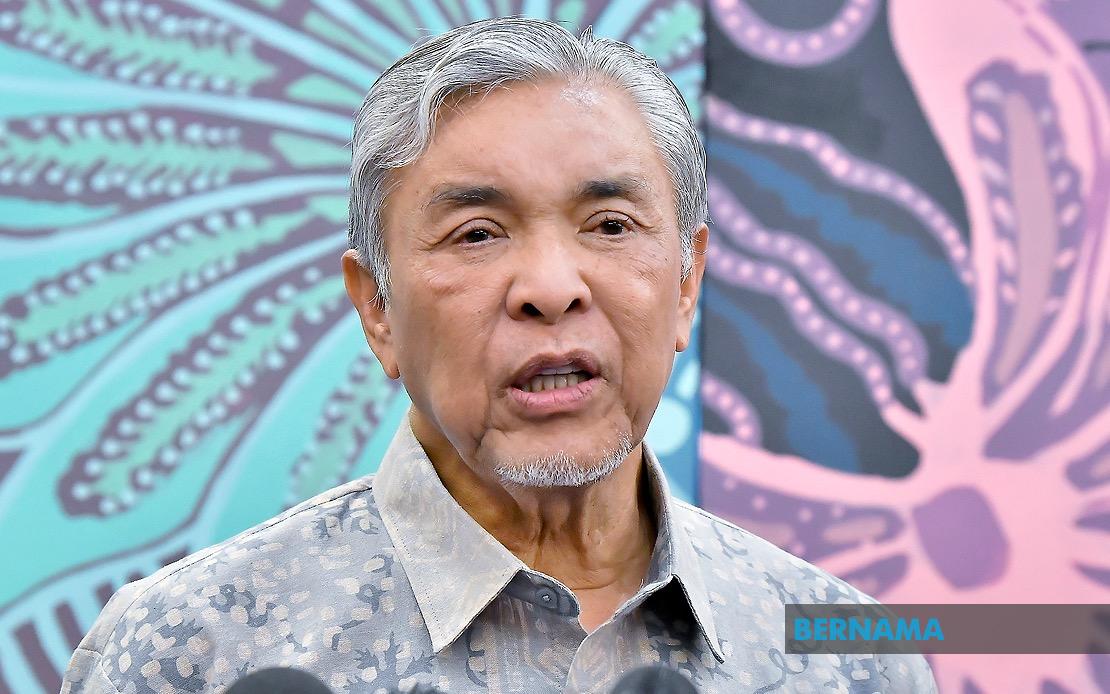
Deputy Prime Minister Datuk Seri Dr Ahmad Zahid Hamidi moved to clarify the intentions behind the proposed expansion of the South East Johor Development Authority, or KEJORA, emphasising that the initiative focuses on coordinating regional development rather than pursuing land acquisition in the affected districts. Speaking at an awards ceremony in Kota Tinggi on July 2, Zahid addressed concerns that had circulated among the public regarding KEJORA's territorial expansion, noting that misconceptions about the agency's ownership intentions needed to be dispelled.
The rural development portfolio holder, who also serves as Minister in the Rural and Regional Development Ministry, stressed that KEJORA's expansion proposal rests fundamentally on the agency's demonstrated track record of successful project implementation. With a 98.3 per cent success rate across its portfolio, KEJORA has established itself as a reliable development vehicle in the region. This strong performance, according to Zahid, provided the primary justification for extending the authority's coordination mandate across a broader geographical area in south-eastern Johor, particularly as the region experiences accelerating economic activity.
Zahid highlighted the transformative changes occurring throughout south-eastern Johor, with particular emphasis on Pengerang's emergence as a major development hub. The district's rapid expansion has been driven by substantial mega-projects and growing tourism investment, creating new demands for coordinated planning and infrastructure development. Rather than centralising land ownership, KEJORA's expanded role would facilitate better coordination among various development initiatives and government agencies operating across these fast-growing areas, ensuring more efficient resource allocation and project execution.
The government's confidence in the expansion proposal is reinforced by extensive public consultation. KEJORA commissioned a public feedback study that revealed 96 per cent of respondents supported the expansion initiative, suggesting broad-based acceptance among residents and stakeholders in the affected districts. This consultation process underscores the government's commitment to ensuring the expansion aligns with community priorities and concerns, rather than imposing development decisions from above.
Nevertheless, Zahid emphasised that regardless of public support levels, the final approval remains contingent upon constitutional approval from His Majesty Sultan Ibrahim and Tunku Mahkota Ismail, the Regent of Johor. This requirement reflects the constitutional framework governing state-level development authorities in Malaysia, where royal consent represents a crucial governance safeguard before expanding bureaucratic jurisdictions.
The financial commitment to KEJORA's operations reflects the government's prioritisation of south-eastern Johor's development agenda. The Rural and Regional Development Ministry has allocated approximately RM138 million to KEJORA for implementation of development projects across the region. This substantial budget supports 107 programmes already in operation, with approximately 350 additional smaller-scale projects scheduled to commence following completion of current initiatives. The scale of investment demonstrates the government's determination to sustain momentum in regional development despite broader fiscal constraints.
Parallel to the KEJORA expansion discussion, Zahid voiced support for a complementary proposal to elevate Pengerang's administrative status. Datuk Seri Azalina Othman Said, the Minister in the Prime Minister's Department overseeing Law and Institutional Reform and Member of Parliament for Pengerang, has advocated for upgrading Pengerang to full district status. Azalina's proposal acknowledges that Pengerang's rapid development trajectory has outpaced its current administrative framework, creating governance and service delivery challenges. The proposed elevation would grant Pengerang enhanced administrative autonomy and potentially improve local decision-making capacity for managing growth.
Beyond administrative reorganisation, Azalina has also championed the establishment of a new hospital serving Pengerang and surrounding areas. The proposal reflects recognition that rapid population growth and economic expansion have strained existing healthcare infrastructure, creating urgent medical service gaps. A dedicated hospital facility would enhance access to tertiary care and reduce pressure on existing medical centres in neighbouring jurisdictions, potentially improving health outcomes across the region.
For Malaysian policymakers and regional observers, KEJORA's expansion represents a broader strategic approach to managing growth in high-performing economic corridors. Rather than creating new bureaucratic layers, the coordination model emphasises leveraging existing agency capabilities to facilitate inter-agency collaboration and strategic planning. This approach proves particularly relevant for south-eastern Johor, where multiple simultaneous development projects risk creating coordination failures or duplicative infrastructure investments without proper oversight mechanisms.
The expansion proposal also reflects shifting attitudes toward regional governance in Malaysia, where development authorities have increasingly become preferred vehicles for managing economic growth in designated corridors. By framing the initiative as coordination rather than centralisation, the government attempts to address legitimate concerns about bureaucratic overreach while maintaining sufficient governance authority to execute complex, multi-stakeholder development programmes. However, the distinction between coordination and control remains sufficiently ambiguous that ongoing public scrutiny will likely continue until formal implementation details emerge.
For Johor specifically, the KEJORA expansion represents an opportunity to systematise development across a region experiencing transformative economic change. The state government's apparent backing, combined with strong public support, suggests the expansion will likely proceed following royal approval. Success will ultimately depend on whether KEJORA's coordination mechanisms genuinely improve development outcomes or merely add bureaucratic layers to existing processes, a distinction that will become apparent only as the expanded authority begins implementing its broadened mandate across south-eastern Johor.

