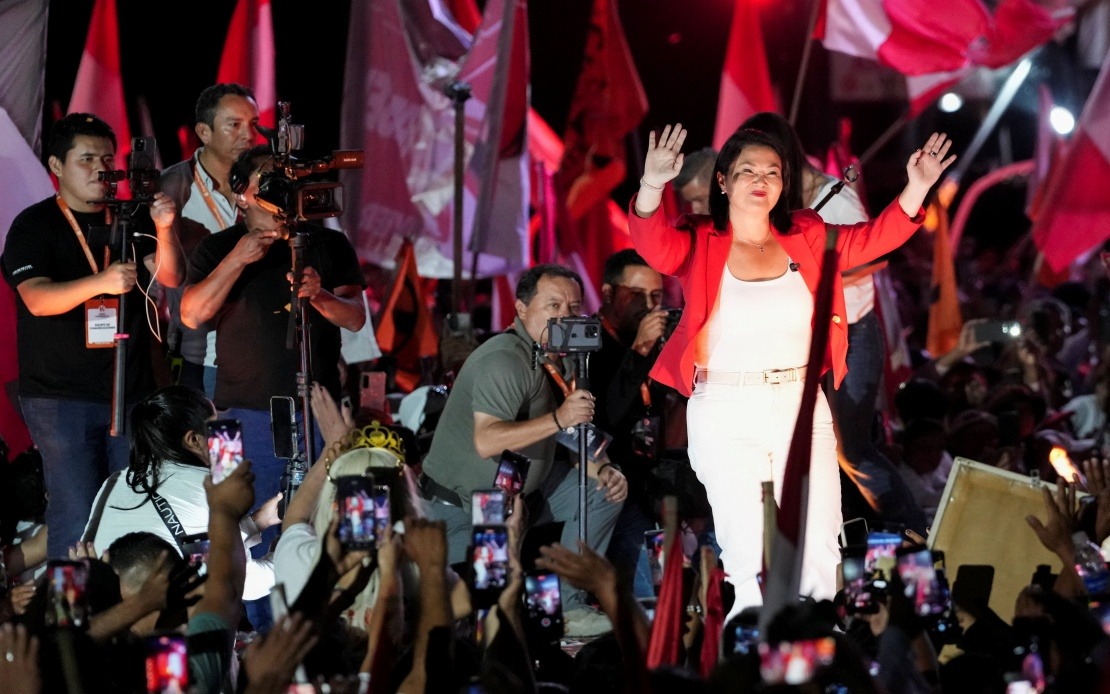
Peru's presidential election has produced one of the nation's closest political contests in recent memory, with right-wing candidate Keiko Fujimori emerging victorious by the narrowest of margins. According to the complete official tally released Monday by Peru's National Office of Electoral Processes (ONPE), Fujimori accumulated 50.135 per cent of valid votes cast during the June 7 election, translating to 9,223,396 ballots. Her nearest competitor, Roberto Sanchez of the Together for Peru coalition, captured 49.865 per cent—representing 9,173,755 votes. The razor-thin separation of merely 49,641 votes underscores the deeply polarised state of Peruvian politics and the intensity of public divisions surrounding this contest.
This represents a watershed moment for Fujimori personally, marking her first successful presidential bid after three previous unsuccessful campaigns. The Popular Force leader has maintained a prominent position in Peruvian politics for years, yet consistently faced electoral defeat until now. Her victory signals a significant shift in voter preferences, particularly among those who have grown weary of leftist governance and the political instability that characterised recent years. The complete processing of all 92,766 tally sheets from the election enables the ONPE to declare these results with full authority, providing closure to a counting process that proceeded without major incidents or widespread disputes over methodology.
Sanchez's background reflects the tumultuous recent political history of Peru. He served as a cabinet minister under former President Pedro Castillo during the 2021-2022 period, a government that ultimately collapsed amid constitutional crisis and institutional breakdown. This association with Castillo's controversial administration appears to have weighed upon Sanchez's campaign, despite his attempts to distance himself from the failures and scandals that defined that tenure. His narrow defeat suggests that approximately half of Peru's electorate remains sympathetic to centre-left governance, yet the majority has opted for an alternative political direction.
Fujimori's family legacy looms large over her victory. She is the daughter of Alberto Fujimori, who served as Peru's president from 1990 to 2000 and later became mired in corruption scandals and legal troubles stemming from his authoritarian governance and human rights violations. The elder Fujimori's complicated legacy—marked by both economic stabilisation and grave abuses—remains contentious in Peruvian society. That Keiko Fujimori has nonetheless achieved electoral success despite this family burden demonstrates how contemporary voter concerns have shifted beyond historical reckoning, with many prioritising economic recovery and institutional stability over accountability for past wrongs.
The electoral outcome reflects broader patterns observable across Latin America, where voters have been cycling between left and right-wing governments in response to economic dissatisfaction and perceived governmental incompetence. Peru's recent years have been characterised by political chaos, with multiple presidents, dissolved congresses, and constitutional crises creating profound uncertainty. Citizens have grown frustrated with institutional dysfunction and seek leaders promising order and economic management. Fujimori's victory can be interpreted as a demand for governmental competence and the restoration of predictable administration, regardless of ideological considerations.
For Malaysian and Southeast Asian observers, Peru's election offers instructive lessons about electoral volatility in developing democracies. The extreme closeness of this result—less than 0.3 percentage points separating the candidates—demonstrates how even in formal democracies with established institutions, electoral outcomes can remain intensely contested and produce deeply divided societies. The full completion of the official count provides legitimacy to Fujimori's victory, yet the minimal margin ensures that significant portions of the Peruvian population feel unrepresented and potentially disenfranchised.
The National Jury of Elections, Peru's ultimate electoral authority, confirmed that it would formally proclaim the official results on Friday, completing the constitutional requirements for declaring a winner. This timeline allows sufficient opportunity for any final legal challenges or recounts to be processed through proper channels. Such procedural adherence becomes particularly important given the extremely tight margin, which theoretically could have justified requests for verification in certain jurisdictions. The fact that both candidates appear willing to accept the complete count suggests that despite deep political divisions, fundamental respect for electoral processes and constitutional authority persists within Peru's political elite.
Fujimori's ascendancy occurs amid broader regional concerns about democratic backsliding and institutional weakness in Latin America. Her father's authoritarian governance during the 1990s created lasting scars within Peruvian society, yet his daughter has managed to rebrand herself as a contemporary political option. This dynamic raises questions about how societies process historical memory and whether electoral cycles can adequately serve as mechanisms for both change and accountability. The renewed prominence of the Fujimori political family suggests that Peru's voters have largely moved beyond concerns about historical justice to focus on immediate economic and governance challenges.
Looking forward, Fujimori assumes the presidency with a deeply divided mandate and a razor-thin popular majority. Nearly half of Peru's electorate rejected her vision for the nation, and governing under such circumstances requires considerable skill in bridge-building and consensus formation. Her ability to address Peru's substantial economic challenges, restore institutional credibility, and navigate the persistent political tensions that produced such a close election will determine whether her victory inaugurates a period of stability or merely represents another temporary shift in Peru's cyclical pattern of political instability.

