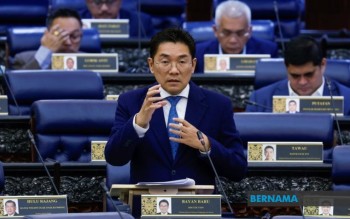
Kedah has pulled in RM1.4 billion in investment approvals spanning 50 projects during the opening quarter of 2026, signalling continued momentum in the state's industrial push, Deputy Investment, Trade and Industry Minister Sim Tze Tzin announced in Parliament on June 29. The figure reflects the ongoing appeal of the state's designated development zones, though the deputy minister's comments suggest the government is now grappling with a more nuanced challenge: ensuring that high-value industrial expansion translates into tangible prosperity for communities beyond the main industrial corridors.
The investments funnel into three main strategic hubs that the government has identified as economic anchors for the northern region. Kulim Hi-Tech Park, which has long served as the region's technological nucleus, continues to draw projects, while the newer Kedah Rubber City represents an attempt to revitalise traditional sectors through modern industrial practices. The Kerian Integrated Green Industrial Park extends this vision across state boundaries, positioning the initiative as a cross-state economic engine that reflects Malaysia's broader emphasis on integrated manufacturing zones.
Yet the deputy minister's parliamentary response to Ahmad Tarmizi Sulaiman, the Sik MP representing Perikatan Nasional, underscored a political reality that development officials cannot ignore. Rural constituencies like Sik, Baling, and Padang Terap—historically reliant on agriculture and traditional livelihoods—risk being left behind as investment clusters consolidate around established industrial precincts. Sim's acknowledgment of this tension suggests the administration recognises that narrow, geographically concentrated growth carries electoral and social risks, particularly in rural heartland areas where voter sentiment shapes parliamentary arithmetic.
The government's response hinges partly on infrastructure realignment. Federal Route FT004, the critical artery linking Kulim Hi-Tech Park to surrounding districts, will undergo significant widening with completion targeted for April 2028. This project aims to reduce transportation bottlenecks and, in theory, make inland areas more accessible to investors and employers. The timing is substantial—a two-year construction window reflects the scale of work required to genuinely reorient logistics networks toward historically peripheral regions.
Beyond physical infrastructure, the government is repositioning Baling, Sik, and Padang Terap within a different industrial narrative. Rather than competing with Kulim for technology-intensive manufacturing, these districts are being marketed as nodes for agriculture-based industries and food processing—sectors that leverage existing local capacity and supply chains. This segmentation approach acknowledges regional comparative advantages while attempting to foster complementary rather than duplicative development patterns.
The New Incentive Framework, which took effect in March 2026, represents a more deliberate policy lever aimed at broadening investment benefits geographically. By offering enhanced government incentives to investors who increase localisation—principally through greater reliance on local vendors and domestically sourced materials—the framework creates financial incentives for supply chain integration that extends beyond major industrial sites. A technology firm locating in Kulim would face stronger inducements to source components or services from neighbouring districts, theoretically creating employment and capability-building opportunities that ripple outward.
This mechanism assumes that foreign investors, when faced with improved financial terms, will actively seek local suppliers rather than defaulting to established regional or global networks. The framework's effectiveness will depend significantly on whether local enterprises in surrounding areas possess the capacity, reliability, and cost structure to meet investor specifications. Without parallel support for small and medium enterprises—training, financing, quality certification—the incentives may prove hollow.
The inclusive development framing advanced by Sim also touches on technology transfer and human capital. The deputy minister explicitly noted that industrial investments should accelerate know-how migration to local companies and strengthen their ability to integrate into global value chains. For rural areas with limited exposure to international manufacturing standards or digital-era supply chain management, this represents an ambitious agenda requiring coordinated vocational training and business advisory systems.
The parliamentary exchange itself reflects broader patterns in Malaysian politics. Backbench MPs representing rural constituencies increasingly demand assurances that major economic initiatives benefit their constituents, signalling that elected representatives have internalised local expectations for shared prosperity. The government's detailed response—complete with timeline-specific infrastructure plans and incentive framework details—indicates an attempt to address these concerns with material commitments rather than rhetorical flourishes.
For Malaysian observers and regional investors, the Kedah model illustrates a recalibration underway across Southeast Asia. As traditional manufacturing hubs mature and competition for high-value facilities intensifies, governments are experimenting with mechanisms to prevent industrial concentration from exacerbating regional inequality. Whether Kedah's approach succeeds depends on execution across multiple fronts—infrastructure completion, investor buy-in for localisation frameworks, and local enterprise capability building. The RM1.4 billion in approvals reflects confidence in the state's existing attractions; the real test lies in translating that investment into distributed opportunity.
The parallel emphasis on agricultural and food processing industries deserves particular attention for Malaysian policymakers. As the nation navigates food security challenges and seeks to strengthen rural economies, positioning secondary agricultural sectors within a formal industrial framework—rather than treating them as residual, pre-modern activities—represents a conceptual shift with potential applications beyond Kedah. This approach sidesteps the false choice between high-technology modernisation and agricultural preservation, instead integrating both within a coherent economic strategy.

