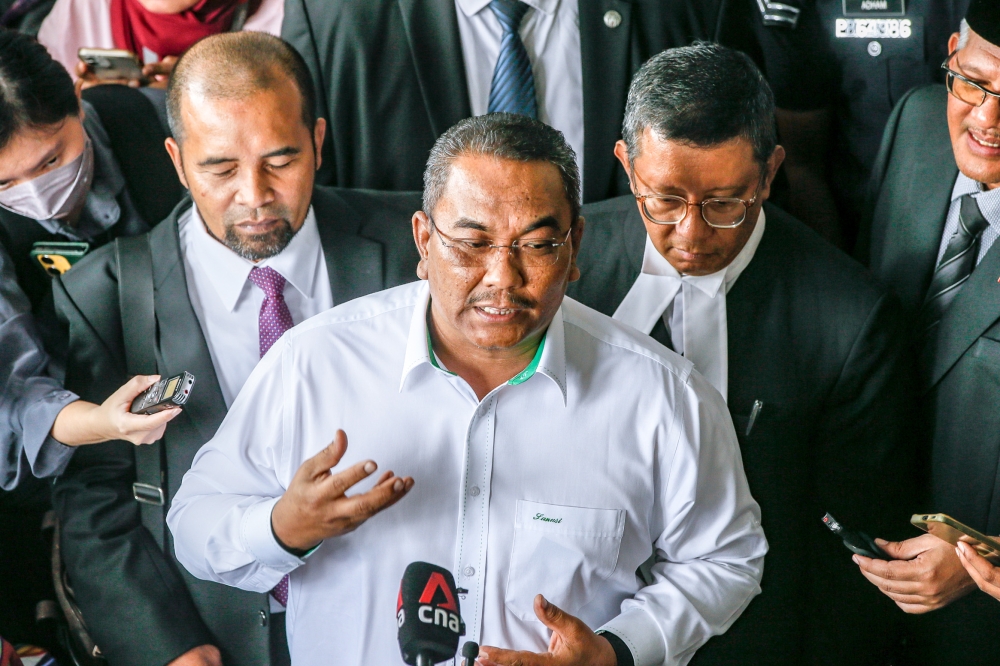
Kedah Menteri Besar Datuk Seri Muhammad Sanusi Md Nor has escalated a political dispute by serving formal letters of demand to DAP senior leaders, including Perak chief Nga Kor Ming, over what his office characterises as deliberate misrepresentation of his public remarks. The legal notices, issued from Alor Star on August 5, represent a hardening stance in an ongoing disagreement that has exposed fault lines within Malaysia's broader political landscape and raised questions about accountability in political discourse.
The decision to resort to legal instruments signals that Sanusi, who has led Kedah since 2020 with backing from Perikatan Nasional, views the alleged distortions as sufficiently serious to warrant formal action. Letters of demand function as preliminary steps before potential defamation litigation, putting recipients on formal notice that their statements are contested and demanding retraction or clarification. For Nga Kor Ming, who holds significant influence within DAP's political machinery and government representation, such a notice carries particular weight given his profile and public platform.
While specific details of the contested remarks remain initially unclear, these disputes typically centre on whether political opponents have accurately represented statements made in parliamentary proceedings, press conferences, or public engagements. In Malaysia's polarised political environment, such disagreements frequently emerge from differing interpretations of policy positions or perceived attacks that one side claims have been taken out of context or deliberately manipulated. The distinction between legitimate political criticism and actionable misrepresentation often hinges on subtle differences in phrasing and intent.
The action reflects broader tensions between Perikatan Nasional-aligned state governments and DAP-led or DAP-friendly administrations. Kedah operates under Perikatan governance, creating natural political fault lines with DAP, which remains part of the federal coalition supporting Prime Minister Anwar Ibrahim. These structural tensions frequently spill into disputes over policy announcements, statements on federal-state relations, and public criticism of opposing leadership. Such conflicts are not unique to Kedah but exemplify challenges in coalition politics where different parties maintain separate institutional interests and political bases.
For DAP, which has maintained a strong organisational presence in peninsular Malaysia despite setbacks in the 2022 general election, defending against such allegations carries implications beyond the immediate dispute. The party has invested heavily in its image as a principled opposition and coalition partner committed to good governance and transparency. Allegations of distorting opponents' statements, regardless of their merit, carry potential reputational consequences in an era where political communications spread rapidly through social media and alternative news channels.
The decision to issue letters of demand rather than immediately pursue court action offers both sides a path toward resolution. Such notices typically allow recipients a defined period, often between 7 and 14 days, to respond, retract statements, or seek to resolve the matter before escalation occurs. This mechanism has become increasingly common in Malaysian political disputes, functioning as a warning system that separates serious grievances from casual political sparring. Whether this dispute will settle at this stage or proceed to court remains uncertain and likely depends on how recipients respond to the formal demands.
Sanusi's aggressive approach aligns with his established pattern of direct political engagement. Since assuming office in Kedah, he has demonstrated willingness to challenge opponents publicly and pursue legal remedies when he perceives his statements have been misrepresented or his administration unfairly criticised. This approach has earned him supporters who view his stance as principled leadership while drawing criticism from those who see it as an inappropriate use of legal mechanisms for political advantage. The contrast reflects deeper disagreements about where legitimate political discourse ends and actionable legal violations begin.
The timing of this action carries contextual significance within Malaysia's broader political trajectory. As the nation approaches mid-term reviews of government performance and positions on potential electoral contests, state-level disputes gain amplified importance. Kedah's governance record, economic performance, and political stability directly influence Perikatan's electoral prospects and claims to effective administration. Similarly, DAP's performance in opposition scrutiny and coalition partnership affects its standing within the federal government and among voters concerned about checks on executive power.
For Malaysian legal observers, this case may contribute to evolving jurisprudence on political speech, defamation standards, and the balance between protecting reputations and preserving space for legitimate political criticism. Malaysian courts have historically applied nuanced approaches to political defamation claims, recognising that politicians must tolerate greater scrutiny than private citizens but also deserve protection against false statements causing demonstrable harm. How courts ultimately assess the contested remarks, should litigation proceed, may establish precedent affecting similar disputes.
The broader implications extend beyond the immediate parties involved. Every instance where political figures resort to legal action over alleged misstatements contributes to the climate surrounding political discourse in Malaysia. If such actions become normalised, they may chill legitimate criticism and debate; conversely, if serious distortions proceed without consequence, standards for political truthfulness may decline. The balance between these concerns remains contested among legal experts, political analysts, and observers concerned with democratic health.
This dispute also highlights the technical challenge of determining what constitutes impermissible distortion versus acceptable political interpretation. Speeches and statements frequently admit multiple reasonable interpretations, and political opponents will naturally emphasise meanings most advantageous to their positions. Distinguishing between presenting an opponent's words in an unflattering but defensible light and deliberately falsifying their meaning involves judgment calls that reasonable observers might dispute. Legal mechanisms offer one approach to resolving such ambiguities, though their application to political speech remains inherently contentious.

