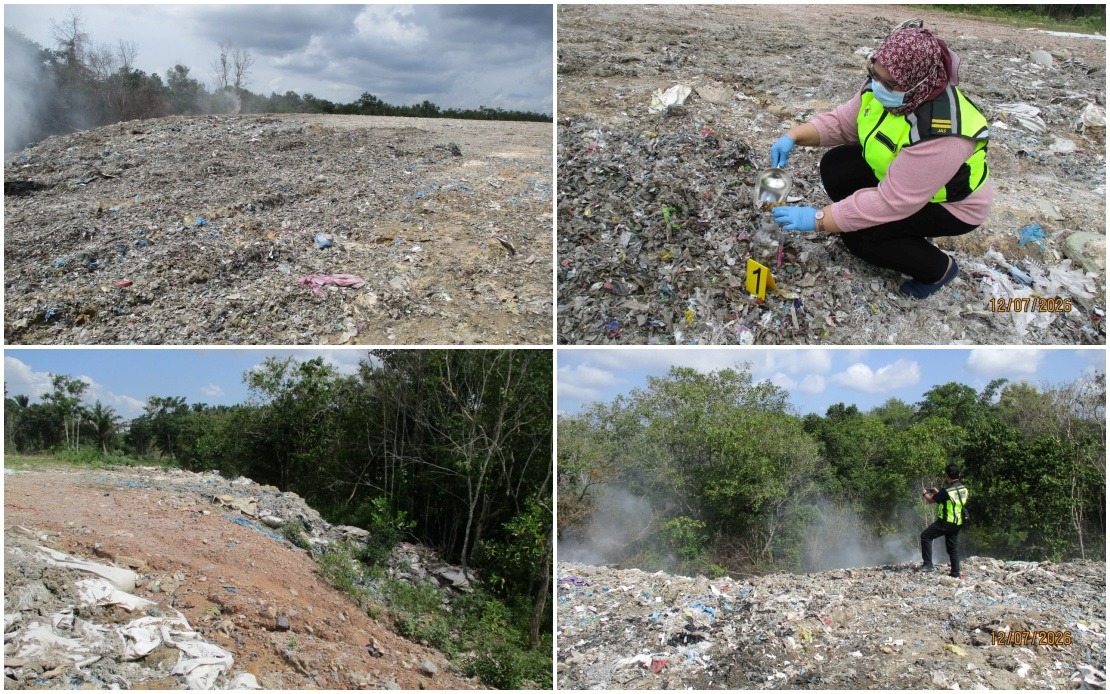
Environmental enforcement officers in Kedah have discovered a clandestine waste dumping operation in Bukit Banyan following complaints from residents about persistent burning odours in the vicinity. The Kedah Department of Environment responded to public reports and subsequently identified the illegal disposal site, which has triggered investigations under multiple sections of environmental legislation and prompted coordination with national waste management authorities.
Sharifah Zakiah Syed Sahab, the state DOE director, revealed that officers investigated the location after receiving complaints about the burning smell from nearby residents. The subsequent inspection confirmed extensive illegal activity at the site, with investigations showing that domestic waste and other solid materials had been deposited across a cleared plot of land measuring approximately 250 square metres. The presence of smoke and burning residue at the location indicated that individuals had been deliberately igniting waste materials—a dangerous and illegal practice sometimes undertaken to extract recoverable metals and other valuable components from discarded items.
The operation appears to have involved a waste collection contractor operating in industrial zones throughout the district, though the individuals directly responsible for the burning and dumping remain under investigation. Critically, the disposal site was operating entirely without the mandatory written authorization from the Director-General of Environment, a fundamental breach of waste management regulations. This absence of proper licensing suggests either deliberate non-compliance or a complete disregard for environmental protocols by those involved in the operation.
Open burning of waste poses severe environmental and public health risks. Beyond the immediate air quality degradation experienced by nearby residents, such practices release hazardous substances and particulate matter into the atmosphere, contributing to respiratory illnesses and other health complications. The deliberate incineration of waste to extract metals is particularly problematic, as it often involves burning materials containing toxic components that release heavy metals, dioxins, and other carcinogenic substances into the surrounding environment and potentially into groundwater systems through soil contamination.
The Kedah DOE has initiated formal legal proceedings against those responsible, with investigations proceeding under Section 29A(1) of the Environmental Quality Act 1974, which addresses unauthorized open burning on land parcels, and Section 34A(6) of the same legislation, which covers the operation of sanitary solid waste landfills without proper departmental approval. These dual charges indicate the severity of the violations and demonstrate the layered nature of the regulatory breaches involved.
As part of its investigative protocol, the Kedah DOE collected representative samples of solid waste from the site for comprehensive laboratory analysis by the Department of Chemistry. These tests will establish the composition of the dumped materials and provide scientific documentation of the waste types being illegally disposed of, strengthening any potential legal action and revealing whether hazardous or regulated waste materials were included in the dumping operations.
The case will be escalated to the Solid Waste and Public Cleansing Management Corporation (SWCorp), the national agency responsible for solid waste management oversight and enforcement. This referral ensures that the matter receives attention from the appropriate authority with jurisdiction over waste management practices nationwide and allows for coordinated monitoring and enforcement action. SWCorp's involvement signals that authorities view this as a systematic violation requiring intervention beyond the state environmental department level.
This discovery highlights the persistent challenge of illegal waste disposal across Malaysia, despite strengthened regulations and enforcement mechanisms. Industrial contractors and waste handlers sometimes circumvent proper disposal procedures through unauthorized dumping to avoid the costs associated with legitimate waste management and disposal facilities. The practice of open burning to extract metals and other materials remains disturbingly common in certain regions, driven by the economic value of recovered materials and the minimal immediate consequence many offenders face.
For Kedah residents and those living near industrial zones, the incident underscores the importance of reporting suspicious activities to environmental authorities. Public vigilance has proven instrumental in identifying such operations, as neighbours are often the first to notice persistent burning or unusual activity at apparently abandoned sites. The state DOE's prompt response to complaints demonstrates that these reports do receive serious attention and lead to concrete enforcement action.
The broader implications for Malaysia's waste management infrastructure remain significant. As the country continues to industrialize and generate increasing volumes of solid waste, the temptation for unscrupulous operators to seek cheaper, illegal disposal methods grows proportionally. Strengthening monitoring capacity, increasing penalties for violations, and improving accessibility of legitimate waste disposal facilities are essential components of addressing this persistent problem. The Bukit Banyan case serves as a reminder that environmental compliance requires consistent oversight and that communities must remain engaged in reporting violations to maintain the integrity of waste management systems.

