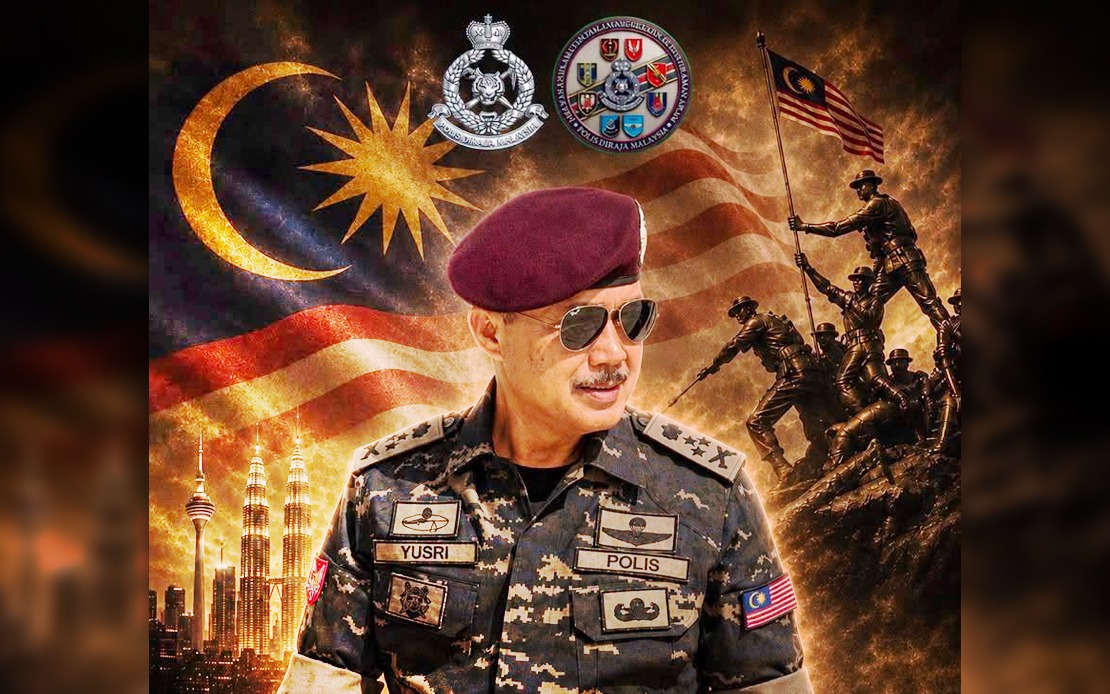
Datuk Seri Mohd Yusri Hassan Basri is preparing for a markedly different experience at this year's National Day Parade. Having commanded the police detachment from atop a high-powered BMW R 1250 RT motorcycle during last year's celebration, the director of the Department of Internal Security and Public Order (KDNKA) will instead guide the Royal Malaysia Police contingent from the saddle of a white horse named Al-Sakb when the 69th National Day Parade takes place at Dataran Putrajaya on Monday, August 31.
The symbolic transition reflects more than just a change in transportation method. With 595 police officers—both senior and junior ranks—marching under his leadership, Mohd Yusri is positioning the 20-strong Federal Reserve Unit's Mounted Unit as the spearhead of the PDRM's presence at the nation's most significant patriotic gathering. The Mounted Unit brings with it 20 horses, creating a visual spectacle that hearkens to Malaysia's colonial heritage while simultaneously modernising the force's public image.
Mohd Yusri, who previously headed the Traffic Investigation and Enforcement Department (JSPT) before assuming his current position leading KDNKA, has invested more than a month in rigorous training to master this new role. He recognises that the transition presents distinct operational and presentational challenges. The training regimen focuses not merely on his personal horsemanship but on ensuring that the entire contingent moves with military precision, maintaining synchronisation and orderliness throughout the parade route. This level of coordination is essential when managing such a large formation, particularly one designed to project strength and professionalism to the watching public.
The shift from motorcycle to horseback leadership carries symbolic weight beyond the merely aesthetic. It represents a diversification in how Malaysia's security apparatus presents itself to citizens and reflects the range of capabilities within PDRM. Mohd Yusri has emphasised that his primary concern remains upholding the institutional image of both PDRM and KDNKA, underscoring how even ceremonial elements serve the broader mission of maintaining public confidence in the nation's internal security framework.
The KDNKA contingent showcases far more than traditional mounted units. The parade will feature the General Operations Force and Air Operations Force, demonstrating the multifaceted operational scope of PDRM. Among the crowd-drawing elements will be ten newly acquired All Terrain Tactical Assault E-Bikes (ATEB)—advanced electric motorcycles specifically designed for the GOF's demanding work in border patrol, counter-terrorism operations, and rapid response scenarios. These vehicles represent PDRM's ongoing modernisation drive, blending cutting-edge technology with tactical necessity.
Airborne capabilities will also feature prominently. An AW139 helicopter operated by PDRM will conduct a flypast, underscoring the force's comprehensive reach from ground to sky. This vertical dimension to the parade sends a powerful message about PDRM's operational versatility and investment in advanced platforms. For Malaysian audiences, particularly those in rural and border areas where helicopter operations provide crucial security functions, this display reinforces the visible presence of the state.
Another distinctive element comes from the K9 Unit, with 16 elite police dogs expected to parade alongside their handlers. These animals represent years of specialist training and embody the professional standards PDRM maintains across all operational domains. The inclusion of dogs in formal parades demonstrates how security forces integrate animal handlers and canine units into their public-facing operations—a detail often overlooked in discussions of modern policing but significant in terms of operational breadth.
Tactical electric motorcycle personnel will also feature, representing the intersection of mobility, technology, and rapid-response capabilities. This combination of traditional elements—the mounted unit and K9 teams—with cutting-edge technology paints a picture of a security apparatus that respects institutional heritage whilst embracing modernisation. For Southeast Asian regional observers, Malaysia's approach offers an interesting template for balancing tradition with technological advancement in public security presentation.
Mohd Yusri has called upon the Malaysian public to attend the parade with their families, framing National Day as an opportunity to strengthen communal bonds and reinforce collective identity. His invitation carries particular weight given the security establishment's role in national cohesion and public safety. The appeal for good weather reflects genuine operational concerns—large formations of mounted and mechanised units require clear conditions for optimal coordination and public visibility.
The 69th National Day Parade arrives at a moment when PDRM faces ongoing scrutiny regarding operational effectiveness, public relations, and institutional reform. The deliberate staging of diverse capabilities—from traditional mounted units to cutting-edge electric vehicles to aerial assets—suggests an institutional awareness of the need to demonstrate comprehensive competence. This multi-layered presentation serves both ceremonial and practical purposes, allowing the public to visually comprehend the breadth of security services available to the nation.
For Malaysian citizens and observers across Southeast Asia, the parade reflects how developing nations navigate the presentation of state power. Rather than projecting military dominance through armoured vehicles and heavy weapons, Malaysia's approach emphasises operational sophistication, technological integration, and human-animal partnerships. This narrative proves particularly relevant in a region where security must be projected without appearing oppressive, and where public confidence in institutions remains a central governance challenge.
The transition from Mohd Yusri's previous role at JSPT to his current position leading KDNKA also illustrates career pathways within Malaysia's security establishment. His progression through different departments—from traffic enforcement to crime prevention to internal security coordination—reflects the horizontal knowledge transfer common in sophisticated security bureaucracies. Such career trajectories ensure that institutional memory flows across departments and that leaders develop multifaceted understanding of security's various dimensions.

