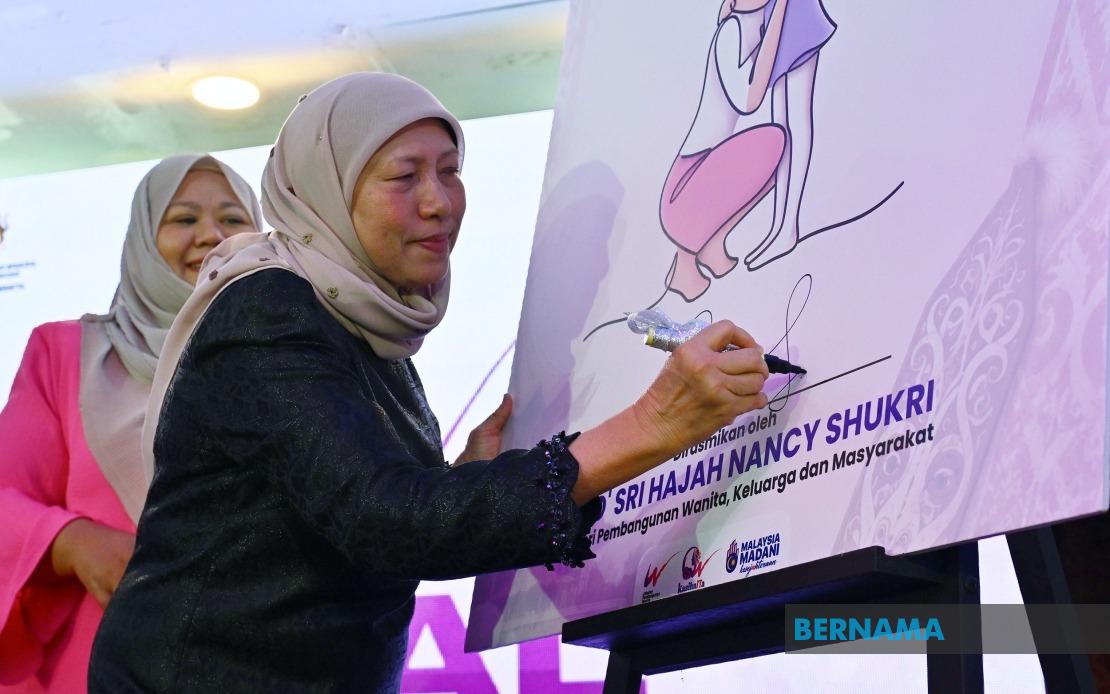
The Ministry of Women, Family and Community Development (KPWKM) has expanded its Single Mothers Support programme, known as KasihnITa, to Sarawak as part of a phased rollout aimed at equipping vulnerable mothers with the tools and knowledge needed to navigate financial and legal challenges. Minister Datuk Seri Nancy Shukri inaugurated the state-level initiative in Kuching on July 19, underscoring the government's commitment to ensuring no segment of society is left behind in national development efforts.
The staged deployment of KasihnITa reflects a deliberate strategy to customise support services across Malaysia's diverse regions. Following an initial phase in Selangor, the programme's arrival in Sarawak marks a significant step toward geographic inclusivity, acknowledging that single mothers in East Malaysia face distinct economic and social circumstances that warrant tailored interventions. This regional approach demonstrates recognition that a one-size-fits-all model cannot adequately address the varied needs of single-parent households across the country's different socioeconomic landscapes.
At its core, KasihnITa functions as a coordination hub, bringing multiple government institutions under one programme to streamline access to services that single mothers would otherwise need to pursue independently across fragmented bureaucracies. The Credit Counselling and Debt Management Agency (AKPK), Bank Negara Malaysia, the Legal Aid Department, and the Syariah Judiciary Department converge to offer comprehensive guidance spanning financial management, legal recourse, and welfare entitlements. This consolidation of expertise within a single programme significantly reduces the administrative burden on participants, who can now access diverse advisory services in a coordinated setting.
Financial literacy forms a cornerstone of the initiative, with participants receiving structured training in family budgeting, savings strategies, and debt management. For single mothers often managing household finances on limited incomes, such knowledge transfers can prove transformative, enabling them to allocate resources more strategically and build resilience against economic shocks. The inclusion of AKPK and Bank Negara Malaysia ensures that guidance is grounded in professional standards and reflects best practices in financial planning, lending credibility to the support offered.
The legal dimension of KasihnITa addresses a persistent pain point for many single mothers: the enforcement of child maintenance obligations. Nancy highlighted how the programme provides a platform for mothers to seek advice from legal professionals on pursuing claims against ex-partners who fail to comply with court-ordered maintenance payments. By integrating the Legal Aid Department and Syariah Judiciary into the programme, single mothers gain access to expert counsel on their rights and available recourse mechanisms without bearing prohibitive legal costs, thereby democratising access to justice.
Crucially, the programme incorporates a feedback mechanism designed to inform future policy development. Rather than imposing top-down solutions, KPWKM is explicitly committed to gathering direct input from participants to ensure that subsequent interventions and policy provisions genuinely reflect the needs articulated by the target community itself. This participatory approach signals a shift toward evidence-based policymaking in the social development sphere, where beneficiaries' lived experiences guide institutional responses rather than assumptions made by distant bureaucracies.
The inaugural Sarawak iteration drew approximately 130 participants over three days, suggesting strong uptake and community engagement. This attendance figure, while modest in absolute terms, reflects the programme's nascent stage and the localised nature of the rollout. As the initiative matures and awareness spreads through word-of-mouth and community networks, participation is likely to expand, amplifying its impact across the state's single-mother population.
Beyond material support, Nancy emphasised the psychological and social value of bringing single mothers together in a supportive environment. By creating spaces for participants to share experiences and exchange coping strategies, KasihnITa fosters solidarity and reduces the isolation that often accompanies single parenthood. This peer-support dimension acknowledges that empowerment extends beyond financial or legal assistance to encompass emotional validation and community belonging.
The programme's expansion to Sarawak also reflects broader demographic and economic realities facing Malaysia. Rising costs of living, stagnant wages in many sectors, and evolving family structures have increased the prevalence of single-parent households, particularly among women who disproportionately bear childcare responsibilities. Governmental recognition of this trend through targeted programmes signals an acknowledgment that social safety nets must evolve to address contemporary family configurations and economic vulnerabilities.
For Malaysian policymakers, KasihnITa represents a template for integrated service delivery in the social development domain. By consolidating expertise and eliminating redundant bureaucratic processes, the programme demonstrates how coordination across government agencies can enhance efficiency and accessibility. This model could potentially be adapted for other vulnerable populations requiring multifaceted support, from elderly persons to households in poverty.
Looking ahead, the success of KasihnITa in Sarawak will likely inform decisions about further expansion into other states, particularly those with significant single-mother populations or higher incidence of poverty. The feedback collected from participants will prove invaluable in refining service delivery, identifying gaps, and ensuring that subsequent phases of rollout address the most pressing concerns articulated by beneficiaries themselves. As Malaysia navigates economic pressures and demographic shifts, programmes like KasihnITa represent a deliberate commitment to inclusive development that prioritises the most vulnerable members of society.

