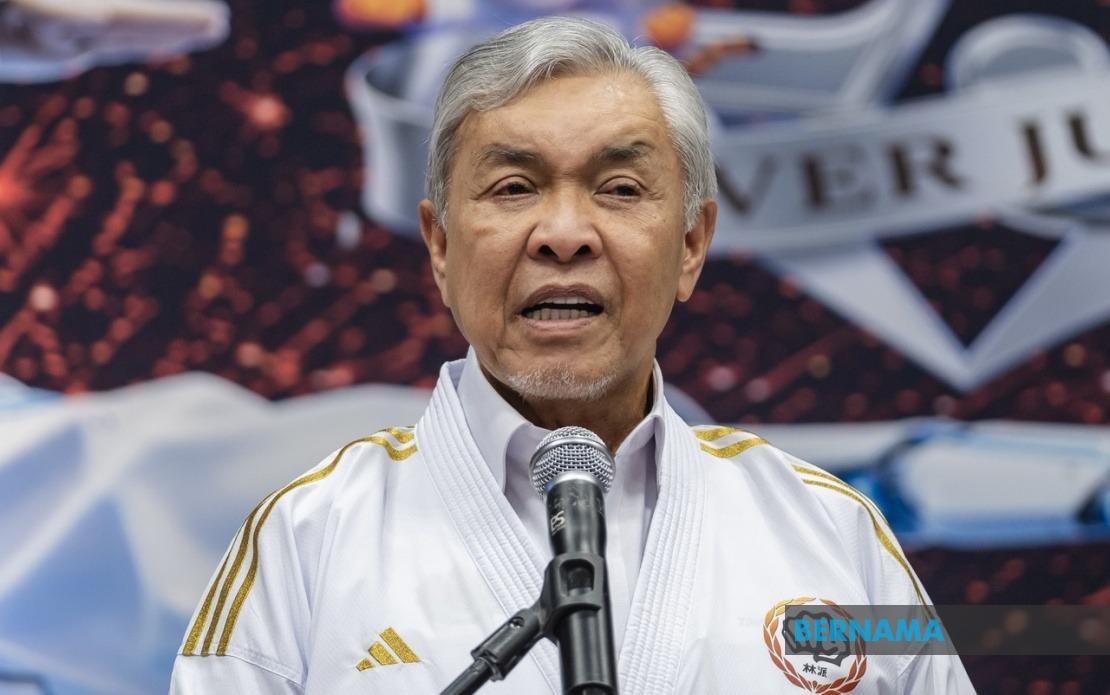
Karate stands on the threshold of becoming an official sport at Malaysia's premier schools championships, with Deputy Prime Minister Datuk Seri Dr Ahmad Zahid Hamidi committing to raise the matter before the Cabinet next week. Speaking after opening the International Open Karate Championship 2026 at Titiwangsa Stadium in Kuala Lumpur, Ahmad Zahid, who chairs the Cabinet Committee on Sports Development, indicated that he would work alongside Education Minister Fadhlina Sidek to advance the proposal through the formal government approval process.
The timing of this development comes as the karate community in Malaysia demonstrates growing momentum at both grassroots and competitive levels. The International Open Karate Championship 2026, now celebrating its 25th year, drew more than 1,850 participants representing 17 countries to the capital, underscoring the sport's international standing and domestic appeal. The scale of this tournament reflects karate's evolution from a niche martial art into a mainstream sporting pursuit with genuine competitive depth across age groups and skill levels.
Putrajaya Karate Association president Datuk P. Thiagu, who organized the championship, has been particularly vocal about the strategic importance of MSSM inclusion for the sport's future development in Malaysia. Thiagu argues that adding karate to the MSSM calendar would provide a structured pathway for school-age athletes, creating institutional support for talent identification and development that currently exists only through independent clubs and associations. This distinction matters considerably in the Malaysian sporting context, where MSSM participation often serves as a gateway to national representation and international competition opportunities.
The argument for inclusion rests on several practical foundations. First, karate has already achieved significant penetration within Malaysian schools, with the sport attracting consistent participation from student-athletes across both urban and regional institutions. Rather than introducing something entirely new to the school system, MSSM inclusion would formalize and standardize existing grassroots activity, providing administrative oversight and competitive structure where ad-hoc arrangements currently prevail. Second, formal inclusion would likely increase participation by providing students with official recognition and varsity status for their sporting commitment, incentivizing both participation and performance improvements.
From a policy perspective, Ahmad Zahid's intervention signals high-level political support for expanding Malaysia's official school sports portfolio beyond traditional disciplines. This reflects a broader regional trend toward diversifying competitive offerings at secondary level, with several Southeast Asian nations having already integrated martial arts and combat sports into their national school championships. By aligning Malaysia's approach with international practice, MSSM inclusion of karate would enhance the country's competitive positioning while modernizing the school sports system.
The cabinet process ahead will require Education Ministry evaluation of practical considerations including competition formats, administrative infrastructure, coaching standards, and integration with the existing MSSM calendar. These bureaucratic steps, while necessary, appear unlikely to present insurmountable obstacles given Ahmad Zahid's explicit commitment and the demonstrable popularity of karate among Malaysian students. The Education Ministry would need to coordinate with state-level authorities responsible for implementing MSSM competitions, ensuring consistent standards and fair competition across regional divisions.
Karate's inclusion would also align with Malaysia's Olympic ambitions, as the sport featured in the Tokyo 2020 Olympic Games and remains part of the international competition framework. Having karate established within the school system could enhance the talent pipeline for national teams competing at regional games and world championships. Southeast Asian Games participation, in particular, represents a strategic priority where expanded domestic competition could yield performance improvements.
Thiagu's emphasis on producing talented athletes through structured grassroots development addresses a persistent challenge in Malaysian sports: the gap between casual participation and elite performance. Official MSSM status would provide the institutional scaffolding necessary to identify promising young competitors early, provide them with quality coaching and competitive experience during their formative years, and maintain their engagement with the sport into university and professional levels. Without such systematic development pathways, Malaysia risks losing potential champions to other countries with more comprehensive sports systems.
The 25th edition of the International Open Karate Championship itself demonstrates Malaysia's capacity to host world-class competitions while simultaneously nurturing competitive depth through school-level participation. The tournament's international scale suggests that Malaysian karate has matured sufficiently to warrant institutional support at the school level. International competitors and organizers observing Malaysian student-athletes at school championships would further enhance the country's karate profile within global sporting circles.
Looking forward, successful MSSM inclusion would require coordination between multiple stakeholders including the Malaysian Karate Association, state education authorities, school administrators, and coaching organizations. The transition period would likely involve establishing competition standards, developing coaching certification requirements, and creating infrastructure for regional and national championships. Ahmad Zahid's cabinet intervention essentially greenlights this planning process, giving stakeholders confidence to begin detailed preparations.
Beyond karate specifically, this proposal illustrates how Malaysia responds to evolving sporting interests and international best practices. As martial arts continue gaining global prominence and youth participation grows, school sports systems must adapt to reflect contemporary athletic interests. The Cabinet's willingness to consider such expansion demonstrates receptiveness to modernizing the MSSM framework while maintaining quality and competitive integrity.
The coming weeks will prove decisive as Ahmad Zahid presents the proposal formally to his Cabinet colleagues and Education Minister Fadhlina Sidek undertakes her department's evaluation. Should approval proceed as currently signaled, Malaysia could see karate-ka competing for MSSM medals within the next competitive cycle, transforming the sport from an extra-curricular activity into an officially recognized school discipline with attendant benefits for athlete development and national competitiveness.

