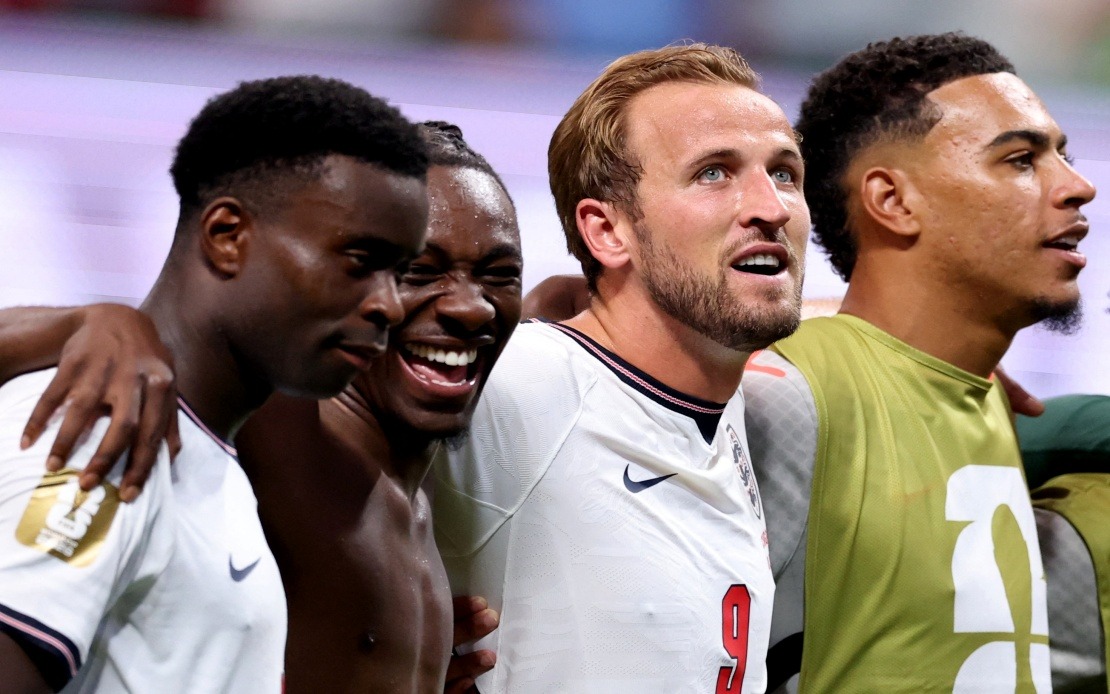
In one of the tournament's most dramatic turnarounds, England narrowly escaped elimination at the hands of an unfancied Democratic Republic of the Congo, with Harry Kane's clinical finishing in the second half proving decisive in a 2-1 World Cup victory in Atlanta. The result sees Thomas Tuchel's squad advance to face co-hosts Mexico in the round of 32, yet the manner of their escape has raised uncomfortable questions about their readiness to challenge for the title.
England's vulnerability was laid bare from the opening exchanges as Brian Cipenga's early breakthrough thrust the Three Lions into a precarious position. The goal sent shockwaves through the stadium and triggered uncomfortable memories of their humiliating Euros exit to Iceland a decade earlier, a wound that still defines English football's collective consciousness. For much of the first half, Congo's organised resistance and the inspired goalkeeping of Lionel Mpasi kept England at bay, with the African side finding space to threaten on the counter-attack with alarming regularity.
The Congo defence proved far more resolute than anticipated, exposing gaps in England's structure that Tuchel will have noted with considerable concern. Yoane Wissa came agonisingly close to extending the lead when his effort struck the woodwork late in the first period, while Kane himself felt aggrieved after failing to win a penalty decision that television replays suggested might have merited awarding. These moments of controversy only amplified the tension within the English camp as they struggled to impose their expected dominance over opposition ranked considerably lower in the FIFA standings.
As the match wore on into the second half, the atmosphere inside the stadium grew increasingly fractious, with English supporters sensing their team teetering on the brink of catastrophe. Congo's tactical discipline and physical commitment made it abundantly clear that first-time World Cup knockout experience had not intimidated the Democratic Republic's players, who were executing their game plan with admirable precision and commitment. The breakthrough that would save England's tournament came through the introduction of Anthony Gordon from the bench, whose fresh legs and directness helped shift the momentum decisively in their favour.
Gordon's impact proved transformative, as the Liverpool winger created space for Kane to strike twice in quick succession, turning the match on its head with clinical finishing that demonstrated his enduring class at international level. The England captain's composure under immense pressure—with the weight of national expectation bearing down on every touch—reminded observers why he remains one of world football's most clutch operators. These were not flashy goals; they were the product of intelligent movement, decisive delivery, and the predatory instincts of a player who has spent his career thriving in moments of genuine consequence.
This comeback represents only the second instance in which England have recovered from conceding first in World Cup knockout football, the previous occasion being the 1966 final triumph that remains embedded in the nation's football folklore. That historical parallel carries significance beyond mere statistics—it speaks to England's capacity for resilience, yet also underscores how rare such comebacks have become at this tournament stage. Tuchel's men showed the mental fortitude required to avoid elimination, but the path to reaching the final now appears considerably more treacherous than pre-tournament expectations suggested.
The Mexico fixture looms as a significant test of whether this England team possesses the consistency and defensive stability to mount a genuine World Cup challenge. Mexico's home advantage at the Azteca Stadium—one of world football's most intimidating venues—combined with their tournament experience and technical superiority in possession, means England cannot afford to replicate Wednesday's sluggish opening. The central defensive pairing, midfield structure, and forward movement all require recalibration if England hopes to avoid another shocking exit that would validate the concerns raised by their struggles against Congo's straightforward but effective approach.
Congo's performance, whilst ultimately ending in defeat, demonstrated that collective organisation and tactical discipline can temporarily neutralise even heavily favoured opponents. For Southeast Asian observers, the match offered validation that underdog narratives remain possible in modern football, provided teams approach big matches with proper preparation and psychological resilience. The Democratic Republic has established a foundation upon which they can build, having competed admirably in their maiden World Cup knockout appearance and extracted significant tactical concessions from one of Europe's traditional powerhouses.
Looking ahead, England's trajectory through the tournament will ultimately depend on whether Tuchel can instil the defensive solidity and early-match intensity that was glaringly absent against Congo. The squad possesses sufficient individual quality to trouble Mexico and potentially progress further, yet the defensive vulnerabilities exposed in Atlanta cannot be dismissed as mere anomalies. If these structural weaknesses persist, England's World Cup ambitions may yet prove short-lived, a sobering thought for a nation that has invested considerable faith in Tuchel's tactical vision and rebuilding process.

